Last updated: October 11, 2026
The best vacuum for dog messes is rarely a single machine: for most homes the winning combination is a corded wet-dry floor cleaner for accidents plus a HEPA-filtered dry vacuum for fur. If you want one cordless tool that handles both, the Dyson V15s Detect Submarine is the closest match on the market in 2026, but the correct pick still comes down to whether your dog’s messes land on carpet, hard flooring, or both — and how much you are willing to spend on a second, dedicated machine.
Quick answer: For most people in 2026, the best vacuums for dog messes, fur, and accidents is the Dyson V15s Detect Submarine — our #1 rated choice. See the full ranked comparison, alternatives and buying advice below.
- Quick comparison: the best vacuums for dog messes
- Best overall: Dyson V15s Detect Submarine
- Best for wet accidents: Bissell CrossWave Pet Pro
- Best for carpet and embedded fur: Miele Complete C3 Cat & Dog
- Best budget dry vacuum: Bissell CleanView Swivel Pet
- Best for spot-treating accidents: Bissell Little Green Pet Pro
- Best for hands-off daily fur: robot vacuum-mop combos
- How to choose: the four specs that matter
- Decision matrix: match the machine to your situation
- What wears out first, and what ownership actually costs
- Five mistakes that shorten a vacuum’s life in a dog household
- Frequently Asked Questions
Quick comparison: the best vacuums for dog messes
Every pick below is a current, widely available model or a clearly defined spec class. Prices are general market ranges and move with sales and configuration.
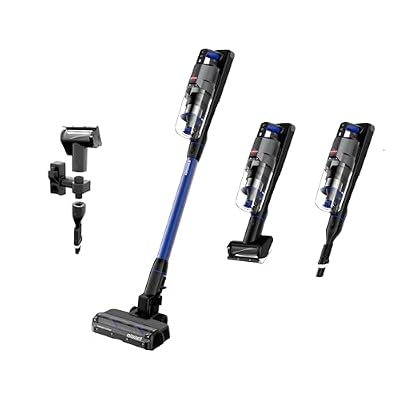
Bissell PowerClean FurFinder 200W Self-Standing Cordless Vacuum, 4052
Included for 'Best Vacuums for Dog Messes, Fur, and Accidents' because the listing specifies 4052, details this guide uses to compare options.
View on Amazon| Pick | Best for | Key specs (manufacturer figures) | Typical price |
|---|---|---|---|
| Dyson V15s Detect Submarine | Best overall: dry fur plus small wet accidents from one cordless tool | Cordless stick, ~3.2 kg, up to 60 min on Eco, 0.76 L bin, HEPA filtration, motorised wet roller head | ~$700–$950 |
| Bissell CrossWave Pet Pro | Best for accidents and muddy paw prints on sealed hard floors | Corded wet-dry, ~0.8 L clean tank / ~0.5 L dirty tank, 7.6 m cord, ~5 kg, multi-surface brush roll | ~$250–$350 |
| Miele Complete C3 Cat & Dog | Best for carpet, embedded fur and allergy households | Corded canister, 1,200 W (US spec), 4.5 L GN bag, HEPA AirClean filter, ~8.3 kg, ~11 m operating radius | ~$600–$850 |
| Bissell CleanView Swivel Pet | Best budget dry vacuum for fur, kibble and dust | Corded upright, ~1 L dirt cup, ~15 lb, 27 ft cord, washable pre-motor filter | ~$130–$190 |
| Bissell Little Green Pet Pro | Best for spot-treating accidents on carpet and upholstery | Portable extractor, ~1.4 L clean tank, ~4 kg, spray-and-extract hand tool | ~$150–$200 |
| Robot vacuum-mop combos (Roborock Q Revo / S8 MaxV Ultra class) | Best for daily fur control between deep cleans | Self-emptying dock with 2.5–3 L bag, 5,500–10,000 Pa depending on model, mop pad or roller | ~$600–$1,300 |
Best overall: Dyson V15s Detect Submarine
See also: AMD Radeon 9070 XT vs Compared: Specs & Performance • Best Wine Fermentation Fridge for Home Winemakers
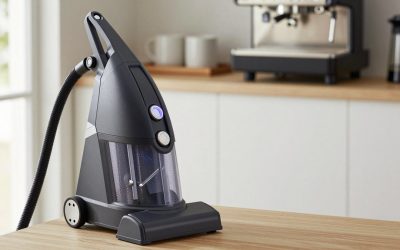
This is the only mainstream cordless that ships with both a standard cleaner head and a motorised wet roller, which is what makes it the single-machine answer for mixed dry-and-wet dog messes. Per Dyson’s published specs, the V15 generation delivers around 240 air watts in Boost mode, runs up to 60 minutes on Eco, and holds 0.76 L in the bin. It suits owners in flats or small homes who clean hard floors daily and want one charging dock instead of two machines.
Trade-off: the wet roller is for sealed hard floors and small spills only — it is not a carpet extractor, and the dirty water reservoir is small enough that a large accident needs emptying mid-job.
Best for wet accidents: Bissell CrossWave Pet Pro
A corded wet-dry floor cleaner vacuums and washes in one pass, which is exactly what you want for urine, vomit and muddy paw prints on tile, LVP or sealed timber. Bissell’s spec sheet lists roughly a 0.8 L clean tank, a 0.5 L dirty tank and a 7.6 m cord, so you can clean a kitchen and hallway without swapping outlets. Suction is modest compared with a dedicated dry vacuum, but the water lift is what removes the residue rather than spreading it.
Trade-off: it is a hard-floor machine first. It will refresh low-pile area rugs, but it is not a substitute for a carpet extractor on thick pile. The Tineco Floor One series is the main alternative, with a similar tank layout and a self-clean cycle.
Best for carpet and embedded fur: Miele Complete C3 Cat & Dog
For wall-to-wall carpet and heavy shedders, a bagged HEPA canister still outperforms most cordless sticks on sustained airflow — airflow, not peak suction, is what lifts hair out of pile. The C3 Cat & Dog uses 4.5 L GN bags, a HEPA AirClean exhaust filter, and an 11 m operating radius per Miele’s specs. The sealed bag system means dander and fine hair stay inside rather than being redistributed, which matters in allergy households.
Trade-off: it is heavy at roughly 8.3 kg, it is corded, and it cannot touch wet messes at all. You are buying it for carpet performance and filtration, not convenience.
Best budget dry vacuum: Bissell CleanView Swivel Pet
If you already own a wet-dry cleaner and just need something cheap and effective for daily fur, a corded bagless upright in this class is the sensible spend. Expect roughly a 1 L dirt cup, a 27 ft cord, around 15 lb of weight, and a washable pre-motor filter. Corded uprights at this price keep full power for as long as you need it, which budget cordless sticks cannot do.
Trade-off: filtration is good but not HEPA-sealed, the brush roll collects hair wrap quickly, and the machine is heavier and louder than a stick.
Best for spot-treating accidents: Bissell Little Green Pet Pro
Spot extractors are the underrated pick here. They spray cleaning solution into carpet or upholstery and immediately vacuum it back out with the dissolved mess, which is the only way to stop a stain and odour from setting in a sofa or rug. Around 1.4 L of clean tank capacity and roughly 4 kg of weight make it easy to carry to the accident rather than dragging furniture to a machine.
Trade-off: it covers a small area per fill and it is a supplementary tool — you still need a vacuum for everyday fur. Always follow with an enzymatic cleaner, because extraction alone rarely neutralises urine salts.
Best for hands-off daily fur: robot vacuum-mop combos
Robots do not replace a deep clean, but a self-emptying combo that runs daily keeps loose fur from ever reaching the carpet pile. Current models in the Roborock Q Revo and S8 MaxV Ultra class advertise between 5,500 Pa and 10,000 Pa of suction, with docks that hold 2.5–3 L of debris so you empty the bag roughly every 6–8 weeks. Obstacle avoidance has improved enough that most handle cables and pet bowls reliably.
Trade-off: never let one run unsupervised in a house with an incontinent dog. A robot that crosses a wet accident will smear it across the floor and push liquid into its own fan housing.
How to choose: the four specs that matter
Suction and airflow
Cordless sticks are rated in air watts (AW); robots are marketed in pascals (Pa). As a rule of thumb, 100 AW is the floor for decent carpet pickup on a cordless, and 150 AW or more is where deep pile stops fighting back. On a corded machine, wattage tells you very little on its own — a 1,200 W canister with good sealing beats a 1,400 W machine with leaky joints.
Brush-roll design
Bristle rolls agitate carpet fibres and lift embedded hair; soft or rubber rollers are better on hard floors and large debris, and they resist hair wrap. Dual-roll and anti-tangle designs with fins cut how often you need to run a seam ripper along the roller, which is the single most common maintenance complaint in dog homes.
Filtration
“True HEPA” means 99.97% of particles at 0.3 microns; H13 under the EN 1822 standard means 99.95% at the same size. Bagged systems hold their filtration as they fill; bagless systems depend on clean filters, so plan to wash or replace them on schedule. This matters most if anyone in the house reacts to dander.
Wet-mess capability
Only two categories handle liquid: wet-dry floor cleaners and spot extractors. Look for a dirty-water tank of at least 0.5 L so a medium accident does not require a mid-clean empty, and check that the brush roll and filter are user-replaceable.
Decision matrix: match the machine to your situation
| Your situation | What to buy | Why |
|---|---|---|
| Mostly hard floors, accidents most weeks | Wet-dry cleaner plus a cheap cordless stick | Liquid destroys dry vacuum motors; splitting the jobs removes the risk |
| Wall-to-wall carpet, heavy shedder | Bagged HEPA canister plus a spot extractor | Sustained airflow and sealed bags win on pile; extractor handles stains |
| Flat under 70 m², budget under $250 | Budget corded upright plus a spot extractor | Two cheap tools cover fur and accidents better than one expensive compromise |
| Two storeys, stairs, daily quick cleanups | Cordless stick under 3.5 kg with HEPA | Weight and runtime matter more than peak suction on stairs |
| No time to vacuum daily | Self-emptying robot combo | Daily passes keep fur out of the pile; you deep clean monthly |
What wears out first, and what ownership actually costs
Run the consumables maths before you buy, because it varies more than the sticker price. A bagged canister in a one-dog household fills a 4.5 L bag roughly every 4–6 weeks: at $5–6 per bag that is 9–13 bags a year, or about $50–75, plus a HEPA exhaust filter at $40–50 annually — call it $90–125 a year. A bagless cordless typically needs pre- and post-motor filters every 3–6 months at $15–30 each, so $60–120 a year, plus a replacement battery every 2–4 years at $80–150. Wet-dry machines add a $20–30 brush roll every 6–12 months and a $10–15 filter every 2–3 months.
Beyond consumables, watch three failure points: hair wrapped around brush-roll bearings (which eventually seizes the roll), cracked dirty-water tank gaskets on wet-dry machines, and worn drive belts on uprights. Keeping a seam ripper and a spare filter on the shelf prevents most of it.
Five mistakes that shorten a vacuum’s life in a dog household
- Running a dry vacuum over a wet accident. Liquid reaches the motor and fan, and the repair usually costs more than the machine.
- Leaving dirty water in the tank. It smells within a day and the residue hardens inside the seals.
- Washing a HEPA filter. Most are not washable; water collapses the media and filtration silently drops to nothing.
- Ignoring hair wrap until the roll stops turning. Trim it every few uses instead of replacing a bearing.
- Letting a robot run unsupervised right after a meal. Obstacle avoidance handles cables, not puddles.
Frequently Asked Questions
Can I use a normal vacuum to clean up dog pee?
No. A standard dry vacuum pulls liquid into the motor and filter housing, which can short the machine and leave a permanent odour in the airflow path. Blot the accident, clean it with a wet-dry machine or spot extractor, and let the area dry fully before vacuuming the carpet again.
Is a wet-dry vacuum or a carpet cleaner better for accidents?
Wet-dry floor cleaners are faster for hard floors because they vacuum and wash in one pass. Carpet extractors and spot cleaners are better on rugs and upholstery because they flush solution into the fibres and pull it back out. Most dog owners end up wanting one of each, or a wet-dry machine plus a handheld extractor.
How much suction do I actually need for dog hair?
For a cordless stick, look for at least 100 air watts and preferably 150 or more if you have deep pile carpet. For corded machines, ignore wattage claims and judge by sealing and airflow, since a well-sealed 1,200 W canister will out-lift a leaky higher-wattage model.
Do robot vacuums handle dog hair well?
Yes for maintenance, no for deep cleaning. A self-emptying robot running daily keeps loose fur off the surface, but it will not pull embedded hair out of carpet pile the way a full-size vacuum with a bristle roll does. Treat it as a supplement, not a replacement.
How often should I replace filters and bags with a dog in the house?
Bagged machines: change the bag every 4–6 weeks with one medium shedder, and the HEPA exhaust filter annually. Bagless machines: rinse or replace pre-motor filters every 3–6 months and post-motor HEPA filters once a year. Hair-filled filters are the most common reason a working vacuum suddenly loses suction.
What is the best vacuum for dog hair on hard floors?
A cordless stick with a soft or rubber roller is the fastest option, because it will not scatter debris and resists hair wrap. If accidents are also frequent, pair it with a wet-dry floor cleaner so the stick never has to go near liquid. Soft rollers are also gentler on sealed timber and vinyl plank.
Ready to decide? Our #1 pick for 2026 is the Dyson V15s Detect Submarine.
Live price & availability on Amazon.