Last updated: October 2, 2026
Choosing the best mid-range espresso grinder is less about finding the most expensive machine and more about avoiding the compromises that make espresso frustrating. In this price band, you can get proper burr alignment, repeatable adjustments, and enough power for daily use—but not every grinder handles single dosing, light roasts, or quick switching between brew methods equally well.
For most home users, the best choice is a grinder with dedicated espresso adjustment, low retention, and a practical workflow. The right option depends on whether you make one espresso at a time, leave the grinder dialed in all week, or also brew filter coffee.
Quick picks
| Best for | Recommended type | Main advantage | Main compromise |
|---|---|---|---|
| First espresso setup | Electric grinder with stepped or fine micro-adjustment | Simple to learn and consistent | Less flexible for unusual coffees |
| Single dosing | Low-retention single-dose grinder | Easy coffee changes and little stale coffee | Slower, more hands-on workflow |
| Espresso and filter | Grinder with a broad adjustment range | One grinder covers both methods | Changing settings can be inconvenient |
| Quiet daily use | Gear-driven or slower motor grinder | Less harsh noise and solid control | Often costs more for the same burr size |
Best overall: a dedicated espresso grinder
See also: Best Espresso Grinders for Home: Burr Size, Workflow and Budget Matched • Breville Smart Grinder Espresso
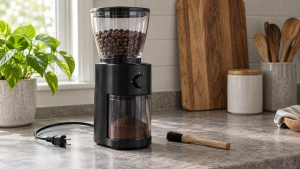
For someone who mainly drinks espresso, a dedicated espresso grinder is usually the safest mid-range purchase. A model such as the Baratza Encore ESP is aimed at this use, with a fine adjustment range intended for espresso and a workflow that is less demanding than a manual or single-dose grinder. It is a sensible choice for beginners who want to learn without spending premium-grinder money.
The advantage is repeatability. You can keep beans in the hopper, adjust the grind a little when the coffee changes, and grind directly into a portafilter. That matters more than an elaborate feature list. A grinder that is easy to use every morning is more useful than one that produces excellent results only after a careful purge and weighing routine.
The failure mode is limited flexibility. Stepped adjustment can make it difficult to land between two settings when a shot runs slightly too fast or too slow. This is not a dealbreaker with medium or darker roasts, but lighter coffees can expose the limitation. If you regularly chase small improvements in extraction, look for a stepless espresso grinder with fine micro-adjustment.
Best for single dosing: a low-retention grinder
Single-dose grinders are a better fit when you buy several coffees, switch between decaf and regular beans, or do not want beans sitting in a hopper. You weigh each dose, feed it into the grinder, and typically use a bellows or a short purge to clear the chamber. The workflow is slower, but coffee changes are much less troublesome.
A mid-range single-dose grinder with 54mm or similar flat burrs can produce clean, consistent espresso when properly aligned. The main benefit is not automatically better flavor. It is control: you know how much coffee went in, how much came out, and how little old coffee remains inside.
There are trade-offs. Bellows can scatter chaff and grounds around the counter. Some grinders retain more coffee than their marketing suggests, particularly when the burr chamber is not brushed or purged. Static can also make dosing messy in dry climates. If you value a fast, tidy routine, a conventional hopper grinder may suit you better. If switching beans matters, compare single-dose espresso grinders rather than assuming every low-retention design works the same way.
Best for espresso and filter coffee
A grinder can make both espresso and filter coffee, but “does both” does not mean “changes between them conveniently.” Espresso requires a fine, precise setting. Filter coffee requires a much coarser setting and often benefits from a clear adjustment scale. Moving back and forth may mean turning a dial several rotations and then trying to find the previous espresso position again.
Choose a broad-range grinder if you make espresso most days but use a V60, batch brewer, or French press occasionally. A grinder with a visible adjustment scale is particularly helpful. Take a phone photo of your espresso setting, or mark it with a removable sticker, so you can return to it.
For frequent switching, a second grinder can be cheaper in frustration than one “do everything” model. A basic filter grinder is often perfectly adequate for weekend coffee. The cheaper option is fine when you do not need espresso-fine adjustment, high pressure resistance, or precise shot-to-shot control.
What matters most in this price range
Burr size and design
Larger burrs can grind faster and may produce a more balanced cup, but size alone does not determine quality. Burr geometry, alignment, motor speed, and the grinder’s adjustment system matter just as much. Do not pay extra for a large burr if the workflow is awkward or replacement parts are difficult to find.
Adjustment system
Stepped adjustment is easier for a beginner because each click is repeatable. Stepless adjustment gives finer control but can be harder to navigate. For a first espresso grinder, a well-designed stepped system is often preferable to a cheap stepless dial with no useful reference marks.
Retention and exchange
Retention is the coffee left inside the grinder. Exchange is older coffee coming out with the next dose. Neither is automatically a problem if you use one bean continuously and purge when necessary. It becomes important when you switch coffees or make decaf. Look for a removable burr carrier, accessible chute, and replacement parts—not just a claimed retention figure.
Noise and speed
Mid-range grinders can be loud, especially during the first few seconds when beans enter the burrs. A quieter grinder is valuable in a shared home, but a low noise rating is hard to compare across brands. Listen for rattling, chirping, or a motor that labors at fine settings. These can indicate poor alignment, a blockage, or a grinder being pushed beyond its intended workload.
Common buying mistakes
Do not buy a grinder based only on wattage. Motor power does not tell you how evenly the grinder produces particles. Do not assume a dosing cup replaces a portafilter fork, either; transferring grounds can create spills and static. Finally, budget for a scale and fresh beans. A precise grinder cannot compensate for stale coffee, an inconsistent dose, or a machine that cannot maintain stable brewing conditions.
If your budget is tight, put more money into the grinder than decorative espresso accessories. A reliable espresso grinder with a timer can be the better buy for a household that leaves one coffee in the hopper. Choose a flat-burr single-dose grinder when freshness, switching beans, and manual control matter more than speed.
FAQ
How much should I spend on a mid-range espresso grinder?
Set aside enough for a grinder with proper espresso adjustment, accessible cleaning, and available replacement parts. The exact price changes by market, but spending slightly more for a grinder you will use daily is usually wiser than replacing a frustrating entry-level model.
Is a single-dose grinder better for espresso?
Not automatically. It is better for switching beans and controlling the dose. A hopper grinder is often faster and more convenient when you use the same coffee every day.
Should I choose flat or conical burrs?
Either can make excellent espresso. Burr geometry, alignment, adjustment quality, and workflow matter more than the shape alone. Choose based on the grinder’s design and your preferred routine.
Can one grinder handle espresso and pour-over?
Yes, but frequent switching can be inconvenient. If you change methods several times a day, two simpler grinders may provide a faster and less frustrating setup.