Last updated: October 2, 2026
What the Saeco Incanto Actually Is
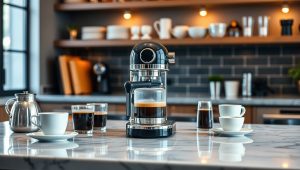
The Saeco Incanto is a mid-range super-automatic espresso machine: you press a button, it grinds, tamps, brews, and dumps the puck into an internal bin. There’s no portafilter, no tamping, and no technique required. Saeco (now under Philips ownership) has made machines like this for decades, and the Incanto sits in the middle of their range — above the basic entry-level units, below the touchscreen flagships.
Key hardware points: a ceramic flat burr grinder with multiple grind settings, a removable brew group you can rinse under the tap, a 1.8-liter water tank, and a manual pannarello-style steam wand on most versions for milk drinks. It’s a stainless-fronted machine that looks more expensive than it is.
If you’re shopping this category generally, browsing super-automatic espresso machines will show you where the Incanto sits in the price landscape — typically mid-hundreds, which is the entry point for a “real” fully automatic machine.
What the Coffee Tastes Like
See also: Breville Bench Saver • Rocket Espresso Coffee Machine
Set expectations correctly: a super-automatic at this price produces decent espresso-style coffee, not café-quality shots. The pressurized-style brewing and relatively quick extraction give you a drink with reasonable crema and a smooth, slightly muted flavor. Fresh beans and a finer grind setting help a lot; stale supermarket beans taste stale no matter what machine you run them through.
The grinder is the Incanto’s better half. Ceramic burrs run cool and quiet, and the adjustability is meaningful — dial it finer for more body, coarser if shots come out bitter and slow. The weakness is brew temperature and pressure consistency, which is where cheaper super-automatics lose to a semi-automatic setup.
Incanto vs. the Alternatives
Here’s the honest comparison that matters for most buyers:
| Saeco Incanto | DeLonghi Magnifica | Semi-auto (e.g., entry Gaggia/Breville) | |
|---|---|---|---|
| Effort per drink | One button | One button | Grind, tamp, pull, clean |
| Espresso quality | Good for the category | Similar; slightly hotter brew | Best, if you learn it |
| Milk drinks | Manual steam wand | Manual steam wand (some auto) | Manual wand, more control |
| Maintenance | Weekly brew group rinse, descaling | Similar | Backflushing, less descaling |
| Typical lifespan concern | Brew group wear, sensor faults | Similar | Very durable, repairable |
| Typical price band | Mid-range | Lower-mid | Similar + grinder cost |
The DeLonghi Magnifica line is the Incanto’s direct rival and often costs less. Coffee quality is a wash; Saeco’s removable brew group is easier to clean by hand, while DeLonghi’s tends to be a bit more forgiving of neglect. If price is the deciding factor, the DeLonghi Magnifica range is worth a look before committing.
The Real Trade-Offs
Convenience vs. cup quality. This is the whole decision. If you want a cappuccino in 90 seconds with zero skill, the Incanto delivers. If you chase flavor, a $300 semi-automatic plus a decent grinder beats it — at the cost of ten minutes and a learning curve.
The steam wand is basic. The pannarello frother makes foamy, bubbly milk fine for cappuccinos, but you won’t get silky microfoam for latte art. Versions of the Incanto with an automatic milk carafe exist at higher cost; the carafe adds another cleaning chore.
Oily beans are a problem. Dark, oily roasts clog the grinder over time. Stick to medium roasts — this is true of nearly every super-automatic, not just this one.
Water tank and bean hopper sizes are modest. In a two-coffee-drinker household you’ll refill the tank every day or two and empty the puck bin and drip tray frequently. It’s fine, but it’s constant light maintenance.
Common Failure Modes
Talking to owners and reading service patterns, the Incanto’s weak points are typical for the category:
- Brew group wear or misalignment. It’s removable, which is great for cleaning, but the mechanism is the most complex part of the machine. Keep it lubricated with food-safe grease per the manual.
- Grinder jams from oily or flavored beans.
- Sensor and board faults after a few years — super-automatics are electronics-heavy, and repair costs can approach half the machine’s price once out of warranty.
- Limescale damage if you skip descaling in hard-water areas. Using in-tank water filters (the Incanto accepts AquaClean-style filters) genuinely extends descaling intervals and is worth the small ongoing cost.
Expect a realistic lifespan of 4–7 years with decent care. That’s the category norm, not a Saeco-specific flaw.
Who Should Buy It (and Who Shouldn’t)
Buy it if: you drink milk-based coffee daily, value speed over perfection, and will actually rinse the brew group weekly. It’s a strong pick for a two-person household replacing a pod machine — per-cup cost drops dramatically versus capsules.
Skip it if: you mostly drink straight espresso and care about flavor nuance — a manual machine rewards you more. Also skip it if nobody in the house will do any maintenance; a neglected super-automatic dies young, and at that point a simple drip brewer or pod machine is the more honest choice.
For a deeper look at alternatives in this price tier, check current listings for Saeco Incanto machines, since prices fluctuate and older stock often discounts heavily.
FAQ
Is the Saeco Incanto good for beginners?
Yes — it’s about as beginner-friendly as espresso gets. The main thing to learn is the maintenance routine: rinse the brew group weekly, empty the bins, descale when prompted.
Can I use oily dark roast beans?
You can, but you shouldn’t regularly. Oily beans coat the burrs and clog the grinder chute. Medium roasts are the safe default.
How does it compare to a Nespresso or Keurig?
Better coffee per cup once dialed in, much lower per-cup cost, but more maintenance and a higher upfront price. If convenience is everything, pods still win.
Does it make real espresso?
It makes espresso-style coffee that satisfies most people in milk drinks. Purists will notice the difference versus a good semi-automatic; most latte drinkers won’t.