Last updated: October 2, 2026
A professional coffee machine with grinder combines two jobs: grinding whole beans and brewing espresso. That sounds like the ideal upgrade, but the phrase covers very different machines. Some are compact all-in-one espresso makers for a home kitchen. Others are commercial bean-to-cup machines designed for offices, restaurants, and high-volume service.
The right choice depends less on the word “professional” and more on how many drinks you make, how much control you want, and whether you are willing to clean and adjust the grinder regularly. A cheaper integrated machine can be perfectly adequate for occasional cappuccinos. It is not automatically a sensible choice for a busy café or a serious home barista.
What “professional” means in this category
In espresso equipment, professional usually refers to durability, repeatability, temperature control, workflow, or capacity—not simply a higher price. A professional-style machine may have a portafilter, a commercial-style steam wand, a larger boiler, and a grinder with more adjustment steps. It still requires the user to dose, tamp, steam, and clean it.
A superautomatic machine takes a different approach. It grinds, doses, brews, and often dispenses milk at the touch of a button. This is closer to office equipment than traditional café equipment. It offers speed and consistency, but usually gives up some control over extraction and milk texture.
If you are shopping for a traditional setup, start with a professional espresso machine with built-in grinder. If convenience matters more than manual technique, look at a superautomatic espresso machine with grinder instead.
The main types to consider
See also: Best Espresso Grinders for Home: Burr Size, Workflow and Budget Matched • Breville Smart Grinder Espresso
| Type | Best for | Main advantage | Typical drawback |
|---|---|---|---|
| Integrated grinder and manual espresso machine | Home users who want control | Fresh grinding with hands-on brewing | Slower learning curve and more cleanup |
| Superautomatic bean-to-cup machine | Offices, families, and convenience-focused users | Fast drinks with little technique required | Less control and more complicated internal cleaning |
| Separate commercial grinder and espresso machine | Busy home setups and cafés | Best performance, serviceability, and flexibility | Higher cost, larger footprint, and two machines to maintain |
Integrated grinder espresso machines
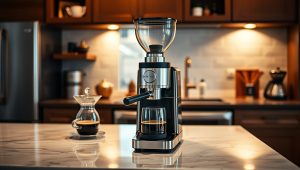
This is the most appealing format for many home buyers. The grinder sits above or beside the espresso machine, so beans go directly into the brewing workflow. You save counter space and avoid buying a separate grinder.
The trade-off is that the grinder and espresso machine are tied together. If the grinder becomes inconsistent, you cannot replace it without replacing or modifying the whole unit. Integrated grinders can also have narrower adjustment ranges than dedicated espresso grinders. That matters when switching between light and dark roasts, or when trying to correct a shot that runs too quickly or too slowly.
Choose this format if you make a few espresso drinks per day and want a tidy setup. It suits a beginner who is willing to learn basic dialing-in but does not want a separate grinder taking up more space. It is less suitable for a household making drinks continuously throughout the day, especially when reliability and easy servicing matter more than compactness.
Watch for retention and clumping. Ground coffee left in the chute can make the next dose stale or inconsistent. A machine that looks professional but has a small, difficult-to-clean grinder may disappoint more than a simpler unit with an accessible burr set.
Superautomatic machines
A superautomatic machine is the practical choice when several people want coffee without learning espresso technique. It usually grinds beans on demand, tamps internally, brews a programmed volume, and ejects the used puck. Milk systems range from a manual steam wand to an automatic carafe or tube.
The cheaper option is fine when speed and convenience are the priority. You may get a pleasant espresso-style drink, especially with medium or dark roasted beans, without spending on commercial hardware. The cost is less control. You cannot easily adjust every part of the dose, puck preparation, and extraction, and the built-in grinder may not produce the same clarity as a good dedicated espresso grinder.
Milk systems are a common failure point. Tubes and carafes need rinsing after use, and dried milk residue can cause poor foam, blocked passages, or unpleasant odors. Automatic cleaning cycles help but do not eliminate manual maintenance. A superautomatic is a poor fit if you dislike cleaning small wet components.
For an office or hospitality setting, check the manufacturer’s rated daily capacity, water tank size, waste-bin capacity, and service availability. A machine intended for five drinks a day may struggle when asked to produce dozens before lunch.
When separate machines are better
A separate grinder and espresso machine usually make more sense for serious home use or commercial service. The grinder can be upgraded independently, and a commercial grinder normally offers faster dosing, stronger burrs, and better heat management. The espresso machine can then be selected for its boiler design, steam power, group configuration, and repair support.
This setup is more expensive and occupies more space. It also exposes every mistake: stale beans, an incorrect grind setting, poor distribution, or an underheated portafilter. That is not a defect, but it does require attention. If you want one-button coffee, separate equipment will feel unnecessarily demanding.
For a high-volume environment, consider a commercial espresso grinder alongside a machine designed for the expected workload. Do not assume that a large-looking hopper proves commercial suitability. Burr size, motor duty cycle, thermal management, replacement parts, and local service are more useful indicators.
What to check before buying
Grinder adjustment: Espresso often needs fine, precise changes. Stepped adjustment is easier for beginners; stepless adjustment offers finer control but can be harder to return to a previous setting.
Burrs and dosing: Steel or ceramic burrs can both work well. Consistent particle size and a repeatable dose matter more than the material alone. A timer-based grinder is convenient, but weighing the dose is more accurate.
Temperature control: A machine should provide stable brewing temperature and enough power for steaming. A single-thermoblock design may be compact and affordable, while dual-thermoblock or boiler systems can improve simultaneous brewing and steaming.
Water and waste capacity: Small tanks and drip trays mean frequent interruptions. Large tanks are useful in offices, but standing water should not be left unattended for long periods.
Cleaning access: Look for removable brew groups where applicable, accessible grinder parts, clear descaling instructions, and replacement seals or filters. If a component cannot be reached without tools, it is more likely to be neglected.
Electrical requirements: Commercial machines may need a dedicated circuit or a different voltage from a standard home outlet. Confirm this before purchase, particularly with imported equipment.
Who should buy which option?
Buy an integrated grinder espresso machine if you want fresh-ground espresso in a compact home setup and are comfortable doing some manual work. Buy a superautomatic if multiple users need quick, repeatable drinks and nobody wants to learn dosing and tamping. Buy separate commercial equipment if you serve many drinks, want maximum control, or need each component to be replaceable.
For occasional espresso, spending more does not guarantee better coffee. Fresh beans, proper cleaning, and a suitable grind setting often matter more than extra buttons or a stainless-steel exterior. The expensive choice earns its place when its capacity, workflow, control, or serviceability solves a real problem.
FAQ
Is a machine with a built-in grinder better than separate equipment?
It is more compact and simpler to buy, but separate equipment usually offers better grinder performance, easier upgrades, and more serviceability. Choose integrated equipment for convenience; choose separate equipment for control and heavy use.
Are professional coffee machines difficult to use?
Manual machines require practice with grind size, dose, tamping, and milk steaming. Superautomatic machines are easier to operate but still need regular cleaning and occasional adjustment.
How often should the grinder and machine be cleaned?
Brush or purge the grinder regularly, empty retained grounds, and clean the brew path according to the manual. Milk parts should be rinsed after every use, while descaling frequency depends on water hardness and the manufacturer’s instructions.
Can an integrated grinder handle light-roasted coffee?
Some can, but light roasts often require finer, more precise adjustment and may be harder to extract. Check the grinder’s adjustment range and use fresh beans before deciding that the machine is at fault.