Last updated: September 18, 2026
If you are asking, “is a dual boiler espresso machine worth it,” the honest answer is: yes—if you regularly make milk drinks, brew several drinks back-to-back, and care about temperature control more than a low purchase price. For occasional espresso drinkers or anyone mainly making straight shots, a single-boiler or thermoblock machine is usually the better value.
Quick answer: Our top pick in 2026 is the Entry-level thermoblock espresso machine — our #1 rated choice. See the full ranked comparison, alternatives and buying advice below.
The Short Answer
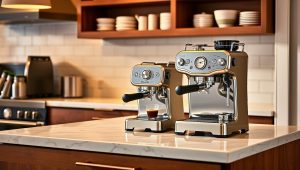
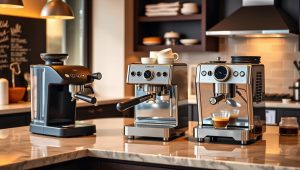
A dual boiler espresso machine is worth the extra cost when you want to brew espresso and steam milk at the same time, with each task handled at an appropriate temperature. One boiler is dedicated to brewing, while the other produces steam. That design makes a noticeable difference during cappuccino-heavy mornings, entertaining, and repeated drinks.
As an Amazon Associate we earn from qualifying purchases at no extra cost to you. Product prices and availability are accurate as of the date shown and are subject to change.


The catch is that dual-boiler machines are larger, heavier, more expensive, and more demanding to maintain. Entry-level models can cost roughly $1,000 to $1,800, while premium machines can run well above $2,000. By comparison, capable single-boiler or thermoblock machines often cost $300 to $900.
What You Actually Get
See also: How to Replace Espresso Machine Water Filter (2026): Step-by-Step • How to Adjust Espresso Machine Brew Temperature (2026): Step-by-Step
With a single boiler, the machine must switch between brewing and steaming. You may pull a shot, wait for the boiler to reach a higher steaming temperature, froth milk, then wait again before brewing. That pause may be brief, but it becomes frustrating when making several drinks.
A dual-boiler machine avoids that temperature shuffle. The brew boiler typically operates around 190 to 205 degrees Fahrenheit, depending on the coffee and programmed setting. The steam boiler runs considerably hotter to create dry, forceful steam. Because the systems are separate, you can extract espresso while steaming milk.
You also usually get better control features. Many machines include a PID temperature controller, a pressure gauge, programmable shot volume, a pre-infusion setting, and a hot-water outlet. These features do not automatically make better coffee, but they make results more repeatable when you use fresh beans, a capable grinder, and a consistent technique.
Expect a substantial countertop footprint. A full-size dual boiler commonly measures about 12 to 16 inches wide, 16 to 20 inches deep, and 15 to 18 inches tall. Allow extra clearance above the machine if the water reservoir is filled from the top. Weights commonly fall between 25 and 35 pounds, so this is not an appliance you will want to move after every use.
For context, the Breville BES920XL Dual Boiler Espresso Machine is listed at $1,599.95 and uses a fairly large 84-ounce water tank. It is a feature-rich choice for home users who want programmable controls without moving into commercial pricing. The Chefman Crema Deluxe Espresso Machine with Double Boiler is listed at $299.99 and targets buyers who want simultaneous brewing and steaming at a much lower price, along with an integrated grinder offering 30 grind settings. Pricing can change, but the gap illustrates the range of the category.
Pros
- Brew and steam at the same time. This is the main advantage. You can pull a shot while texturing milk instead of waiting for the machine to change modes.
- More consistent brewing temperatures. A dedicated brew boiler reduces the temperature swings associated with switching from espresso to steam.
- Better for multiple drinks. Making four lattes is less of a stop-and-start process, especially when everyone wants a drink at once.
- Stronger steaming performance. A dedicated steam boiler generally supplies more sustained steam than compact single-boiler machines.
- More control over extraction. PID regulation, programmable pre-infusion, shot timing, and pressure information can help you refine different beans.
- A more capable long-term setup. If you already own or plan to buy a good grinder, a dual boiler can let you take advantage of better coffee without immediately outgrowing the machine.
Cons
- High upfront cost. A dual boiler can cost two to five times as much as a basic espresso machine. The machine is only part of the budget; plan on roughly $200 to $800 for a suitable espresso grinder if one is not included.
- Large and heavy design. A machine weighing about 25 to 35 pounds takes permanent counter space. Its depth can exceed 18 inches, which may interfere with cabinets or a shallow counter.
- More maintenance. Two boilers, pumps, valves, and temperature controls create more components to monitor. You still need to backflush, clean the group head, wipe and purge the steam wand, and descale according to the manufacturer’s instructions.
- Longer heat-up times. Depending on the design, full readiness can take about 10 to 20 minutes. Some machines offer a lower-power mode, but that may reduce steam availability.
- More energy use. Keeping a steam boiler hot takes more electricity than operating a small thermoblock. A typical home dual boiler may be rated around 1,500 to 2,200 watts.
- It cannot fix poor coffee technique. Stale beans, an inconsistent grinder, incorrect dosing, and weak tamping will still produce disappointing espresso.
Who Should Buy It
Buy a dual boiler if you make milk-based drinks several times a week and value speed, repeatability, and strong steam. It makes the most sense for households where two people want coffee in the morning, for home baristas who routinely prepare three or more drinks, and for anyone who enjoys experimenting with light, medium, and dark roasts.
It is also a sensible upgrade if you already have a good burr grinder and understand basic espresso preparation. In that situation, the machine’s temperature stability and workflow improvements are easier to appreciate. If you entertain often, simultaneous brewing and steaming can be the feature that changes the machine from a hobby into a practical daily appliance.
Models such as the $1,599.95 Breville BES920XL make the most sense for buyers who want extensive controls, a large reservoir, and an established home-barista format. A lower-cost model such as the $299.99 Chefman Crema Deluxe may appeal to beginners who want the dual-boiler concept and an integrated grinder in one package, provided they have realistic expectations about refinement, longevity, and service support at that price.
Who Should Skip It
Skip a dual boiler if you drink one espresso or Americano a day, rarely steam milk, or are still deciding whether espresso is a lasting hobby. You will likely get better value from a compact thermoblock machine and a separate grinder.
It is also a poor fit for small kitchens, renters with limited counter space, or anyone who wants coffee immediately after waking up. A pod machine or fast thermoblock may be more convenient. Finally, do not buy one just because it sounds more professional. A dual boiler does not automatically deliver better espresso than a well-adjusted single-boiler machine with a superior grinder.
Cheaper Alternatives
| Option | Cost | Trade-off |
|---|---|---|
| Entry-level thermoblock espresso machine | $150–$400 | Heats quickly and costs less, but usually cannot brew and steam simultaneously. |
| Single-boiler machine with PID | $500–$1,000 | Better temperature control for espresso, but you must wait between brewing and steaming. |
| Heat-exchanger machine | $1,000–$2,000 | Can brew and steam together, but brew-temperature management may be less direct than with separate boilers. |
| Manual lever espresso maker | $300–$800 | Can produce excellent shots with practice, but offers limited convenience and usually no powerful steam system. |
| Super-automatic espresso machine | $600–$1,500 | Very convenient and often includes grinding, but provides less control over dialing in espresso and milk texture. |
FAQ
Does a dual boiler make better espresso?
Not automatically. It provides more stable brewing conditions and a smoother workflow, but the grinder, beans, dose, water, and technique have a larger effect on flavor. A good single-boiler machine can outperform a poorly set up dual boiler.
How long does a dual boiler espresso machine last?
A well-maintained home machine can last many years, but lifespan depends on water quality, usage, cleaning, and access to replacement parts. Use filtered water when recommended, clean the group head and steam wand after every session, and follow the manufacturer’s descaling guidance.
Is a dual boiler better than a heat exchanger?
It depends on priorities. A heat exchanger can brew and steam simultaneously and may offer excellent steam power. A dual boiler generally gives you more independent control over brew temperature, which is useful for dialing in different coffees. Heat-exchanger machines can be simpler or less expensive, depending on the model.
What else should I budget for?
Plan for a grinder, a scale, a tamper that fits the portafilter, and routine cleaning supplies. A practical additional budget is about $250 to $900, depending mostly on the grinder. If your budget only covers the machine, a less expensive espresso maker paired with a better grinder may produce more satisfying results.
Bottom line: a dual boiler is worth it when simultaneous brewing and steaming will improve your routine several times a week. If that condition does not describe your coffee habits, put the money toward a better grinder, fresher beans, or a simpler machine instead.
Ready to decide? Our #1 pick for 2026 is the Entry-level thermoblock espresso machine.
Live price & availability on Amazon.