Last updated: October 2, 2026
What the Galanz Retro Actually Is
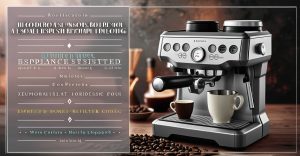
The Galanz Retro Espresso Machine is a budget single-boiler, semi-automatic with a deliberately vintage look. Cream, mint green, red, or black with chrome trim, analog gauge on the front, and a 51mm portafilter. Underneath the styling it’s a conventional 15-bar pump machine with a single thermoblock/boiler, a panarello-style steam wand, and a 1350W heating element. It sits in the same sub-$150 category as the De’Longhi Stilosa and basic CASABREWS models.
Galanz is better known for microwaves and compact retro refrigerators than espresso, and that matters for support and parts. You get the standard pressurized dual-wall baskets for pre-ground coffee or pods, plus a non-pressurized single-wall option in some bundles, a plastic tamper, and a small portafilter. There is no PID, no pre-infusion setting, no 3-way solenoid valve, and no built-in grinder. You pull a shot by pressing a button, steam by flipping to steam mode and waiting for the light.
Design and Build: Looks vs. Longevity
See also: Breville Bench Saver • Rocket Espresso Coffee Machine
The appeal here is obvious. If you want a machine that looks good on a small kitchen counter without paying for an SMEG, the Galanz nails the aesthetic for less than half the price. The footprint is compact at roughly 12 x 10 inches, and the 1.2-liter removable water tank sits behind the body so you need clearance to lift it out.
Build is where you feel the price. The housing is mostly painted plastic over a metal frame, the drip tray is light plastic, and the portafilter handle is plastic-clad with a fairly light feel. The filter baskets are thin-press steel. None of this affects the coffee on day one, but it does affect daily use. The portafilter needs a firm twist to lock, the steam knob feels plasticky, and the drip tray rattles if you don’t seat it exactly.
Failure modes to know about before you buy: the single boiler means you cannot brew and steam at the same time, and the thermostat has a wide deadband. Temperature swings 10-15°F during a shot, which is normal for this price but means shot-to-shot consistency suffers. After steaming, the boiler is too hot to brew until you purge hot water through the group or wait a minute. If you don’t, the next shot will taste burnt and bitter. The vibration pump is also loud, and like most cheap vibration pumps, it gets louder as scale builds up if you use hard tap water.
Brewing Performance
With the pressurized basket and store-bought pre-ground espresso, the Galanz is easy to get along with. It compensates for an imperfect grind and gives you crema-looking foam even if the grind is stale. For someone moving up from a Keurig or a moka pot, that’s a painless win.
With the non-pressurized basket and a real grinder, it’s a different machine. You need a grinder that can actually dial in for espresso, not a blade grinder or a $30 conical. If you have one, the Galanz can pull a decent, syrupy shot at around 25-30 seconds for a 1:2 ratio, but you will fight temperature. The best workflow is: heat up for 5-7 minutes, run a blank shot to heat the group and portafilter, grind, tamp, then brew immediately. Don’t let it sit on heat for 20 minutes or the group overheats.
Pressure is listed as 15 bars, but that’s the pump’s max. The over-pressure valve bleeds down to around 9-11 bars at the puck, which is standard for this class. There is no gauge that shows actual brew pressure, just a dial that moves when the pump runs. Ignore it for dialing in and go by taste and timing.
Where it falls short compared to $300+ machines: no solenoid means the puck stays soupy and wet after the shot, and the group will drip for 10-15 seconds. You also get no pre-infusion, so channeling shows up more if your tamp is uneven. A cheap distribution tool and proper tamper helps more here than on a more forgiving machine.
Steaming and Daily Use
The steam wand is a panarello sleeve over a single-hole tip. In stock form it auto-aerates, which makes big bubbly foam for lattes without technique. If you pull the outer sleeve off, you get a bare wand that can make tighter microfoam, but it takes practice and the steam pressure is weak compared to a larger boiler. Expect 45-60 seconds to steam 6 ounces of milk, and the boiler will run out of steam if you try to do two large lattes back-to-back. You have to wait for it to reheat between drinks.
Daily workflow for two milk drinks is: pull shot 1, pull shot 2, flip to steam, wait 30-45 seconds for the steam light, steam milk, then purge and cool the boiler if you want a third shot. It’s workable for one or two people, tedious for four.
Cleaning is simple but not automatic. Wipe the wand immediately after every use or milk bakes onto the panarello and clogs it. The drip tray fills fast. Descale every 2-3 months if you have hard water, or you will burn out the thermoblock. Galanz recommends only water and vinegar or citric descaler, not harsh commercial descalers that can attack the aluminum boiler.
Who Should Buy It and Who Should Skip It
Buy it if you want the retro look on a tight budget, you mostly drink one latte or cappuccino in the morning, and you will use pre-ground coffee or pressurized baskets to keep things simple. For dorms, small apartments, or a second machine at the office where looks matter, it’s a fair value when it’s on sale for under $120.
Skip it if you want to learn serious espresso, pull back-to-back shots for guests, or you already own a good grinder. At that point, temperature stability and build quality matter more than the paint color, and you will outgrow the Galanz in months. A slightly more expensive single-boiler with a heavier portafilter and better thermostat will waste fewer beans.
Be honest about the grinder question. The cheaper option is fine here: if you don’t want to buy a $150+ espresso-capable grinder, stay with the pressurized basket and pre-ground coffee. You will get more consistent, less frustrating results than trying to force a cheap grinder to do espresso-fine. If you do want to go deep on espresso, put more money into the grinder than the machine and look at a different machine class altogether, like the entry semi-automatic espresso machines with PID that hold temperature better.
How It Compares
If the retro styling is optional, you have better-performing options at the same price. If styling is the priority, the Galanz is one of the cheapest ways to get it.
| Machine | Portafilter | Heating System | Steam Wand | Trade-off |
|---|---|---|---|---|
| Galanz Retro | 51mm, pressurized + single-wall in some kits | Single boiler/thermoblock, no PID | Panarello, removable sleeve | Best look for the price; weakest temperature control and lighter build |
| De’Longhi Stilosa EC260 | 51mm, pressurized only | Single boiler, no PID | Panarello | More reliable parts and service, very similar performance, plainer look |
| CASABREWS 20 Bar (CM5418 etc.) | 51mm or 58mm depending on version | Single boiler, no PID | Panarello, some with better steam pressure | Often stronger steam and included pressure gauge, but build varies by seller |
| Calphalon BVCLECMP1 / Similar $200+ | 58mm, better baskets | Single boiler with PID or better thermostat | Traditional wand | Costs more, but holds temp and steams more consistently; better for learning |
If you are shopping purely on value and don’t care about color, the De’Longhi is usually the safer long-term bet because filters, gaskets, and portafilters are easier to find. If you want that 1950s kitchen vibe and are okay with a little more temperature babysitting, the Galanz is fine. For a small kitchen where you want machine and grinder to match, you can also search for retro kitchen espresso machines to compare current colors and bundle prices before you commit.
FAQ
Does the Galanz Retro need a special grinder?
Not with the pressurized basket. Any decent burr grinder or even store-ground espresso will work. If you want to use the single-wall, non-pressurized basket, you need an espresso-capable grinder that can make fine, repeatable adjustments. Without it you will get channeling and sour or bitter shots.
Can it make two lattes in a row?
Yes, but slowly. Pull both shots first, then steam. The boiler needs 30-45 seconds to reach steam temperature and another minute to cool down enough to brew again without scorching. For three or more milk drinks back-to-back, a larger boiler or heat-exchange machine is much faster.
Is the 15-bar pump too much pressure?
No, the machine regulates down. Like most budget pumps, 15 bars is the pump maximum, not what hits the puck. Actual brew pressure is closer to 9-11 bars. Don’t chase the gauge on the front, time your shot and taste it.
How long does it last?
With filtered water, regular backflushing with water only, and descaling, two to four years is common for this class. The most common failures are scale-clogged thermoblocks and worn group gaskets. Using soft or filtered water is the single easiest way to extend its life.