- Top Pick: Northwest Grind White Coffee Ground 2lbs– High Caffeine, Low Acid Light Roast, Smooth Nutty Praline Flavor, Medium-Fine Grind for Espresso & Drip, Small Batch Roasted in Washington, 2 lb (2 x 16 oz Bags)
- Best Value: NESCAFÉ Gold Espresso Blonde Instant Coffee, 3.5 oz Jar
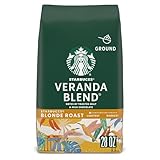
- Premium Choice: Starbucks Ground Coffee Veranda Blend Blonde Roast, 28 oz Bag
Last updated: September 18, 2026
Light-roasted coffee is less forgiving than dark roast, and many disappointing espresso shots begin with the grinder rather than the beans or machine. Common mistakes include buying a grinder because it has a high wattage, assuming more settings automatically mean better espresso, and choosing a model designed mainly for drip coffee. Another frequent error is shopping for “fine” grounds instead of looking for the adjustment range, burr quality, retention, and repeatability needed to dial in dense light-roast beans.
This espresso grinder buying guide for light roasts focuses on the features that affect real-world use: whether the grinder can produce fine, consistent particles; whether it can handle repeated adjustments; and whether it fits your counter, workflow, and budget. The coffee examples often shown alongside grinder listings—such as blonde ground coffee, instant espresso, or a pre-ground light roast—are not substitutes for an espresso grinder. Pre-ground coffee cannot be adjusted after opening, while instant coffee requires no grinding at all. If you buy whole beans, the grinder is the equipment that determines how much control you have.
As an Amazon Associate we earn from qualifying purchases at no extra cost to you. Product prices and availability are accurate as of the date shown and are subject to change.



Decide These 3 Things First
- What coffee will you brew? For espresso, select a grinder with a true espresso range and fine adjustment. If you also make pour-over or drip coffee, choose a model that can move between espresso and coarser settings without excessive retention.
- How much coffee do you make? A solo drinker may need only 18–36 grams per session, while a household making several drinks may grind 100 grams or more daily. This determines whether a compact single-dose grinder or a larger hopper model makes sense.
- What is your total budget? Include a scale, dosing cup, and possibly a bellows or replacement burr set. A grinder priced at $300 may be a better value than a $200 model that struggles with light roasts, but the least expensive option can still work for occasional brewing.
Size and Counter Footprint
See also: How to Clean an Espresso Grinder Burrs (2026): Step-by-Step • Espresso Grinder Hopper Capacity How Much Size Guide With Measurements (2026)
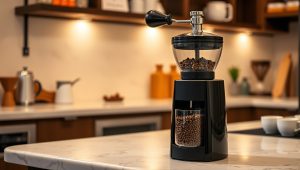
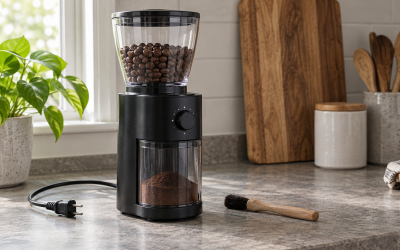
Measure the space before shopping, especially if the grinder will sit beneath upper cabinets. Compact electric grinders typically measure about 5–7 inches wide, 7–10 inches deep, and 11–16 inches tall. Hopper-based models may be taller because of a 6–10 inch bean container. A single-dose grinder with a short hopper can be easier to fit beneath cabinets, but its loading process is slower.
Pay attention to the footprint, not just published height. A grinder with a 6-inch width and 9-inch depth needs additional room for a portafilter, dosing cup, or catch bin. Allow at least 2 inches above a removable hopper lid and 3–4 inches beside the machine if you need to turn a grind-adjustment collar.
Capacity matters less than many shoppers expect. A 30–40 gram hopper is sufficient for most single-dose espresso routines, while a 200–300 gram hopper is convenient for multiple drinks. Larger hoppers can expose beans to more air, so they are not automatically preferable for light roasts.
Burr Material and Cutting Design
For espresso, burr geometry is generally more important than marketing claims about motor power. Steel burrs are common because they are durable, efficient, and available in many espresso-focused designs. Ceramic burrs resist heat and wear but are less common in serious electric espresso grinders and may be more vulnerable to damage from hard foreign objects.
Entry-level electric grinders often use flat or conical burrs measuring roughly 38–48 millimeters. Midrange models commonly use 48–64 millimeter burrs, while premium machines may use 64–83 millimeter burrs. Larger burrs can grind faster and may produce a more uniform particle distribution, but size alone does not guarantee better espresso.
Look for removable burrs or an accessible upper burr when regular cleaning matters. Light-roast beans can be dense, and oily residue is not the main cleaning concern; trapped fines and chaff are. A grinder with tool-free or simple-access burr removal is easier to maintain every 1–3 months, depending on use.
Construction and Adjustment Quality
A rigid body and stable burr alignment help the grinder produce repeatable grounds. Metal adjustment collars, a solid portafilter holder, and a heavy base usually indicate better long-term stability than a very light plastic chassis. Budget grinders weighing 3–6 pounds can be perfectly serviceable, but models in the 8–15 pound range are less likely to shift during grinding.
Adjustment design is decisive for light roasts. Stepped systems may offer 20–40 total settings, but only a small portion may be useful for espresso. A stepless collar or a system with many fine increments gives you more control when a shot runs a few seconds too fast or too slowly. Ask whether the grinder can be adjusted while running or only when empty; changing settings under load may damage some mechanisms.
Useful espresso adjustment is measured by control, not by the biggest number on the box. A grinder that moves in tiny, predictable increments is easier to dial in than one with 60 widely spaced clicks. If you switch between espresso and filter coffee, note how easily you can return to a previous setting.
Comfort, Speed, and Daily Performance
Light-roast beans are dense, so grinding speed and motor behavior matter. A practical home grinder may use a motor rated between 150 and 450 watts, but wattage is not a reliable quality score. A well-designed 200-watt grinder can outperform a poorly aligned 400-watt model. More useful specifications include grind time, duty cycle, noise, and whether the motor slows or stalls with dense beans.
For a double shot using 18–22 grams, a reasonable home grinder should finish in approximately 10–30 seconds, depending on burr size and grind setting. A machine that takes a minute for one dose may become frustrating, particularly when making several drinks. Do not treat manufacturer timing as a laboratory result; bean density and roast level change the outcome.
Single-dose models reduce stale coffee in the hopper and make it easy to change beans. Hopper models are faster for repeated drinks and may include timed dosing. In either case, look for low retention, an anti-static design, or a bellows attachment. Retention of even 0.5–1 gram can matter when changing coffees or weighing every dose.
Comfort includes the controls. A readable timer, a catch cup that does not cling to grounds, and a portafilter cradle that supports a 58-millimeter basket can save time. If you use a 54-millimeter or 58-millimeter portafilter, verify compatibility rather than assuming the holder is universal.
Price Tiers: What You Actually Get
Budget: $100–$250. Expect smaller burrs, louder operation, more plastic, and fewer fine adjustments. These grinders can be suitable for occasional espresso, especially with forgiving beans, but light roasts may require patience and careful dialing in. Manual grinders with steel burrs often provide better grind quality in this range, though they require physical effort.
Midrange: $250–$600. This is the most balanced category for many home espresso users. You can typically find stronger construction, better adjustment control, lower retention, and more capable burr sets. Some models support both espresso and filter brewing without becoming excessively slow or messy.
Premium: $600–$1,500 or more. Premium grinders may offer large burrs, quieter motors, improved alignment, precise digital dosing, and replaceable parts. These features are valuable for daily users, multiple coffees, and enthusiasts who frequently compare light roasts. They are not necessary if you make one espresso every few days.
Remember that packaged coffee prices do not indicate grinder quality. A $7.99 jar of blonde instant coffee needs no grinder, while a $39.99 bagged ground coffee is already fixed in size. A $24.29 large bag or an $11.40 light-roast drip blend may be economical, but neither lets you adjust particle size at the moment of brewing.
Warranty and Serviceability
Look for at least a one-year warranty; two years is preferable for an electric grinder. A longer warranty is useful only if the company provides clear service, replacement burrs, and accessible support. Confirm whether the warranty covers the motor, burr carrier, electronics, and labor, or only manufacturing defects.
Replacement parts can determine whether a grinder lasts five years or becomes disposable. Before buying, check whether burrs, hoppers, dosing cups, adjustment components, and power cords are sold separately. Burrs commonly need replacement after several hundred pounds of coffee, although the interval varies significantly with bean volume and hardness.
Delivery, Setup, and Assembly
Most electric grinders arrive nearly assembled, but setup still takes 10–20 minutes for unpacking, installing the hopper, and calibrating the burr zero point. A manual grinder may take less space but require 60–120 seconds of hand grinding for a typical espresso dose, depending on the model and bean.
Inspect the return policy before ordering. A grinder can sound acceptable in a showroom but seem too loud in a small kitchen. Check shipping weight, package damage procedures, and whether the seller accepts returns after beans have been run through the machine. For a countertop appliance weighing 10–15 pounds, sturdy packaging is especially important.
Spec Checklist
| Spec | Budget | Mid | Premium |
|---|---|---|---|
| Typical price | $100–$250 | $250–$600 | $600–$1,500+ |
| Burr size | 38–48 mm | 48–64 mm | 64–83 mm |
| Useful espresso control | 20–40 steps or basic stepless adjustment | Fine stepped or stepless collar | Highly precise stepped or stepless system |
| Typical weight | 3–7 lb | 7–12 lb | 10–20 lb |
| Typical single-dose capacity | 18–30 g | 25–50 g | 30–100 g |
| Approximate dose time | 20–45 seconds | 10–30 seconds | 5–20 seconds |
| Warranty target | At least 1 year | 1–2 years | 2 years or more |
Red Flags
- A product calls itself an espresso grinder but lists only coarse, medium, and fine settings.
- The manufacturer gives motor wattage but no burr size, adjustment details, or replacement-part information.
- The hopper is permanently attached, making cleaning and bean changes difficult.
- The grinder has a small catch cup that scatters grounds or does not fit your portafilter.
- There is no stated warranty, service address, or return policy.
- Reviews repeatedly mention stalling, inconsistent dosing, excessive static, or a collar that moves during use.
- The grinder is marketed with espresso imagery but is explicitly designed for drip coffee or pre-ground coffee.
FAQ
Do I need a special grinder for light-roast espresso?
You need a grinder capable of producing consistent, very fine grounds with precise adjustment. It does not have to be marketed exclusively for light roasts, but weak burr alignment, wide adjustment steps, and stalling are especially frustrating with dense beans.
Are larger burrs always better for light roasts?
No. Larger burrs may grind faster and can support higher daily volume, but burr geometry, alignment, adjustment control, and retention matter just as much. A well-built 48-millimeter grinder can be more useful than a poorly designed grinder with larger burrs.
Should I choose single-dose or hopper grinding?
Choose single dosing if you change beans often, weigh each dose, or want less coffee sitting in the hopper. Choose a hopper if you make several identical drinks and value speed. A 30–40 gram single-dose capacity is enough for most home espresso sessions.
Can a grinder for drip coffee make espresso?
Some can, but many cannot adjust finely or consistently enough. A grinder advertised primarily for drip brewing may produce grounds that are too uneven for espresso. Before buying, confirm that it has a dedicated espresso range, fine adjustment, and a motor and burr system suited to dense beans.
Ready to decide? Our #1 pick for 2026 is the Typical price.
Live price & availability on Amazon.