Last updated: September 18, 2026
Quick answer: Our top pick in 2026 is the Handheld battery whisk — our #1 rated choice. See the full ranked comparison, alternatives and buying advice below.
The Short Answer
Yes—if you make lattes at home at least a few times a week and your coffee maker does not have a reliable steam wand. A milk frother is not essential for a latte, but it is the easiest way to create hot, foamy milk without buying a full espresso machine. If you only make lattes occasionally, already own an espresso machine with a steam wand, or prefer flat white–style drinks with very little foam, you can skip it.
The key distinction is that a frother improves convenience, not necessarily coffee quality. Your espresso, milk, cup, and technique still matter. A $40 automatic frother can produce pleasant everyday lattes, but it will not turn instant coffee into espresso or perfectly duplicate the microfoam from a skilled barista.
As an Amazon Associate we earn from qualifying purchases at no extra cost to you. Product prices and availability are accurate as of the date shown and are subject to change.

What You Actually Get
See also: How to Froth Oat Milk with Steam Wand (2026): Step-by-Step • What Size Milk Pitcher for Two Lattes? Size Guide With Measurements (2026)
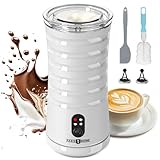
A milk frother heats milk while adding air to it. For lattes, that usually means warm milk with a thin, smooth layer of foam rather than the thick, spoonable foam associated with cappuccinos. Most automatic countertop models have separate settings for hot milk, hot froth, and cold froth. Some also include a chocolate or specialty-drink setting.
The process is simple: pour milk into the jug, select a setting, and wait several minutes. Depending on the model and the amount of milk, a typical cycle takes roughly 2 to 5 minutes. You then add the heated milk to espresso or strongly brewed coffee and spoon or pour the foam on top.
Two similarly priced examples are the SIMPLETASTE Milk Frother, 4-in-1 Electric Automatic Milk Steamer, Dark Blue, listed at $39.97, and the Paris Rhône Milk Frother, 4-in-1 Electric Automatic Milk Steamer, listed at $39.98. Their “4-in-1” labels suggest flexibility for several milk textures and temperatures, but buyers should still check the current capacity, cleaning instructions, warranty, and included accessories before purchasing. Features can vary by listing and production version.
For most kitchens, the practical benefits are consistency and reduced hands-on work. You do not need to stand over a saucepan, whisk continuously, or learn how to position a steam wand. The trade-off is less control. An automatic frother generally gives you a preset result rather than letting you adjust temperature, aeration, and texture minute by minute.
Pros
- Convenient for daily drinks: Add milk, press a button, and prepare your espresso while it runs. That is easier than steaming milk manually every morning.
- More consistent than a saucepan: Automatic heat cycles reduce the risk of scorching milk or accidentally bringing it to a boil. Milk for a latte is usually best warm rather than boiling hot.
- Works without an espresso machine: You can pair frothed milk with a pod machine, moka pot, AeroPress, pour-over coffee, or strong instant coffee.
- Useful for more than lattes: A frother can make cappuccinos, hot chocolate, matcha drinks, iced coffee toppings, and cold foam, depending on its settings.
- Less expensive than upgrading equipment: At roughly $40, a frother costs far less than replacing a basic coffee maker with an espresso machine that includes a steam wand.
- Good for households with different preferences: One person can make hot foam while another uses a low-foam or cold setting without changing the coffee setup.
Cons
- It does not make espresso: A latte still needs a concentrated coffee base. If you want café-style flavor, budget separately for espresso equipment or a strong brewing method.
- Texture can be less refined: Whisk-based frothers often create larger bubbles than a properly used steam wand. The foam may sit on top instead of blending smoothly into the milk.
- Capacity is limited: Many compact frothers are designed for one or two drinks at a time. Check the minimum and maximum fill lines; exceeding them can cause overflow when milk expands.
- Cleaning is part of the routine: Milk residue can dry onto the interior, whisk, lid, or spout. Rinsing immediately is much easier than removing baked-on film later.
- Some parts may not be dishwasher-safe: The jug, electrical base, and removable components have different cleaning requirements. Never submerge an electric base unless the manufacturer specifically allows it.
- You have less manual control: Preset cycles may heat milk more or less than you prefer, and you cannot easily adjust the foam while the machine is running.
- It takes counter and cabinet space: Even a small appliance needs a place to sit and a storage spot for its lid, whisk, and power cord. Measure before buying if your counter is crowded.
Who Should Buy It
Buy a milk frother if you make lattes two or more times per week and want a simple, repeatable routine. It is especially useful for people who own a coffee maker but not an espresso machine, renters who do not want another large appliance, and households that enjoy several milk-based drinks.
It is also a sensible first step if you are curious about latte making but unsure whether you want to invest in a machine with a steam wand. A roughly $40 purchase is easier to justify than a several-hundred-dollar espresso setup. Look for a model with a removable whisk, clear fill markings, a handle that stays cool, and a jug that is easy to rinse. A compact footprint—often around 5 to 7 inches wide for this category—can be easier to accommodate than a full espresso machine, though you should verify each product’s actual dimensions.
Choose a frother with multiple settings if you drink both cappuccinos and lattes. Choose simplicity over extra programs if you mainly want hot milk every morning. A longer warranty and readily available replacement parts may be more valuable than one additional preset.
Who Should Skip It
Skip a separate frother if your espresso machine already produces good steam and you enjoy learning hands-on milk technique. A steam wand offers more control over temperature and microfoam, which matters if you care about latte art or a very silky texture.
You can also skip it if you make a latte only once every few weeks. A handheld frother, jar, whisk, or saucepan may be adequate for occasional use. People who drink mostly black coffee may find that the appliance occupies more space than its use justifies.
Finally, do not buy one expecting dairy-free milk to behave exactly like whole milk. Oat, soy, almond, and other alternatives can foam differently depending on the brand and formula. “Barista” versions often produce more stable foam, but results still vary.
Cheaper Alternatives
| Option | Cost | Trade-off |
|---|---|---|
| Handheld battery whisk | $8–$20 | Very inexpensive and compact, but it usually does not heat milk and can create uneven foam. |
| Manual pump frother | $15–$30 | Can heat milk separately and produce substantial foam, but requires more effort and extra cleanup. |
| Stovetop saucepan and whisk | $10–$25 if you need the cookware | Uses equipment you may already own, but temperature control is less convenient and scorching is possible. |
| Sealed jar method | $0–$10 | Nearly free, but hot liquid can create pressure and burns if handled carelessly; it also does not provide dependable heating. |
| French press | $20–$50 | Can aerate warmed milk effectively, but it is larger to clean and may be more equipment than occasional latte drinkers need. |
For the lowest-cost approach, warm milk gently in a saucepan and use a handheld whisk. For the best balance of convenience and price, an automatic countertop model around $35–$50 is usually the more comfortable choice. The SIMPLETASTE and Paris Rhône options both sit near the lower end of that range at about $40, so the decision between them should come down to capacity, cleaning, warranty, and user reviews rather than a meaningful price difference.
FAQ
Can I make a latte without a milk frother?
Yes. A latte only requires coffee or espresso and warm milk. You can heat milk in a saucepan, use a steam wand, or add it without foam. A frother simply makes the heating and aerating steps easier and more repeatable.
Is a milk frother better than a steam wand?
It is better for convenience, but a steam wand is usually better for control and texture. A wand can create finely textured microfoam suitable for latte art when used correctly. An automatic frother is easier for beginners and requires less practice, but its preset foam may be less integrated and silky.
What milk works best in a frother?
Whole milk generally produces rich, stable foam and a creamy latte. Low-fat milk can create lighter foam, while non-dairy results vary by brand. Oat and soy “barista” blends are often good choices, but check the frother’s instructions and avoid filling above the maximum line.
Is a $40 milk frother worth it?
It is worth it if you make milk-based coffee regularly and value a fast, low-effort routine. It is less worthwhile for occasional drinkers or anyone who already has a capable steam wand. At the roughly $40 price point, focus on easy cleaning, useful capacity, and a dependable warranty instead of paying extra for decorative features.
Ready to decide? Our #1 pick for 2026 is the Handheld battery whisk.
Live price & availability on Amazon.