Last updated: September 18, 2026
Plant milk is not difficult to froth, but it is less forgiving than dairy milk. Soy, oat, almond, coconut, and pea beverages vary widely in protein, fat, sugar, and viscosity. That means a frother that produces a dense cappuccino with dairy may create a thin layer of bubbles—or a scorched film—with a plant-based drink.
The most common buying mistake is choosing by wattage alone. A 500-watt appliance is not automatically better than a 400-watt model, and a handheld wand cannot deliver the same texture as an automatic steamer. Other frequent errors include buying a pitcher that is too small for two drinks, overlooking minimum-fill lines, and assuming every “plant milk” setting works equally well with unsweetened almond milk and barista-style oat milk.
As an Amazon Associate we earn from qualifying purchases at no extra cost to you. Product prices and availability are accurate as of the date shown and are subject to change.


This milk frother buying guide for plant milk focuses on the details that affect everyday use: capacity, heating control, cleaning, noise, handling, and long-term value. Prices and product features can change, so treat the example prices as useful reference points rather than permanent specifications.
- Decide These 3 Things First
- Size: Match Capacity to Your Mug and Counter
- Material: Favor Easy Cleaning Over Decorative Finishes
- Construction: Heating Control and Whisk Design Are Decisive
- Comfort and Performance: Texture, Noise, and Control
- Price Tiers: Spend on Heating and Cleanup, Not Button Count
- Warranty: Look for Coverage That Matches the Electronics
- Delivery and Assembly: Small Appliances Still Need a Setup Check
- Spec Checklist
- Red Flags
- FAQ
Decide These 3 Things First
- Choose your main drink. For occasional cappuccinos, a handheld whisk may be enough. For lattes, hot chocolate, and multiple drinks, choose an automatic heated frother. Oat and soy drinks generally produce more stable foam than many thin almond beverages.
- Decide whether you need heat. A wand aerates milk but does not heat it. If you want a ready-to-pour drink from one appliance, look for a heated model with separate hot-froth and cold-froth functions. A useful serving temperature is approximately 140°F to 150°F; hotter settings can flatten foam and increase scorching risk.
- Set a realistic cleaning tolerance. If you do not want to wash a pitcher after every use, a wand is simpler. Automatic frothers are more convenient during operation but require immediate rinsing, especially after sweetened oat or soy drinks.
Size: Match Capacity to Your Mug and Counter
See also: How to Froth Oat Milk with Steam Wand (2026): Step-by-Step • What Size Milk Pitcher for Two Lattes? Size Guide With Measurements (2026)
Capacity labels can be misleading because a frother’s maximum volume is usually higher than its usable frothing volume. Foam expands, so a 10-ounce pitcher may hold only about 5 to 7 ounces of milk for frothing. Overfilling can force hot foam through the lid or create uneven circulation.
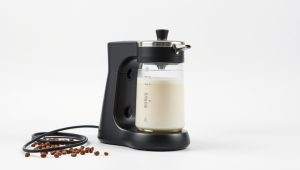
For one drink, look for a usable frothing capacity of at least 5 ounces. For two 8-ounce lattes, aim for approximately 10 to 12 ounces of usable capacity, or plan to make two batches. A pitcher around 10 ounces total is compact and suitable for a single cappuccino, while a 300-milliliter pitcher—about 10.1 fluid ounces—works best for one generously foamed drink rather than two full lattes.
Also measure the storage area. Compact automatic frothers commonly occupy roughly 6 to 8 inches in diameter and stand 7 to 10 inches tall, excluding lid clearance. Leave at least 2 inches above the appliance if the lid or whisk must be removed vertically. Handheld wands usually need only a drawer or cup for storage, but their charging stand can add 3 to 5 inches of counter width.
Material: Favor Easy Cleaning Over Decorative Finishes
The milk-contact surface matters more than the exterior color. Stainless steel is durable and resists odor retention, but it may hide residue and is often not dishwasher-safe. Glass makes fill levels visible and does not retain flavors easily, but it can break if placed in a sink or bumped against a faucet. Nonstick interiors release residue well, though aggressive scrubbing can damage the coating.
For plant milk, a smooth interior and removable whisk are especially valuable. Sugars and thickeners in barista-style beverages can form a sticky ring around the bottom. Avoid rough seams, exposed heating elements, and narrow crevices around the whisk mount. If a product lists a dishwasher-safe pitcher, confirm whether that applies to the lid, whisk, and gasket too; it often applies only to removable parts.
Food-contact components should be clearly identified as stainless steel, glass, or a food-safe polymer. Do not assume that a metal-looking finish means the interior is metal. A cool-touch exterior is useful, but it does not eliminate the need to handle a hot pitcher carefully.
Construction: Heating Control and Whisk Design Are Decisive
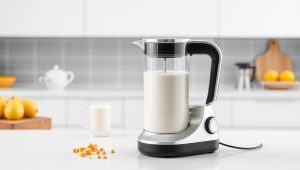
Automatic frothers generally use an induction or concealed heating base with a magnetic whisk. That design keeps the heating surface relatively smooth and makes cleanup easier than a visible coil. Look for an automatic shutoff, boil-dry protection, and a clear minimum-fill line. These are more important than an extra preset you may never use.
For plant milk, multiple temperature or program choices are helpful. A good basic arrangement includes hot foam, hot milk, and cold foam. Four-preset machines may add a denser foam or warming-only program, but the number of buttons does not guarantee better texture. The ability to stop before overheating is often more useful.
Handheld wands depend on motor speed and whisk geometry rather than heating. A practical wand should have a stainless-steel whisk, a protected shaft, and a speed that does not immediately splash liquid. Rechargeable models are convenient, but check whether charging takes 2 to 4 hours and how the wand is stored between uses. A replaceable or removable whisk is preferable to a sealed head that traps residue.
Comfort and Performance: Texture, Noise, and Control
Plant-milk foam should be judged by stability and mouthfeel, not just how high it rises. Soy and pea milk can create relatively firm foam. Oat milk usually produces a creamy, smooth texture, while almond milk may create larger bubbles that collapse quickly. Barista versions often perform more consistently because they contain added fat, protein, or stabilizers.
A handheld wand works best when the whisk is held just below the surface for 15 to 30 seconds, followed by a brief swirl deeper in the cup. Keep the liquid below the whisk head to reduce splashing. Automatic models typically take about 90 seconds to 3 minutes per cycle, depending on volume and temperature. Longer cycles are not necessarily better if the beverage becomes overheated.
Noise is rarely listed consistently, but a quiet kitchen appliance is generally preferable to one that produces a harsh, high-pitched motor sound. For a wand, prioritize a balanced grip, a power button that can be operated with one hand, and a shaft long enough to reach the bottom of your cup. For an automatic machine, a cool-touch handle and a spout that pours cleanly are practical performance features.
Price Tiers: Spend on Heating and Cleanup, Not Button Count
Budget: $8 to $25. This tier is dominated by handheld wands. The New England Stories Handheld Rechargeable Milk Frother Wand, listed at $7.97 as a reference example, illustrates the low entry price. Expect aeration rather than heating, basic controls, and more hands-on technique. This is the right choice if you already heat milk in a saucepan or microwave.
Midrange: $30 to $60. Automatic heated frothers typically add a pitcher, temperature control, and multiple modes. The SIMPLETASTE 4-in-1 models listed at $38.97 and $39.97 fall within this reference range. At this level, prioritize removable parts, a clear fill guide, and reliable shutoff over a fourth preset.
Premium: $65 to $100 or more. Higher-priced models may offer glass pitchers, better pouring control, quieter operation, stronger warranty coverage, or more refined heating programs. The Martha Stewart 10-ounce model, listed at $79.99 as a reference, shows how a glass pitcher and four presets can position a product in this tier. Premium pricing is worthwhile only if the construction and service support are genuinely better.
Warranty: Look for Coverage That Matches the Electronics
A heated frother contains a motor, control board, heating system, and sometimes a charging base, so warranty length matters more than it does for a simple whisk. One year is a reasonable minimum for an automatic model. Two years is preferable, particularly when the product costs $70 or more.
Read exclusions carefully. Warranties may cover the base but exclude the pitcher, whisk, coating, cosmetic damage, or problems caused by mineral buildup. Confirm whether the manufacturer provides a replacement pitcher or only repair service. Keep the receipt and product identification information; some claims require both.
For a rechargeable wand, check whether the battery is covered for the full warranty period. A warranty that excludes battery capacity loss may offer limited practical protection. Replacement whisk availability is another useful measure of long-term value.
Delivery and Assembly: Small Appliances Still Need a Setup Check
Most frothers require little assembly, but “ready to use” should still mean checking the whisk, lid, seal, charging cable, and power base. A removable whisk may arrive loose inside the package. Before the first use, wash all milk-contact parts according to the instructions and run a water-only cycle if the manufacturer recommends one.
When ordering online, inspect the box immediately. Glass pitchers need protective packaging, and a cracked pitcher should be reported before use. Check that the included voltage and plug match your home; do not use a travel adapter as a substitute for a compatible appliance. Allow at least 24 hours for a wet appliance or charging port to dry completely before connecting power.
Spec Checklist
| Spec | Budget | Mid | Premium |
|---|---|---|---|
| Typical price | $8–$25 | $30–$60 | $65–$100+ |
| Format | Handheld wand | Automatic heated frother | Automatic heated frother with refined controls |
| Typical power | About 2–5 watts | About 400–500 watts | About 400–600 watts |
| Useful capacity | Use your own cup | About 5–8 ounces of foam | About 5–10 ounces of foam |
| Programs | Manual control | Hot foam, hot milk, cold foam | Three to four programs or adjustable control |
| Best material target | Stainless whisk and shaft | Smooth nonstick or stainless interior | Glass or premium stainless interior |
| Warranty target | At least 90 days | At least 1 year | 1–2 years |
Red Flags
- No stated minimum or maximum fill line.
- A heated model with no automatic shutoff or boil-dry protection.
- “Dishwasher-safe” claims that do not specify which parts qualify.
- A very high wattage paired with no temperature information.
- A sealed whisk head that cannot be rinsed or removed.
- Unclear battery, voltage, warranty, or replacement-part information.
- Reviews describing scorching, plastic odors, leaking lids, or foam collapsing immediately.
- Capacity advertised as total pitcher volume when usable frothing capacity is not provided.
FAQ
What is the best milk frother for plant milk?
The best choice depends on the drink. Choose a handheld wand for low cost and occasional use. Choose an automatic heated model with hot-foam and cold-foam settings for daily lattes. A frother cannot compensate for every beverage formulation, so barista-style oat, soy, or pea milk is usually the easiest place to start.
Can I froth almond milk?
Yes, but results vary. Unsweetened almond milk is often thinner and less stable than soy or oat milk. Use it cold or warm rather than boiling, keep the fill level within the marked range, and expect a lighter foam. A handheld wand may produce better control than an automatic cycle if the almond beverage collapses quickly.
Is a handheld frother better than an automatic one?
Neither is universally better. A wand costs less, stores easily, and is simple to clean, but it does not heat milk and requires technique. An automatic frother heats and aerates in one cycle, making it more convenient for repeated drinks, but it costs more and needs careful cleaning after every use.
How do I clean a plant-milk frother?
Rinse the whisk, pitcher, lid, and sealing areas immediately after use. Use warm water and mild dish soap, then wipe away any film before it dries. Never immerse an electrical base unless the instructions specifically allow it. For stubborn residue, soak removable parts rather than scraping a nonstick surface with metal.
Ready to decide? Our #1 pick for 2026 is the Typical price.
Live price & availability on Amazon.