Last updated: September 12, 2026
The best gifts for a black coffee drinker improve the bean and the extraction, not the toppings. Prioritize a burr grinder, then fresh single-origin beans, a temperature-control gooseneck kettle, a scale with a timer, and a water filter. Skip flavored syrups, milk frothers and latte art kits — there is no milk to hide behind.
Quick answer: Our top pick in 2026 is the Pour-over (cone dripper) — our #1 rated choice. See the full ranked comparison, alternatives and buying advice below.
- Why Coffee Gifts for Someone Who Drinks It Black Follow Different Rules
- A Burr Grinder Is the Single Highest-Impact Gift
- Beans and Subscriptions: Buy Fresh, Not Fancy
- Brewers That Suit Black Coffee
- Kettle, Scale and the Unglamorous Gear That Changes the Cup
- Water Is the Most Overlooked Variable
- Mugs and Storage That Actually Do Something
- Gift, What It Improves, Who It Suits
- What to Skip
- Frequently Asked Questions
Why Coffee Gifts for Someone Who Drinks It Black Follow Different Rules
Milk and sugar are forgiving. They round off bitterness, mask staleness, and paper over an uneven grind. Take them away and the cup is naked: every flaw in the beans, the grind, the water and the timing shows up directly on the tongue. That single fact should drive every buying decision you make for this person.
It also explains why so much of the coffee gift aisle is useless to them. Syrup sampler sets, novelty frothing wands, latte art stencils and flavored pods are all built around adding something, and your recipient has already decided they want to taste the coffee. That narrows the field to six categories: grinding, beans, brewing, water, measurement and storage. Everything genuinely good you can buy sits in one of them, which also makes this easy shopping during the holiday rush — you are choosing on function, not guessing someone’s taste in mugs.
A Burr Grinder Is the Single Highest-Impact Gift
See also: Espresso Gifts for Someone With a Tiny Kitchen • 5 Best Coffee Scales for Beginners (2026)
If you buy one thing, buy a burr grinder. Blade grinders smash beans into a mix of dust and boulders; the dust over-extracts into bitterness while the boulders stay sour, and you taste both at once in the same sip. Burrs crush beans between two shaped surfaces at a set distance, so the particles come out roughly the same size and extract at roughly the same rate. That is the difference between “harsh” and “clean.”
Freshness matters just as much as uniformity. Ground coffee loses its aromatics within minutes because grinding multiplies the surface area exposed to air. Someone drinking it black will notice pre-ground coffee tasting flat and papery in a way a latte drinker never would. A grinder is what lets them buy whole beans and grind per brew, which is the biggest quality jump available for the money. If you want the full reasoning, our notes on choosing the right grind size for your brewer cover it in detail.
Hand Grinder vs Electric Grinder
Hand grinders win on price-to-quality: because there is no motor, the budget goes into the burrs, so a mid-priced manual grinder often out-grinds an electric one costing more. They are quiet, travel well, and suit someone brewing one or two cups a day. The cost is effort — roughly a minute of cranking per cup, and more for fine espresso grinds, which can genuinely annoy someone with wrist pain or a chaotic morning.
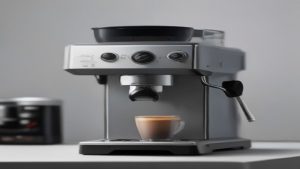
Electric grinders win on convenience. For a household brewing several cups, or anyone making espresso, the motor is worth it. Look for flat or conical steel burrs and a stepped or stepless adjustment collar, and avoid anything sold as a “grinder” that shows a spinning blade in the product photos. Skip a grinder only if they already own a good one or are committed to a capsule machine; for everyone else it is the safest expensive gift here.
Beans and Subscriptions: Buy Fresh, Not Fancy
Single-origin beans are the natural gift here because a single origin tastes of somewhere specific — the citrus and florals of a washed Ethiopian, the cocoa and nut of a Brazilian, the syrupy body of a Sumatran. Blends are engineered for consistency, but a gift is a chance to try something with a signature.
One rule outranks origin, roaster reputation and packaging: check the roast date. Look for a printed roast date, not a “best by” date twelve months out, and aim for beans roasted within the last few weeks. Coffee needs a few days off the roaster to degas, then drinks well for several weeks before flattening out. A prestigious bag roasted eight months ago is worse than an ordinary bag roasted last Tuesday.
Subscription boxes are a strong gift precisely because they solve freshness — the coffee is roasted to order and shipped on a cycle. Two cautions. First, match the volume to the drinker: a weekly 12 oz bag will pile up unopened for someone brewing one cup a day, which recreates the staleness problem you were avoiding. Second, check the roast profile. Many subscriptions skew light and fruity; if your recipient drinks dark, bitter-sweet coffee black, a box of delicate floral lots will not land. Most services let you set a preference at signup, and our guide to picking a coffee subscription that matches how you brew walks through the choices.
Brewers That Suit Black Coffee
Every brewer is really a different filter and contact-time combination, and each changes the cup predictably. Buy the one that matches how your person actually drinks, not the one with the best photos.
| Brewer | What it does to the cup | Effort per cup | Best for |
|---|---|---|---|
| Pour-over (cone dripper) | Paper filter traps oils and fines — clean, bright, tea-like; shows off acidity and origin character | Medium; needs a slow pour and some attention | Someone who likes light roasts and enjoys the ritual |
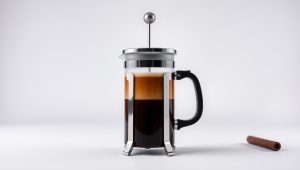
| French press | Metal mesh lets oils and fine particles through — heavy body, rounder, slightly muddy finish | Low; steep and plunge | Dark-roast drinkers and anyone brewing for two or more |
| AeroPress | Pressure plus short steep — concentrated, low bitterness, very forgiving of grind error | Low; fast and easy to clean | Travelers, office desks, beginners |
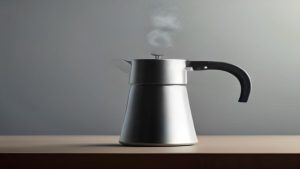
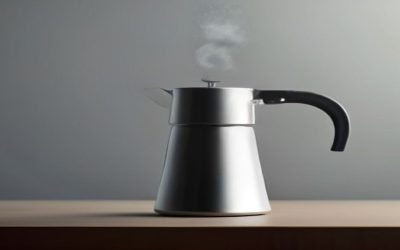
| Moka pot | Steam pressure through a fine bed — intense, syrupy, espresso-adjacent but not true espresso | Medium; stovetop attention required | Someone who wants strength in a small volume |
| Batch drip (quality auto brewer) | Consistent saturation and correct brew temperature — clean and repeatable | Very low; push a button | Households brewing a full carafe daily |
A pour-over setup is the most gift-friendly because the dripper itself is inexpensive and the upgrade path is long. A French press is the safest for someone who wants coffee without a procedure. An AeroPress is the best gift for a black coffee drinker who travels, and it is nearly impossible to ruin a cup with one. If they are interested in a stovetop route, compare it against how a moka pot differs from real espresso before you buy — the expectations gap is where disappointment comes from.
Kettle, Scale and the Unglamorous Gear That Changes the Cup
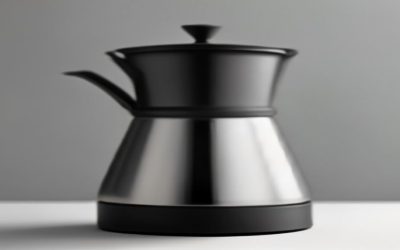
A gooseneck kettle with temperature control does two things. The narrow spout gives a slow, aimable stream so water lands evenly over the bed instead of blasting a channel through it, and the temperature setting lets them brew in the roughly 195–205°F band where extraction behaves. Boiling water straight off the stove scorches lighter roasts; water that has sat and cooled under-extracts and tastes sour. For pour-over especially, this is the second-biggest upgrade after the grinder.
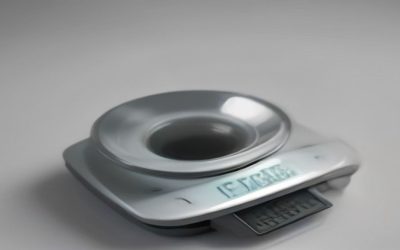
A scale with a built-in timer sounds fussy and is not. Scooping by volume is wildly inconsistent because bean density varies with roast level, so the same scoop can be a 15:1 ratio one week and 19:1 the next. Weighing coffee and water makes a good cup repeatable and a bad cup diagnosable; 0.1 g resolution and a timer on the same display is all that is needed. Our coffee-to-water ratio reference is a useful thing to tuck into the card.
Consumables make excellent stocking fillers because they are used constantly and rarely bought generously: a big box of the correct paper filters for their brewer, a reusable metal filter if they prefer more body, descaling solution, and cafe-grade cleaning powder for the parts that go brown and stay brown.
Water Is the Most Overlooked Variable
Brewed coffee is around 98–99% water, so the water is not a detail — it is the drink. Hard tap water leaves scale in kettles and machines and mutes the aromatics; heavily chlorinated water adds a flat chemical note you taste immediately in a black cup. A simple carbon filter pitcher, a faucet filter, or a set of replacement filters for the one they already own is a small, unglamorous gift that quietly improves every cup they make for a year. Distilled water is the opposite mistake: with no minerals at all, extraction suffers and the coffee tastes hollow. Filtered tap water is the target.
Mugs and Storage That Actually Do Something
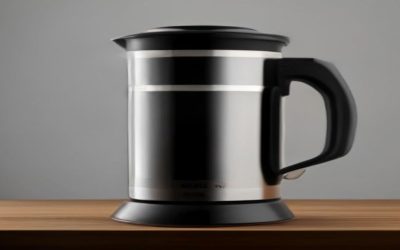
An insulated mug is a good gift only if it does not add flavor. Bare stainless can carry a faint metallic edge for sensitive palates; a ceramic-lined or fully ceramic interior avoids it entirely and cleans up better. Black coffee also goes bitter as it cools and re-oxidizes, so a vacuum mug that holds temperature for hours genuinely preserves the taste rather than just the heat.
For storage, the enemies are oxygen, light, heat and moisture. A canister with a one-way degassing valve lets CO₂ escape without letting air in, which is what you want for freshly roasted beans; an opaque, airtight, room-temperature container in a cupboard is the pragmatic version. The freezer is genuinely debated: freezing in small, fully sealed, single-use portions preserves beans well for long-term storage, while repeatedly opening one big bag in the freezer invites condensation, which is the worst outcome. The safe gift advice is a good airtight canister for working stock, and no freezer instructions attached. There is more in our notes on how to store coffee beans so they stay fresh.
Gift, What It Improves, Who It Suits
| Gift | What it improves | Who it suits |
|---|---|---|
| Burr grinder (hand or electric) | Particle consistency and freshness — the largest single quality jump | Anyone still using pre-ground or a blade grinder |
| Fresh single-origin beans | Flavor clarity and origin character | Curious drinkers; check roast date and roast level |
| Roast-to-order subscription | Ongoing freshness without thinking about it | Steady daily drinkers; match bag size to consumption |
| Pour-over, French press or AeroPress | Control over body, clarity and strength | Matches to taste; see the brewer table above |
| Temperature-control gooseneck kettle | Even saturation and correct brew temperature | Pour-over brewers above all |
| Scale with timer | Repeatability — turns luck into a recipe | Anyone who wants the same good cup twice |
| Filters and cleaning supplies | Removes stale oils and off-flavors | Everyone; ideal small gift or add-on |
| Ceramic-lined insulated mug | Holds temperature without adding metallic taste | Commuters and slow sippers |
| Valve canister or airtight storage | Slows staling from oxygen and light | Anyone buying beans in 12 oz bags |
| Water filter or filter refills | The base of the drink; removes chlorine and scale | Hard-water or chlorinated-tap households |
What to Skip
Flavored syrups, milk frothers, latte art kits, whipped-cream chargers and flavored pod variety packs all assume a drink your recipient does not make. So do most “coffee lover” novelty bundles, which pad the box with mugs and chocolate. Be careful with anything that locks them into a proprietary capsule; it removes the grinder and bean choices that matter most here. And unless you know their machine, skip espresso accessories — tampers, portafilter baskets and distribution tools are all size-specific, and the wrong diameter is unusable. If the person you are shopping for is short on counter space, our small-kitchen espresso gift picks handle that constraint separately.
One honest note on price: spending more does not linearly buy more here. A good hand grinder and a bag of properly fresh beans beat an expensive automatic machine fed stale pre-ground coffee, every time. If you are shopping the holiday sales, the grinder is the item worth waiting for a discount on; beans should be bought at the last possible moment so they arrive fresh, and a gift card to a named local roaster does that job well. Pair either with our step-by-step pour-over method and the gift teaches something too.
Frequently Asked Questions
What is the best gift for someone who drinks coffee black?
A burr grinder, in almost every case. Without milk or sugar to mask defects, uneven particle size and stale pre-ground coffee are the two flaws that show up most obviously in the cup. A grinder fixes both at once by letting them buy whole beans and grind fresh for each brew, and a good hand grinder costs far less than an electric one of equal grind quality.
Are coffee subscription boxes a good gift for a black coffee drinker?
Yes, with two adjustments. Choose a roaster that ships roasted to order, so freshness is built in rather than left to shelf life. Then match both the volume and the roast profile to the person: a weekly bag overwhelms a one-cup-a-day drinker and the coffee goes stale, and a service that only sends light, fruity lots will disappoint someone who drinks dark roast black.
Hand grinder or electric grinder as a gift?
Hand grinders put your whole budget into the burrs, so they deliver better grind quality per dollar and suit someone brewing one or two cups daily. Electric grinders are worth it for households brewing several cups, for espresso, or for anyone with wrist or grip issues who would find a minute of cranking every morning a reason to stop using the gift altogether.
Which brewer should I buy for someone who drinks their coffee black?
Match the brewer to the flavor they already like. A paper-filter pour-over gives a clean, bright cup that flatters light roasts. A French press passes oils through for a heavier, rounder body that suits dark roasts. An AeroPress is concentrated, forgiving of grind mistakes and ideal for travel, while a moka pot delivers intense, small-volume coffee that is espresso-adjacent rather than true espresso.
Should coffee beans be stored in the freezer?
For daily use, no. Keep working stock in an opaque, airtight container at room temperature, ideally one with a one-way valve for freshly roasted beans. Freezing works only for long-term storage in small, fully sealed single-use portions that are never reopened and refrozen, because repeatedly opening a bag in the freezer causes condensation and moisture damages beans faster than air alone.
Ready to decide? Our #1 pick for 2026 is the Pour-over (cone dripper).
Live price & availability on Amazon.