Last updated: September 12, 2026
The best espresso gift for a tiny kitchen is a hand grinder — it fits in a drawer, costs less than a machine, and improves every brew method they already own. After that, choose by footprint: a manual lever press, a moka pot, or one of the few genuinely narrow semi-automatic machines.
The hard part of shopping for a small-kitchen coffee person isn’t the budget. It’s that the gift has to earn a permanent rectangle of counter, and in a galley kitchen or a studio apartment that rectangle is already spoken for by a toaster and a dish rack. Everything below is sorted by how much space it actually takes, not by price.
Quick answer: Our top pick in 2026 is the Hand grinder (1Zpresso / Timemore class) — our #1 rated choice. See the full ranked comparison, alternatives and buying advice below.
- Espresso Gifts for Someone With a Tiny Kitchen: The Short List
- The Four Measurements That Actually Decide Fit
- Gifts by Footprint, Smallest First
- Footprint Comparison
- Counter Space Available → Best Pick
- Accessories That Earn Their Space
- What to Avoid
- How to Buy This Gift Without Guessing
- Frequently Asked Questions
Espresso Gifts for Someone With a Tiny Kitchen: The Short List
If you want the quick version: a quality hand grinder is the safest gift in this entire category, a manual lever press is the most fun, and if they specifically want a plug-in machine, the narrow single-boiler models are the only ones worth considering. Compact semi-automatics below are the machines built around a small counter rather than in spite of it.
The Four Measurements That Actually Decide Fit
See also: Coffee Gifts for Someone Who Drinks It Black • 5 Best Coffee Scales for Beginners (2026)
Manufacturer spec sheets lie by omission. They list the box, not the working envelope. Before you buy anything, have the recipient measure — or measure yourself, discreetly, next time you’re over — these four numbers.
1. Width at the widest point
Usually the drip tray or the body. This is the easiest number and the one most people check. Add at least an inch on each side so they can actually grip the machine to clean around it.
2. Depth with the portafilter swung out
This is the number that ruins purchases. A machine listed at 12 inches deep needs roughly 4–5 more inches in front of it while the portafilter handle is rotated out of the group head. If the counter is 16 inches deep and the machine is pushed to the back wall, the handle will hit the person standing at it.
3. Height under a wall cabinet, with the lid open
Standard US wall cabinets sit about 18 inches above the counter. A 13-inch machine fits — until you flip open the water tank lid or the bean hopper, which can add 4–6 inches. Grinders are the worst offenders here; a hopper-fed electric grinder can be 14 inches tall closed and unusable under a cabinet.
4. Whether it has to be pulled out to fill the tank
Rear-fill water tanks are the quiet dealbreaker of small-kitchen espresso. If the tank lifts out of the back, the machine gets dragged forward and shoved back every single morning, which scratches the counter and eventually loosens things. Front- or top-fill tanks, or a removable tank on the side, are worth paying extra for.
Gifts by Footprint, Smallest First
Hand grinders (the best small-kitchen gift, full stop)
A stainless-burr hand grinder like a Timemore C3, a 1Zpresso J-series, or a Comandante C40 is roughly 2 inches in diameter and 6–7 inches tall. It lives in a drawer. It uses no outlet, makes no noise at 6 a.m. in a studio apartment, and it upgrades espresso, moka pot, and pour-over simultaneously. The trade-off is 30–60 seconds of cranking per dose, which is real effort at espresso fineness. Skip it only if the recipient has wrist or grip issues — in that case an ultra-narrow electric like a Baratza Encore ESP or a Eureka Mignon (both about 4.7 inches wide) is the better call, but check that cabinet height. See our breakdown of hand grinder versus electric grinder trade-offs before deciding.
Moka pots
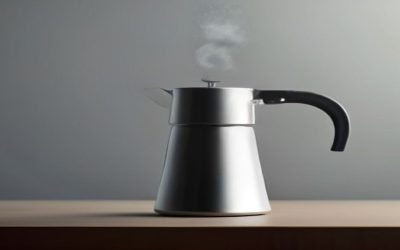
A three-cup Bialetti Moka Express is about 4 inches across and 7 inches tall, and it lives in a cabinet between uses. Zero permanent counter cost. It doesn’t make true espresso — no crema, lower pressure — but it makes a strong, syrupy shot that works beautifully in milk drinks. It’s the right gift for someone who says “I just want something stronger than drip” and hasn’t asked for a machine. Pair it with our guide to getting a moka pot right so their first attempt isn’t bitter.
AeroPress-style presses
An AeroPress is roughly 5 inches tall and 4 inches wide, dismantles, and stores inside a mug. It’s not espresso either, but a fine-ground, short AeroPress shot is close enough for milk drinks and far more forgiving than a lever. The AeroPress Go version packs into its own cup and is a good gift for someone whose kitchen is also their office. Our notes on pulling espresso-style shots with an AeroPress cover the ratios.
Manual lever and hand-pump makers
This is the category built for exactly this problem. A Flair Neo or Flair 58 breaks down into a case after use, so the counter cost is zero between shots. A Cafelat Robot is about 12 inches tall with a base under 6 inches wide, but needs roughly 18–20 inches of clear width while the arms are down — measure the swing, not the base. A Wacaco Picopresso is hand-held and drawer-sized. All of them make genuinely excellent espresso, all of them need a good grinder, and none of them steam milk. Give a lever to someone who drinks straight espresso, not lattes.
The smallest genuinely good semi-automatics
If a plug-in machine is the ask, three shapes matter. The De’Longhi Dedica is about 5.9 inches wide — the narrowest credible espresso machine sold — though it’s around 13 inches deep, so it trades width for depth. The Breville Bambino is roughly 7.7 inches wide, 12.6 deep, 12.2 tall, heats in seconds, and steams milk properly; its tank is rear-mounted, so check clearance behind it. The Gaggia Classic Evo Pro is around 9.5 inches wide and takes standard 58mm accessories, which makes it the best long-term platform if the counter can take it. If the budget is the real constraint too, compare against our roundup of machines worth buying under $500.
Footprint Comparison
| Gift | Approx. W × D × H (in) | Working clearance needed | Stores away? | Steams milk? |
|---|---|---|---|---|
| Hand grinder (1Zpresso / Timemore class) | 2 × 2 × 6.5 | None | Yes — drawer | n/a |
| AeroPress Original | 4 × 4 × 5 | Minimal | Yes — inside a mug | No |
| Moka pot, 3-cup | 4 × 6 × 7 | One burner | Yes — cabinet | No |
| Wacaco Picopresso | 3 × 3 × 7 | Hand-held | Yes — drawer | No |
| Flair Neo / Flair 58 | 6 × 12 × 13.5 | Overhead room to press down | Yes — case | No |
| Cafelat Robot | 6 × 12 × 12.6 | ~18–20 in wide for arm swing | Partly | No |
| De’Longhi Dedica | 5.9 × 13 × 12 | +4 in front for portafilter | No | Yes (wand) |
| Breville Bambino | 7.7 × 12.6 × 12.2 | +4 in front, rear tank access | No | Yes |
| Gaggia Classic Evo Pro | 9.5 × 8 × 14.2 | +5 in front, top-fill tank | No | Yes |
| Compact electric grinder (Encore ESP / Mignon class) | 4.7 × 6.3 × 13.8 | Cabinet clearance for hopper lid | No | n/a |
Treat these as approximate manufacturer figures. Revisions change, and drip trays and feet vary. Measure the actual counter before you commit, and when in doubt round the machine up an inch in every direction.
Counter Space Available → Best Pick
| Free counter space | Best gift | Why |
|---|---|---|
| None — drawer only | Hand grinder, or AeroPress Go | Zero permanent footprint, improves whatever they already brew |
| A burner and a cabinet shelf | Moka pot + hand grinder | Strong coffee, nothing stays out, very low risk gift |
| ~8 in that must be cleared after use | Flair or Cafelat Robot | Real espresso, packs into a case between shots |
| 6–8 in permanent, shallow counter | De’Longhi Dedica | Narrowest real machine; needs depth, not width |
| 8–10 in permanent, low cabinets | Breville Bambino | Short, fast heat-up, proper steam wand |
| 10+ in permanent | Gaggia Classic Evo Pro + compact grinder | 58mm standard means years of upgrades |
Accessories That Earn Their Space
Small accessories are the underrated half of this gift category, because they solve the space problem instead of adding to it.
- A small scale. A 4 × 4-inch pocket scale that fits under the drip tray beats a kitchen scale that has to live in a cupboard. Espresso needs 0.1 g resolution; a Timemore Nano-class scale or similar is the right size. More on dosing in our espresso scale and dosing notes.
- A tamper that stores in a drawer. Skip tall wooden-handled showpieces and heavy tamping stands. A short palm tamper, correctly sized to the basket, drops into a utensil drawer. Getting the diameter right matters more than the looks — see how to match tamper size to the basket.
- A knock box that doubles as storage. A 5-inch knock box holds pucks during the week and a portafilter, a brush, and spare baskets the rest of the time. It replaces a drawer rather than filling one.
- A slim bottomless portafilter or precision basket for anyone with a 58mm machine — pure upgrade, no footprint at all.
- A wall-mount or magnetic rack for cups and tools. Vertical space is the one dimension a tiny kitchen usually has spare.
What to Avoid
Two categories cause the most returns. Bulky super-automatics — bean-to-cup machines with internal grinders and milk carafes — are typically 10–15 inches wide, 17–18 inches deep, and 14+ inches tall, and they need pull-out access for the tank, the bean hopper, the drip tray and the grounds bin. They are wonderful machines in a big kitchen and a daily irritation in a small one.
Large bean hoppers are the second trap. A grinder with a 10-ounce hopper is tall, has to be opened upward under a cabinet, and holds beans in a place where they go stale anyway. Single-dose grinders are shorter, fresher, and fit under cabinets. Also skip oversized milk frothing pitchers, pod machines for someone who grinds their own, and anything with a footprint that assumes an island. If they’re inheriting an older machine instead, our maintenance and descaling routine is a better gift than more hardware.
How to Buy This Gift Without Guessing
Ask one question in passing: “where would you even put a coffee thing?” The answer tells you whether you’re shopping for a drawer, a burner, or a permanent slab of counter — and that single fact narrows this list to two or three options. If you can’t ask without spoiling the surprise, default to the hand grinder; it’s useful in every scenario above and nobody with a coffee habit owns too many.
During the holidays, the compact machines and the popular hand grinders are the ones that go out of stock first, so it’s worth deciding early even if you buy later. Outside of gift season, the same logic holds year-round for housewarmings, first apartments, and dorm-adjacent kitchens, where the space constraint is even tighter. Whatever you pick, include the receipt and a note with the dimensions — a gift that doesn’t fit is only a problem if it can’t go back. For a starting point on the machines themselves, our manual lever espresso overview covers what a lever can and can’t do.
Frequently Asked Questions
What is the smallest espresso machine that still makes good espresso?
Among plug-in machines, the De’Longhi Dedica at roughly 5.9 inches wide is the narrowest credible option, though it’s about 13 inches deep so it trades width for depth. If total footprint matters more than width alone, a manual lever like a Flair packs into a case after every use, which makes its long-term counter cost effectively zero.
Is a hand grinder really better than an electric one for a small kitchen?
For space, yes — a hand grinder is drawer-sized and needs no outlet, while even a slim electric grinder occupies about 5 by 6 inches permanently and may not clear a wall cabinet with the hopper lid open. The trade-off is 30 to 60 seconds of cranking per espresso dose. If the recipient has grip or wrist problems, choose a narrow single-dose electric instead.
How much counter depth does an espresso machine actually need?
Add four to five inches to the listed depth for portafilter clearance, because the handle swings out toward the person using it. A machine listed at 12.6 inches deep realistically wants 17 inches of usable counter. Also check whether the water tank lifts out of the back, since a rear-fill tank means dragging the machine forward every day.
Is a moka pot a good gift for someone who wanted an espresso machine?
It’s a good gift for someone who wanted stronger coffee, not for someone specifically set on crema and milk drinks. A moka pot brews at far lower pressure than an espresso machine, so the result is concentrated and syrupy rather than true espresso. It costs almost nothing in space, stores in a cabinet, and works well as a milk-drink base.
What should I avoid buying for a tiny-kitchen coffee setup?
Avoid super-automatic bean-to-cup machines, which typically run 10 to 15 inches wide and nearly 18 inches deep and need pull-out access on multiple sides. Also avoid grinders with tall bean hoppers, which rarely clear standard wall cabinets when opened, oversized tamping stations, and any accessory that assumes the kitchen has an island or a spare drawer.
Ready to decide? Our #1 pick for 2026 is the Hand grinder (1Zpresso / Timemore class).
Live price & availability on Amazon.