Last updated: October 2, 2026
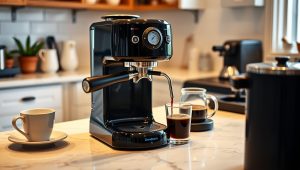
Quick answer: Our top pick in 2026 is the Bambino (BES450) — our #1 rated choice. See the full ranked comparison, alternatives and buying advice below.
What “small” actually means for Breville
Breville makes a lot of machines that look compact in photos but aren’t once you add a grinder, knock box, and room to actually use the portafilter. When people say “small Breville” they usually mean one thing: narrow width and shallow depth without needing to plumb anything in. That narrows it to three machines worth considering – the Bambino, the Bambino Plus, and if you want a grinder built in, the Barista Express. The Barista Express is wider, but it is still small compared to a separate grinder + machine setup.
If counter space is your main constraint, you want to measure three things before you buy: width, depth with the drip tray and portafilter inserted, and height under your cabinets with the hopper or tank lid open. The Bambino family wins on all three. They are roughly 7.5 inches wide and under 13 inches deep, which lets them sit between a toaster and a wall where a Barista Express won’t fit.
The small Breville options worth buying
See also: Breville Bench Saver • Rocket Espresso Coffee Machine
There are older compact models like the Infuser and the Duo-Temp that still show up in searches. They are fine machines but they take up more counter than a Bambino and heat up slower. For most small kitchens today, the decision is between the two Bambinos unless you absolutely need an all-in-one.
| Model | Footprint (approx.) | Heat System | Grinder Included | Best For |
|---|---|---|---|---|
| Bambino (BES450) | 7.7″ W x 12.6″ D | ThermoJet, ~3 sec heat-up | No | Tightest spaces, lowest price, paired with own grinder |
| Bambino Plus (BES500) | 7.7″ W x 12.6″ D | ThermoJet, ~3 sec heat-up | No | Hands-free milk, beginners who make lattes daily |
| Barista Express (BES870) | 13.5″ W x 13.7″ D | Thermocoil with PID | Yes, conical burr | One-machine setup where width is less critical than total clutter |
The Bambino and Bambino Plus use the same ThermoJet thermoblock and the same 54mm portafilter system. Shot quality is essentially identical. The difference is workflow and steaming, not espresso in the cup.
Bambino vs Bambino Plus: the real differences
The base Bambino is the smallest and cheapest way into proper Breville espresso. You get fast heat-up, PID temperature control with three settings, auto-purge after steaming, and a 47 oz water tank in the back. The steam wand is manual. It is a single-hole tip that is surprisingly capable once you learn to find the angle, but it requires you to texture milk yourself and stop it yourself.
The Bambino Plus adds two things that matter in a small kitchen: an auto-steam system with three temperature levels and three texture levels, and a slightly larger 64 oz tank. You can still steam manually if you want, but the auto mode is what people pay for. Put the jug on the temperature sensor, press a button, walk away to wipe the counter, and it stops on its own. For morning lattes when you are half-awake, that is a real help.
Trade-offs are straightforward. The Bambino is about $100-$130 less and does the same core job. If you are comfortable learning to steam or you already have a good milk technique, save the money. If you make milk drinks for two people every day or you know you won’t practice steaming, the Plus is worth it. Don’t pay extra for the Plus expecting better espresso – you won’t get it.
Both machines come with pressurized (dual-wall) and non-pressurized (single-wall) baskets. Use the dual-wall if you are using pre-ground or inconsistent grinds. Switch to single-wall once you have a grinder that can dial in finely. A Breville Bambino espresso machine without a capable grinder will frustrate you regardless of which version you pick. Budget for the grinder first.
When the Barista Express still makes sense in a small kitchen
The Barista Express is not small in width, but it is small in total footprint if you count what it replaces. It puts a grinder, PID-controlled brew head, and steam wand in one case. You don’t need a separate grinder, mat, and extra cable management. For apartments where “small” means fewer separate objects rather than narrowest possible width, that can be the tidier option.
The built-in grinder is adequate but not exceptional. It is stepped, a bit clumpy at fine settings, and loud. It will make good espresso with fresh beans in the medium roast range, but light roasts and very fine dialing will expose its limits. The machine also uses a larger 67 oz tank and a heavier stainless body, so it feels more planted when you lock in the portafilter.
Buy the Barista Express if you want one purchase that works out of the box and you have 14 inches of width to spare. Skip it if you already own a good standalone grinder like a Eureka Mignon or Baratza Sette – you will get better grind quality and keep the narrower Bambino footprint. A separate espresso grinder for 54mm Breville paired with a Bambino will outperform the built-in grinder and is easier to upgrade later without replacing the whole machine.
Daily trade-offs and failure modes to expect
Small Brevilles heat up fast, but they pay for it in temperature stability. The ThermoJet gets to brew temp in three seconds, which is great for a quick shot before work. Under back-to-back shots, though, the small thermoblock can drift. If you pull three shots in a row for guests, let the machine recover 30-45 seconds between them or your third shot will run hotter and more bitter.
The 54mm portafilter is lighter and has less thermal mass than 58mm commercial groups. You need to run a blank shot to heat the group and portafilter, especially in a cold kitchen. Skip that and your first shot will taste sour even with the right grind. It is a 10-second habit that fixes a lot of complaints.
Water tank placement is the other daily annoyance. On both Bambinos the tank is at the rear. If you push the machine under low cabinets, refilling means sliding it out. The larger tank on the Plus helps – you refill less often. The Barista Express tank pulls out from the front, which is easier in tight spots.
Long-term reliability: the most common issues are not pump failure but scale buildup and steam valve wear. These machines have small boilers/blocks that scale quickly with hard water. Use filtered water, not distilled, and descale only with Breville’s recommended solution and cycle. Over-descaling with vinegar or aggressive citric acid damages the internal sensors. The Bambino’s three-way solenoid will also clog if you never backflush or wipe the shower screen. A quick wipe after each shot and a water backflush every week prevents that sour, blocked-drain flavor that people mistake for bad beans.
Vibration is another small-machine quirk. Because the case is light, the Bambino can walk a little when the pump runs at 9 bars, especially with a very fine grind that chokes the shot. Put a thin rubber mat under it and don’t overtamp to compensate for a coarse grind. Fix the grind, not the tamp.
What to buy for your actual space
If your counter is under 24 inches wide total: get the base Bambino and a compact grinder. You will have room to work. The cheaper option is genuinely fine here – the Plus doesn’t give you extra space, just auto milk.
If you make two milk drinks every morning and hate fussing with a jug: get the Bambino Plus. The auto-steam and larger tank save real time. Pair it with a small footprint grinder that doses directly into the portafilter to keep the workflow tight.
If you want the fewest boxes and cables and you have at least 14 inches of width: a Breville Barista Express for small kitchens is the simpler, neater setup even though the case itself is wider. It is often cheaper than Bambino Plus plus a decent grinder, but remember you are locked into its grinder quality.
Skip any small Breville if you mainly drink drip or large mugs of light-roast coffee. These are espresso machines first. For big mugs, a compact drip maker or a small Breville with a drip option like the Precision Brewer will make you happier than trying to make Americanos all day on a Bambino.
FAQ
Is the Bambino too small to make good espresso?
No. It uses the same brew logic and PID control as larger Brevilles and can pull excellent shots with fresh beans and a capable grinder. The small size affects workflow and temperature stability under heavy use, not single-shot quality.
Do I need a separate grinder for a small Breville?
Yes for the Bambino and Bambino Plus – they have no grinder. A good espresso-capable burr grinder is required for the non-pressurized baskets. For the Barista Express, you don’t need one, but a standalone grinder will give you finer control and better consistency if you can make space for it.
Will a Bambino fit under standard kitchen cabinets?
Usually yes. It is about 12 inches tall with the hopper closed, but leave 2-3 inches above to remove the water tank lid and add beans to your grinder. If your cabinets are very low, measure with the portafilter locked in and the tank pulled slightly out.
How often do small Brevilles need descaling?
With filtered tap water, every 2-3 months with normal use. With hard water, monthly is common and the machine will prompt you. Use soft filtered water to reduce scale, and follow Breville’s descale cycle exactly rather than using homemade solutions.
Ready to decide? Our #1 pick for 2026 is the Bambino (BES450).
Live price & availability on Amazon.