Last updated: October 2, 2026
If you want to learn espresso without turning every morning into a project, start with the grinder and the kind of coffee you’ll make—not a long list of machine features. A beginner-friendly setup should make it possible to pull a decent shot, recover from mistakes, and fit your counter space and budget.
For most first-time buyers, a semi-automatic machine with a pressurized basket is the easiest place to start. It’s forgiving of pre-ground coffee and inconsistent grinding. If you know you’ll enjoy weighing, grinding, and adjusting shots, a standard basket and a capable burr grinder offer more control—but also more ways to get a sour, weak, or slow shot while you learn.
Quick answer: For most people in 2026, the best espresso maker for beginners is the Pressurized-basket semi-automatic — our #1 rated choice. See the full ranked comparison, alternatives and buying advice below.
Choose the setup that matches your routine
| Setup | What you gain | Main trade-off | Best for |
|---|---|---|---|
| Pressurized-basket semi-automatic | Forgiving shots with pre-ground coffee or a basic grinder | Less control over flavor and crema | Beginners who want espresso-style drinks without dialing in |
| Standard-basket semi-automatic plus burr grinder | More control over extraction and fresh beans | Higher cost and a learning curve | People who enjoy adjusting grind and dose |
| Automatic or super-automatic machine | Convenience and fewer manual steps | More complex cleaning; milk systems can need frequent care | Households prioritizing speed and consistency |
| Stovetop or pod coffee maker | Lower cost, compact storage, simpler routine | Does not make espresso in the same way as a pump machine | People who mainly want strong coffee or minimal setup |
Best starting point: a forgiving semi-automatic
See also: Breville Bench Saver • Rocket Espresso Coffee Machine
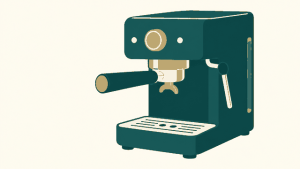
A pump machine with a pressurized basket is a practical choice if you’re not ready to buy a separate espresso grinder. The basket helps build pressure even when the coffee grind is less precise, so it’s less likely to produce a disappointing shot than a standard basket paired with a weak grinder. Look for a machine sold with both basket types if you want room to improve later.
The compromise is that pressurized baskets can make shots taste more uniform and less nuanced. They also produce foam that can look like crema without telling you much about extraction quality. That’s fine if your usual order is a latte or cappuccino; milk softens small flaws, and the basket keeps the routine accessible. For this kind of setup, browse beginner semi-automatic machines with pressurized baskets.
Don’t assume a machine advertised as “15 bar” or “20 bar” will make better espresso than one with a lower number. That figure is often the pump’s maximum pressure, not a useful measure of the quality in your cup. Pay more attention to basket options, cleaning access, warranty, and whether the machine has enough clearance for your cups.
When a grinder is worth the extra cost
For standard-basket espresso, grind size is one of the main controls you have. Coffee ground too coarse can run quickly and taste thin or sour; coffee ground too fine can choke the machine or dribble out bitterly. A grinder designed for espresso makes small adjustments more reliably than a basic blade grinder or many inexpensive all-purpose grinders.
If you’ll use a standard basket, set aside money for an espresso-capable burr grinder rather than spending your entire budget on the machine. Search for burr grinders with fine espresso adjustments, and check that reviews discuss espresso rather than only drip coffee. A grinder that can’t grind finely or adjust in small increments is a common reason a beginner’s shots run too fast, even with a capable machine.
A good grinder isn’t compulsory if you’re happy with pressurized baskets, pre-ground coffee, or milk drinks. It’s also reasonable to start with a simpler setup and upgrade only if you find yourself wanting more control. Fresh beans help, but they can’t make up for a grinder that cannot produce a suitable grind.
Automatic convenience or hands-on control?
Super-automatic machines grind and brew at the touch of a button, which suits busy mornings or a shared kitchen where nobody wants to learn espresso technique. Their drawbacks are price, less hands-on control, and maintenance. Grounds containers, brew groups, drip trays, and milk circuits all need regular cleaning; skipped upkeep can lead to stale flavors, clogs, or milk residue. If you want a one-touch routine, compare one-touch super-automatic espresso machines and check how the brew group and milk system are cleaned.
A semi-automatic machine asks you to grind or dose, start the shot, and steam milk yourself. That takes practice, but it gives you more control and can be easier to troubleshoot: if a shot is too fast, you can adjust the grind or dose instead of relying on preset settings. Choose it if the process sounds enjoyable, not because manual work is automatically better.
Don’t overlook milk, cleanup, and counter space
If you drink milk-based coffee, check whether you want a steam wand or an automatic milk system. A steam wand takes practice and needs wiping and purging after use, but it gives you control over milk texture. Automatic systems are easier at first, though their tubes and containers need careful cleaning. A machine without a built-in grinder also needs room for a grinder, beans, and a knock box or grounds bin.
Before buying, measure the machine’s height with the water tank or hopper in place, and check whether you can remove the tank under your cabinets. Think about warm-up time, too: a machine that takes longer to heat may be inconvenient if you make one coffee and leave. Regularly rinse baskets and wipe the group area; neglected coffee oils can make even fresh beans taste stale.
FAQ
Can I make espresso without buying a grinder?
Yes. A pressurized basket can work with pre-ground coffee, though the results are less adjustable than with freshly ground coffee and a standard basket.
Is a more expensive machine easier for beginners?
Not necessarily. Extra controls can add complexity, and a better machine won’t compensate for an unsuitable grind. Choose features you’ll use and budget for the grinder if you want standard-basket espresso.
Are pod machines a bad choice?
No. They suit people who value speed, consistent portions, and easy cleanup. The trade-offs are ongoing pod costs, less control, and fewer choices than buying whole beans.
What should I do if espresso runs too fast?
With a standard basket, try a finer grind and keep the dose consistent. With a pressurized basket, check the basket and machine instructions, and avoid packing it beyond its recommended fill. Change one thing at a time so you can tell what helped.
Ready to decide? Our #1 pick for 2026 is the Pressurized-basket semi-automatic.
Live price & availability on Amazon.