Last updated: September 18, 2026
Most espresso-machine warranty mistakes happen before checkout. Buyers see “one-year warranty,” assume the machine is protected, and only later discover that the steam wand, grinder, seals, shipping damage, or labor costs are excluded. Others overpay for a long warranty on a low-cost machine whose replacement cost is barely higher than the repair bill.
The right warranty is not simply the longest one. It should match the machine’s price, complexity, expected workload, and the brand’s ability to provide parts and service. A compact $90 steam espresso maker and a $700 grinder-equipped semi-automatic have very different repair risks. In 2026, it pays to read the warranty before purchasing—not after a pump stops building pressure or a grinder begins making unusual noises.
As an Amazon Associate we earn from qualifying purchases at no extra cost to you. Product prices and availability are accurate as of the date shown and are subject to change.



Decide These 3 Things First
- How often will you use it? A machine making 2 drinks per day faces roughly 700 brewing cycles annually. A household making 6 drinks per day can reach more than 2,000 cycles per year. Heavier use makes pump, grinder, steam-wand, and gasket coverage more important.
- What type of machine are you buying? Simple capsule and steam machines have fewer moving parts. Pump-driven machines add solenoids, boilers or thermoblocks, and pressure systems. Semi-automatic machines with built-in grinders introduce another expensive wear-prone component.
- Would you repair or replace it? For a $90 to $150 compact machine, a $60 to $120 out-of-warranty repair may not make financial sense. For a $500 to $1,000 machine, access to authorized service, replacement parts, and labor coverage can be a major purchase factor.
Size and Countertop Fit
See also: How to Replace Espresso Machine Water Filter (2026): Step-by-Step • How to Adjust Espresso Machine Brew Temperature (2026): Step-by-Step
Warranty service can be inconvenient when a machine is bulky, heavy, or difficult to pack safely. Before buying, measure both the counter footprint and the clearance needed to remove the water tank, fill beans, and operate the steam wand.
Compact espresso machines commonly measure about 5 to 8 inches wide, 11 to 14 inches deep, and 11 to 14 inches tall. They typically weigh 7 to 12 pounds. A slim model such as the CHULUX-style compact format may be easier to ship if warranty service requires mailing the unit, but compact dimensions can mean smaller water tanks, often 30 to 45 ounces.
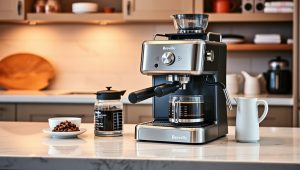
Mid-size machines are often 10 to 13 inches wide, 12 to 16 inches deep, and 13 to 16 inches tall, with 45- to 67-ounce water tanks. Machines with integrated grinders, including Barista Express-style designs, can be approximately 12 to 13 inches wide, 12 to 14 inches deep, and 15 to 16 inches tall. Their 20- to 25-pound weight affects warranty logistics: confirm whether the manufacturer supplies a prepaid shipping label or expects you to pay freight.
Allow at least 3 inches behind the machine for cords and ventilation, plus enough top clearance to lift off a tank or pour beans into a hopper. If the warranty requires shipment in original packaging, keep the box and foam inserts for at least the full coverage period.
Materials and Parts That Affect Coverage
Stainless-steel exterior panels look durable, but the more important materials are inside the machine. Many machines in the $90 to $200 range use stainless steel on the housing while relying on plastic internal fittings, aluminum thermoblocks, silicone seals, and plastic water tanks. That is not automatically a problem, but it is worth knowing what the warranty considers a covered defect versus normal wear.
Look closely at coverage for these components:
- Pump: Usually a 15- to 20-bar rated vibration pump in home machines. Marketing pressure ratings do not guarantee better espresso, but a failed pump is a meaningful repair.
- Heating system: Thermoblocks heat quickly and are common below $300. Boiler-equipped machines may cost more to repair but can offer stronger steam performance.
- Steam wand and valves: Milk residue and scale can cause problems, so some brands may classify clogs as maintenance issues rather than warranty claims.
- Portafilter and baskets: These are often replaceable accessories. Check whether handles, basket coatings, and pressurized basket components are covered.
- Built-in grinder: Burrs, motors, adjustment mechanisms, and bean hoppers deserve explicit attention on machines priced above $500.
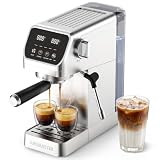
Aromaster-style stainless machines around $110 may offer an appealing metal finish, but buyers should verify whether the warranty covers the internal pump and heating system, not just manufacturing defects in the exterior. For any machine, descale according to the manual. Mineral buildup is among the most common reasons a warranty claim can be denied.
Construction and Repairability
A warranty has more value when the machine can actually be repaired. Some entry-level makers are treated as replace-only products: if they fail during the coverage period, the manufacturer may send a replacement unit rather than repair the original. That can be perfectly reasonable for a $90 to $150 machine, provided the process is straightforward.
For machines costing $400 or more, look for a brand with authorized service options, replacement filters, gaskets, drip trays, water tanks, portafilters, and grinder components available after the warranty ends. A machine that lasts 5 to 10 years often depends on inexpensive maintenance parts, such as a $5 to $20 gasket or a $15 to $40 water tank, rather than a major overhaul.
Read whether the warranty is “repair, replace, or refund at the manufacturer’s discretion.” This wording is common and not necessarily unfavorable, but it means you may not be entitled to a cash refund or a new upgraded model. Also check whether a replacement restarts the warranty clock. Many policies state that the original warranty period continues rather than beginning again with the replacement machine.
For built-in grinder machines, ask whether the grinder is covered for the same term as the brewing system. A one-year machine warranty that excludes grinder failure is weaker than it first appears.
Comfort and Performance Features
The features that make espresso more enjoyable can also add warranty complexity. Evaluate them as both daily-use features and possible service points.
A 1,350- to 1,500-watt machine is common for 120-volt home espresso makers. The Aromaster 1400W format and similar models can heat quickly for a single drink, while higher-priced semi-automatics may offer more precise temperature control, larger water reservoirs, and stronger steam capability. More electronics can improve consistency, but digital displays, sensors, and automatic dosing systems add components that should be covered.
For milk drinks, inspect the steam wand design. A manual wand gives more control but needs regular purging and wiping after every use. An automatic milk system can simplify frothing but often has more tubing and cleaning requirements. If a warranty excludes damage from inadequate cleaning, choose the system you are realistically willing to maintain.
Also consider the portafilter size. Many compact machines use 51 mm or 54 mm portafilters, while premium home machines commonly use 58 mm commercial-style portafilters. Larger 58 mm accessories are easier to source, but portafilter size alone does not determine quality. What matters for warranty purposes is whether compatible replacement parts are readily available.
Price Tiers and the Right Warranty Value
Budget: $80 to $180. This range includes compact models such as the CHULUX Slim at about $89.96 and the CASABREWS CM5418 around $139.99. Expect a basic 1-year limited warranty to be typical. A longer paid protection plan may not be worthwhile if it costs $20 to $40; set that money aside toward a replacement instead. Prioritize easy support, a clear defect policy, and reasonable shipping terms.
Mid-range: $180 to $500. At this level, features may include larger tanks, pressure gauges, stronger steam systems, and more substantial metal construction. A 1-year warranty is still common, but a 2-year warranty with covered parts and labor is meaningfully better. Verify that replacement water tanks, baskets, and steam-wand components can be purchased.
Premium home: $500 to $1,200. The Breville BES870XL Barista Express, commonly around $689.99, sits in a category where service support matters as much as the initial warranty term. Look for at least 1 year of manufacturer coverage, clear instructions for authorized repair, and a reliable way to obtain grinder and brewing-system parts. Consider an extended plan only if it adds labor, shipping, and grinder coverage beyond what the manufacturer provides.
Prosumer: $1,200 and up. Machines at this level should have strong parts availability and service infrastructure. A 2-year warranty is preferable, especially on dual-boiler or rotary-pump machines. Confirm whether home use, light commercial use, and office use are treated differently; commercial use frequently voids residential coverage.
What to Look for in Espresso Machine Warranty
A strong espresso machine warranty states its term, covered parts, labor policy, shipping responsibilities, exclusions, and claim process in plain language. Look for a minimum 1-year limited warranty on any new machine. For models above $500, a 2-year term or a clearly established repair network adds real value.
Check these details before ordering:
- Parts and labor: “Parts only” can leave you paying $75 to $200 in labor. “Parts and labor” is more protective.
- Shipping: Determine who pays to send a 10- to 25-pound machine to a service center. Round-trip shipping can cost $30 to $100 or more.
- Grinder coverage: On bean-to-cup and semi-automatic models, ensure the grinder motor, burr carrier, and adjustment mechanism are included.
- Consumables versus defects: Gaskets, filters, baskets, seals, and burrs may be excluded as wear items. That is common, but the list should be specific.
- Water damage and scale: Most warranties exclude mineral damage, improper descaling, freezing, and use outside the stated water conditions.
- Proof of purchase: Save the order confirmation and serial number. Some brands require registration within 30 to 60 days, though registration should not replace retaining your receipt.
- Turnaround time: A policy may not promise a repair deadline, but customer support should be able to explain the typical process and service location.
Do not confuse a retailer return period with a manufacturer warranty. A 30-day return window helps with immediate defects or dissatisfaction. A 12- or 24-month warranty matters when a pump, heater, valve, or grinder fails later.
Delivery, Setup, and Assembly
Inspect the box immediately upon delivery, especially if the machine has a stainless finish or weighs more than 15 pounds. Photograph crushed corners, punctures, and visible dents before unboxing. Retailer shipping-damage claims can have short reporting windows, sometimes 24 to 72 hours.
Most countertop espresso machines need no true assembly, but setup matters. Wash removable components, install the water filter if included, fill the reservoir, and run the recommended rinse or priming cycle. This may take 5 to 15 minutes and can prevent dry-pump operation.
Use a grounded 120-volt outlet and avoid lightweight extension cords. A 1,400-watt machine can draw roughly 11.7 amps at 120 volts, so it should not share a crowded circuit with high-draw appliances such as toaster ovens or electric kettles. Electrical damage caused by improper power use may not be covered.
Keep all accessories until you know the machine works correctly: portafilter, baskets, tamper, scoop, water filter, milk pitcher, manuals, and packaging. Missing accessories can complicate a return or replacement claim.
Spec Checklist
| Spec | Budget | Mid | Premium |
|---|---|---|---|
| Typical price | $80–$180 | $180–$500 | $500–$1,200+ |
| Machine width | 5–9 in. | 9–13 in. | 12–17 in. |
| Typical weight | 7–12 lb. | 12–20 lb. | 20–45 lb. |
| Power | 1,000–1,400W | 1,300–1,600W | 1,400–1,800W |
| Water tank | 30–45 oz. | 45–67 oz. | 67 oz.–2 L+ |
| Recommended warranty | 1 year limited | 1–2 years, parts and labor | 2 years preferred; authorized service |
| Best warranty priority | Simple replacement process | Shipping and labor coverage | Grinder, parts, and repair network |
Red Flags
- A warranty page that only says “manufacturer warranty included” without stating the term or exclusions.
- Coverage limited to defects in materials while excluding pumps, heating elements, electronics, or grinders.
- A service policy requiring the buyer to pay two-way shipping on a machine priced under $200.
- No listed customer-service phone number, email process, or service address.
- Instructions that require original packaging but do not clearly say so before purchase.
- A paid protection plan that costs more than 20% to 25% of the machine’s purchase price.
- Claims that a machine is “commercial grade” while the warranty excludes commercial or high-volume use.
FAQ
Is a 1-year espresso machine warranty enough?
It is generally adequate for a machine under about $200 if the brand has responsive support and replacement is practical. For machines above $500, a 2-year warranty or dependable authorized repair service is more reassuring, particularly when a built-in grinder is involved.
Does descaling void an espresso machine warranty?
No. Proper descaling usually protects the machine. However, damage caused by failing to descale, using unsuitable cleaners, or allowing heavy mineral buildup may be excluded. Follow the manufacturer’s stated cleaning schedule and use the recommended descaling method.
Are extended warranties worth it for espresso machines?
They can be worthwhile for a $500-plus machine if they cover labor, shipping, electronic controls, pumps, boilers or thermoblocks, and built-in grinders. They are less compelling for an $80 to $150 machine when the plan costs $25 to $50 and replacement is inexpensive.
What should I document for a warranty claim?
Keep your receipt, order number, serial number, model number, photos or video of the issue, cleaning records if relevant, and notes about when the problem began. Describe the symptom clearly—for example, “machine powers on but produces no water after priming”—rather than simply saying it does not work.
Ready to decide? Our #1 pick for 2026 is the Typical price.
Live price & availability on Amazon.