Last updated: October 2, 2026
Quick answer: Our top pick in 2026 is the Entry-level machine with pressurized basket — our #1 rated choice. See the full ranked comparison, alternatives and buying advice below.
What “American home espresso machine” means
“American home espresso machine” isn’t a standard machine type. It usually means a home espresso maker sold in the United States, with a range that runs from inexpensive pressurized-basket machines to prosumer setups with a separate grinder. The right choice depends less on where the machine is made than on what you drink, how much effort you’ll tolerate, and how much counter space you can spare.
For occasional lattes, a basic machine can be enough. For repeatable espresso from freshly ground beans, a capable grinder matters as much as the machine. And if you mostly want coffee with little cleanup, a drip brewer may suit you better than any espresso setup.
Choose a setup that fits your routine
See also: Breville Bench Saver • Rocket Espresso Coffee Machine
Espresso machines differ in how much of the work they do for you. Some grind and brew at the touch of a button; others require you to grind, dose, tamp, and clean up after each shot. More control can improve results, but it also adds steps and opportunities for inconsistency.
| Setup | What you do | Best for | Main trade-off |
|---|---|---|---|
| Entry-level machine with pressurized basket | Use pre-ground coffee or a basic grinder; tamp lightly | Beginners, milk drinks, occasional espresso | Forgiving, but limited control and less room to improve the shot |
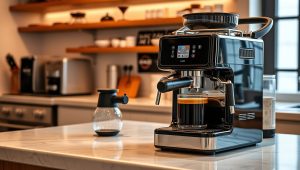
| Manual machine plus espresso grinder | Grind, dose, tamp, brew, and clean | People who enjoy dialing in coffee | Better control, but a learning curve and extra equipment cost |
| Automatic or super-automatic | Fill the hopper and water tank; select a drink | Convenience-focused households | Fast and simple, but less control and more involved internal cleaning |
| Drip coffee maker | Add ground coffee and water | People who want several cups with minimal effort | Not espresso, but usually cheaper and easier for regular coffee |
Entry-level machines: the sensible starting point
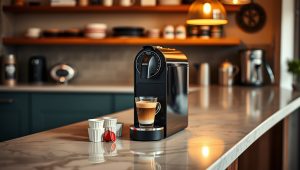
A lower-cost machine is a reasonable choice if you mainly make cappuccinos, lattes, or occasional espresso and don’t need every shot to taste exactly the same. Pressurized baskets create resistance for the water, which makes them more tolerant of pre-ground coffee and uneven grinding. That convenience comes at a cost: they can mask the differences between beans and give you less control over extraction.
The common failure mode is expecting a budget machine to compensate for stale coffee or a poor grind. It won’t. If you buy this type, use fresh coffee, keep the basket and brew path clean, and accept that results may be less consistent than at a café. A search for entry-level home espresso machines is a practical place to compare features and current prices.
Manual machines: more control, more work
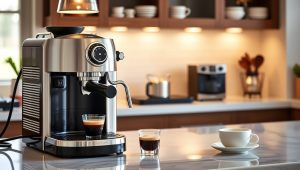
A traditional machine with a non-pressurized basket can make excellent espresso, but only when the grind, dose, and tamp are close to right. A grinder that can make small, repeatable adjustments is essential; a blade grinder or a typical drip-coffee grinder usually won’t cut it. Budget for the grinder rather than spending the entire amount on the machine.
This setup suits someone who likes learning a process and is willing to adjust when a shot runs too fast, tastes sour, or turns bitter. It’s a poor fit if you want coffee ready with almost no effort before work. For a first setup, compare espresso machine and grinder bundles, but check whether the grinder is genuinely suitable for espresso and whether it can be upgraded separately.
Automatic options: convenience with compromises
Automatic machines and super-automatics reduce the hands-on work. Many grind beans and brew a shot at the press of a button; some also handle milk. They’re appealing when several people want coffee without learning to tamp or adjust a grinder.
Convenience doesn’t mean no maintenance. These machines need regular rinsing and descaling, and milk systems must be cleaned promptly. Neglect can lead to clogs, poor-tasting coffee, or repairs. Their built-in grinders and fixed recipes also limit how much you can change the result. If ease of use matters more than tuning every shot, super-automatic home espresso machines are worth comparing; read the cleaning instructions before buying, not after.
Check milk performance and counter space
If you drink milk-based espresso, pay attention to the steam wand. A basic wand may heat milk easily but take practice to produce smooth microfoam. An automatic milk system is simpler, though it adds parts that need cleaning. If you mostly drink straight espresso, don’t pay extra for a milk feature you’re unlikely to use.
Measure the space under your cabinets and account for room to lift out the water tank, open the hopper, and work at the portafilter. A machine that technically fits can still be awkward to use. Also check warm-up time, drip-tray capacity, and whether the machine can brew and steam without a long wait between tasks.
Common buying mistakes to avoid
Buying a machine before deciding on the grinder is the biggest one. A capable machine paired with an unsuitable grinder can produce frustrating shots, while a modest machine with fresh beans and an appropriate grinder may do better. Another trap is paying for a long list of drink presets when you only make two drinks.
Check the practical details: replacement parts, warranty terms, cleaning steps, and whether the machine uses a standard basket size if you want to upgrade accessories. For a first purchase, it’s usually wiser to spend on the parts that affect your daily cup than on a screen or polished finish. If you aren’t sure you’ll enjoy the routine, an inexpensive pressurized-basket machine—or a drip brewer—may be the better first buy.
FAQ
Do I need a grinder for a home espresso machine?
For a machine with a pressurized basket, pre-ground coffee can work. For a non-pressurized basket, a grinder made for espresso is usually necessary for consistent results.
Is a more expensive espresso machine always better?
No. Higher-priced machines may offer better temperature control, steam power, or build quality, but they won’t fix stale beans or an unsuitable grind. Buy features you’ll use.
Can an espresso machine make regular coffee?
It can make espresso-based drinks such as americanos, but that isn’t the same as brewing a pot of drip coffee. If you regularly serve several mugs, a drip brewer is often more convenient.
How much cleaning does an espresso machine need?
Expect to rinse parts that contact coffee after use, empty the drip tray as needed, and descale according to the manufacturer’s instructions. Machines with milk systems need additional cleaning after milk drinks.
Ready to decide? Our #1 pick for 2026 is the Entry-level machine with pressurized basket.
Live price & availability on Amazon.