Last updated: October 20, 2026
Why a Used Dual Boiler Makes Sense (And When It Doesn’t)
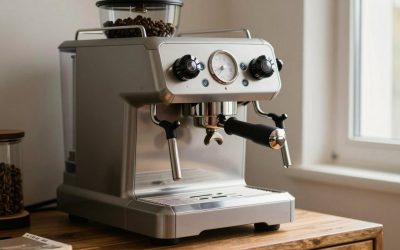
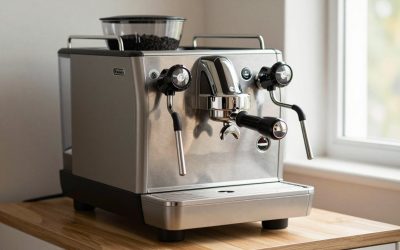
The Breville Dual Boiler (BES920XL and the older BES900XL) is the one Breville that serious home baristas actually keep long-term. True dual boiler with PID, saturated group, adjustable pre-infusion, shot timer, and enough steam power to texture milk properly.
A used Dual Boiler is worth considering if you want to pull shots and steam at the same time, you care about temperature stability, and you don’t want to single-dose or temperature-surf. It’s not worth it if you want a low-maintenance appliance or you plan to never open the machine. These machines reward owners who will do basic maintenance. If that is not you, a simpler single-boiler or thermoblock machine will be less headache, even if the espresso ceiling is lower.
What to Pay and Where to Buy
See also: How to Descale an Espresso Machine: Citric Acid vs Vinegar • Best Electric Kettles: Ten Glass, Steel and Gooseneck Picks Compared
In 2024-2025, private sale prices have settled pretty predictably:
Only worth it if you are comfortable repairing.
Expect some cosmetic wear and that it may be due for o-rings soon.
Pay this only if you can verify history.
Best places to find one are Facebook Marketplace and Craigslist for local inspection, r/coffeeswap and Home-Barista forums for documented machines, and eBay or renewed Breville Dual Boiler listings where you get some buyer protection. Avoid sellers who won’t show the machine heating, pulling a shot, and steaming. Photos of it “turned on” are not enough.
What to Check Before You Hand Over Cash
Bring a portafilter, some coffee, and ask the seller not to warm it up before you arrive. You want to see a cold start.
First, check the build date. It’s on the label under the drip tray or on the rear. Machines from 2018 onward (BES920XL) had several running revisions that improved o-ring material and steam boiler fittings. An older BES900XL can be fine, but parts like the 3-way solenoid are different, and some spares are harder to source.
Watch the startup. It should reach 200F brew temp in about 10 minutes and both boilers should read stable. If the steam boiler never gets above 212F or throws a “Fill Steam Boiler” error and keeps pumping, walk away.
Pull a shot, then immediately steam. Listen to the pumps. A healthy Dual Boiler has a relatively quiet vibe pump that hums steadily. Loud rattling, clicking, or a pump that runs continuously without building 9 bars points to a failing pump or scale blockage.
Inspect under the machine and inside the drip tray area. Any white or green crust around fittings, or a drip tray that smells strongly of mildew, suggests neglected water and leaky o-rings. Stick your finger under the group where the brew boiler meets the back wall. Dampness or mineral residue there is the classic o-ring leak.
Test every button and knob: hot water tap, steam knob, manual pre-infusion, and the menu for PID adjustment. Make sure the pressure gauge moves smoothly, not in jumps. Check that both portafilters (single and dual wall) and the cleaning disc, tamper, and water filter holder are included. Replacements add up fast.
Ask three specific questions: What water did they use? How often did they descale and backflush? Has it ever been repaired? “Tap water, never descaled, never repaired” on a 4-year-old machine is a red flag for scale in the steam boiler.
Common Failure Modes (And What They Cost)
The Dual Boiler is repairable, which is part of why buying used works. But you should budget for these:
1. Steam boiler o-rings. The number one issue. Breville used silicone o-rings that harden with heat and then weep. Symptoms: hissing from the top vents, water under the machine, or pressure loss in the steam boiler. It’s not if, it’s when.
2. Solenoid valves. Two common ones: the brew path 3-way and the steam boiler fill solenoid. Scale sticks them open or closed. Symptom: group constantly dripping, or steam boiler overfilling and venting water to the drip tray.
3. Scale. If the previous owner used hard tap water, the small-diameter tubing and sensors clog. Descaling a Dual Boiler is more involved than a single boiler because you have to drain both boilers separately. If it is heavily scaled, you may need to replace probes and valves. Use distilled or properly filtered water with a recipe like RPavlis or Third Wave Water afterward and you largely avoid this. A simple water test kit for espresso machines can tell you what you are dealing with at home.
4. Pump. Ulka EX5 vibe pumps last 4-7 years with normal use.
None of these are deal-breakers if you know they are coming. What makes a used Dual Boiler a bad buy is buying one that already has all of them at once and paying a premium price.
BES920XL vs. BES900XL: Which Used Version?
Breville sold the Dual Boiler as the BES900XL from 2011 to around 2017, then replaced it with the BES920XL. The internals are 90% the same.
The 920 added a dedicated descaling mode, slightly better steam boiler insulation, a more accessible OPV, and a revised group o-ring design. The 900 has a slightly older PID logic and a different front panel, but shot quality is identical when both are working.
Just know that some 900XL-specific steam fittings are now special-order.
Used Dual Boiler vs. Other Options at the Same Price
This is where people get stuck.
| Machine | Typical Used Price | Best For | Trade-Offs |
|---|---|---|---|
| Breville Dual Boiler (BES920XL) Used | Check on Amazon | Someone who wants PID, true dual boiler, and fast workflow without plumbing in | Needs o-ring/service every 2-3 years; plastic-heavy build; out-of-warranty Breville support is limited |
| Breville Bambino Plus (New) | Check on Amazon | Tight space, low maintenance, milk drinks fast | Thermoblock, not true temp control; must wait between brew and excellent steam; less adjustable |
| Rancilio Silvia (Used, pre-2019) | Check on Amazon | Learner who wants to practice fundamentals, all-metal, simple to fix | Single boiler, temperature surfing unless PID modded; slower steaming; no pre-infusion control |
| Gaggia Classic Pro + PID Mod (Used) | Check on Amazon | Tinkerer on a budget | Small boiler; requires mods to match Dual Boiler stability; workflow is slower |
Bluntly: if you drink mostly straight espresso and light roasts, the used Dual Boiler beats the Bambino on temperature stability and pre-infusion. If you make one milk drink in the morning and want zero fuss, the cheaper Bambino is fine and you will not miss the Dual Boiler enough to justify the extra maintenance. Don’t stretch to a used prosumer E61 machine unless you are ready for a 30-minute warm-up and a 58mm ecosystem investment.
Even a good 58mm bottomless portafilter for Breville makes diagnosing channeling much easier than the stock dual-wall baskets.
How to Make a Used One Last
Once you get it home, do a full service reset. Backflush with Cafiza, replace the group gasket if it’s hard, clean the steam wand thoroughly, and run the descale routine only if the previous owner used hard water. If they used soft water, don’t descale preemptively and risk loosening scale into valves.
From there, keep it simple: use soft water (70-100 ppm TDS is ideal), backflush with water after each session and with detergent weekly if you pull daily, purge the steam wand every time, and drain the steam boiler every 2-3 months via the silicone tube and Allen key in the drip tray area. That one habit prevents most scale failures.
Keep spare o-rings and a group gasket on hand. They are cheap and the machine will tell you when it needs them with a slow drip or hiss long before it fails completely.
FAQ
Is a used Dual Boiler reliable?
Yes, if it was fed good water. The mechanical design is solid, but neglected water quality causes scale and premature o-ring failure. A well-maintained 3-year-old machine is usually more reliable than a neglected 1-year-old one. Always ask about water and descaling history.
How long do Breville Dual Boilers last?
Many owners get 7-10 years with one or two o-ring services and a pump replacement. Heavy use (4+ drinks daily) shortens that interval. Breville does not have a wide authorized service network, so factor in DIY or an independent espresso tech after warranty.
Should I buy a used BES900XL to save money?
Only if it’s significantly cheaper and in verified good condition. Shot quality is the same as the 920XL, but parts availability is slightly worse and it lacks the newer descaling mode. If the price gap is small, the 920XL is easier to live with.
What is a fair warranty to ask for on a private sale?
Private sellers rarely offer one. Instead, agree to test it together on-site and run at least two full heat-up and shot cycles. If buying shipped, use a platform with buyer protection and ask for a video of a cold start, a 9-bar shot, and 60 seconds of steaming.