Last updated: September 14, 2026
Sage and Breville are the same machines. If you are shopping in the UK, Ireland or most of Europe you will see the Sage badge; in the US, Canada and Australia the identical machine carries the Breville badge. Same designs, same model names, different brand name on the front.
That one fact solves a lot of confusion — and it unlocks every US review you have been reading. This guide maps the range, explains which machine suits which buyer, and links to our full reviews of the Breville-badged equivalents.
🛒 Best Price Today on Amazon
As an Amazon Associate we earn from qualifying purchases at no extra cost to you. Product prices and availability are accurate as of the date shown and are subject to change.




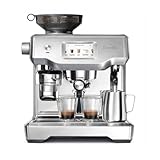
Why the same machine has two names
The company behind these machines is Breville Group, an Australian appliance maker. In the UK and Europe it cannot trade under the Breville name, because that trademark belongs to a different company in those markets. So it sells under Sage Appliances instead.
Practically, this means:
- Model names carry across. A Sage Bambino is a Breville Bambino. A Sage Barista Express is a Breville Barista Express.
- US reviews apply to you. If a review praises the Breville Barista Pro’s grinder, that is the grinder in your Sage Barista Pro.
- Support and warranty do not carry across. Buy in your own region. Voltage, plug and service network follow the market you buy in, not the badge.
Sage to Breville: model name map
See also: Breville Bambino vs Bambino Plus: Which Should You Buy? • Nespresso Coffee Machines: Every Model Compared (2026)
- Sage Bambino = Breville Bambino
- Sage Bambino Plus = Breville Bambino Plus
- Sage Barista Express = Breville Barista Express (the BES870 in US listings)
- Sage Barista Pro = Breville Barista Pro
- Sage Barista Touch = Breville Barista Touch
- Sage Oracle / Oracle Touch = Breville Oracle / Oracle Touch
- Sage Dual Boiler = Breville Dual Boiler
Which Sage machine should you buy?
Bambino / Bambino Plus — you already have a grinder
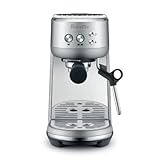
Small, fast to heat, and focused on one job: pulling a shot and steaming milk. There is no grinder built in, so you must own one — and for espresso that means a decent burr grinder, not a blade unit.
The Plus adds automatic milk texturing, which is the upgrade most people actually feel day to day. Read our Bambino Plus review, or compare it against a classic manual machine in Bambino Plus vs Gaggia Classic Pro.
Pair it with a grinder from our best burr grinders for home list.
Barista Express — the default all-in-one
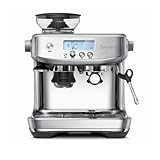
The machine most people picture when they think of this brand: grinder, dose, tamp and brew in one unit, with a manual steam wand. It is the sensible single purchase if you want everything in one box and are willing to learn.
Full detail in our Barista Express BES870XL review, and a head-to-head in Barista Express vs De’Longhi La Specialista Arte.
Barista Pro / Barista Touch — faster and more automated
The Pro heats faster than the Express and swaps the analogue gauge for a display. The Touch adds a guided touchscreen and automatic milk, which suits households where not everyone wants to learn the craft.
Dual Boiler / Oracle — the serious end
True dual boilers let you brew and steam at the same time with proper temperature stability. The Oracle range adds automated grinding and tamping on top. These are large, heavy and expensive, and they only make sense if you are making several milk drinks back to back or you genuinely want to chase shot quality.
See our guides to the Breville Dual Boiler and the Breville Oracle Dual Boiler.
Choosing by situation
- Tight budget, want real espresso: Bambino plus a decent separate grinder usually beats an all-in-one at the same total price, because the grinder is better.
- One purchase, no fuss: Barista Express.
- Family where not everyone wants to learn: Barista Touch.
- Milk drinks for several people at once: Dual Boiler or Oracle.
- Mostly black coffee: reconsider. A grinder plus filter setup may serve you better for less.
Living with a Sage machine
These machines reward maintenance and punish neglect — particularly in hard-water parts of the UK.
- Filter the water. It is the cheapest way to protect the boiler. See Breville water filters for espresso machines.
- Run cleaning tablets on schedule. Our picks: Breville espresso cleaning tablets.
- Descale when prompted. Ignoring the descale light is the most common route to weak flow and a dead machine.
- Consider a bottomless portafilter once you want to improve your technique — it shows you exactly where your extraction is going wrong. See the best portafilters for Breville.
Frequently Asked Questions
Is Sage the same as Breville?
Yes. They are the same machines from the same manufacturer, sold under the Sage name in the UK and Europe and the Breville name in markets such as the US, Canada and Australia.
Why is Breville called Sage in the UK?
Because the Breville trademark in the UK and Europe is held by a different company, so Breville Group trades there as Sage Appliances.
Can I use a US Breville review to choose a Sage machine?
Yes, for performance, build and features — the machines are the same. Do not rely on it for price, plug type, voltage or warranty, which are all market-specific.
Should I import a Breville machine to the UK to save money?
Generally no. You inherit a voltage and plug mismatch and lose local warranty support, and servicing an out-of-market espresso machine is awkward and expensive.
Which Sage machine is best for beginners?
The Barista Express if you want everything in one machine, or the Bambino Plus if you would rather buy a better standalone grinder and keep the espresso machine simple.
Do Sage machines need a separate grinder?
The Bambino and Bambino Plus do. The Barista and Oracle ranges have grinders built in.
Final take
Stop treating Sage and Breville as two brands — they are one, and that instantly doubles the pool of reviews available to you. Then choose on the only question that matters: do you want the grinder inside the machine (Barista range) or beside it (Bambino plus a proper burr grinder)? For most people learning espresso at home, the second route buys better coffee for the same money.