Last updated: October 2, 2026
La Marzocco’s cheapest machine is the Linea Micra. As of 2025-2026 it retails for $3,990 in the US (often $3,790-$3,990 depending on color and retailer), which makes it about $1,600 less than the Linea Mini. There is no cheaper new La Marzocco for the home. If you see a new machine listed for less, it’s either used, grey-market, or not actually a La Marzocco.
That price still puts the Micra in the luxury home espresso bracket. The question isn’t whether it’s cheap in absolute terms — it isn’t — but whether it makes sense compared to the Linea Mini and to other prosumer machines at $2,000-$4,000.
Quick answer: Our top pick in 2026 is the La Marzocco Linea Micra — our #1 rated choice. See the full ranked comparison, alternatives and buying advice below.
What the Micra actually is
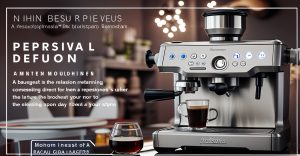
The Linea Micra is a scaled-down Linea Mini built for a standard kitchen counter and a standard 15-amp outlet. It uses the same brew group philosophy as La Marzocco’s commercial Linea models: saturated group, dual boilers, PID control, and a rotary pump lineage. But everything is condensed.
Key specs that matter when you’re deciding:
Dual stainless steel boilers: ~0.33L brew boiler, ~1L steam boiler. Heats up in about 5-7 minutes from cold, far faster than the Mini’s 15-20 minutes. Brew boiler is PID-controlled, adjustable via the La Marzocco Home app.
Rotary-style pump but with a different implementation than the Mini. It’s quiet for a home machine and allows direct reservoir operation only — no plumb-in option, unlike the Mini which can be plumbed.
58mm commercial portafilter and group, same as La Marzocco cafes use. Solenoid valve, stainless steel body, and drip tray with magnetic catch.
It is made in Florence, Italy, on the same line as La Marzocco commercial machines. Build quality is the main reason people pay the premium: heavy gauge stainless, brass and stainless internals, and parts availability for years.
If you want to check current street pricing and colors, you can compare La Marzocco Linea Micra listings on Amazon — inventory fluctuates, and some colors carry a small upcharge.
What you get for $3,990
See also: Breville Bench Saver • Rocket Espresso Coffee Machine
For home use, the Micra gets three things right that cheaper machines often don’t:
1. Temperature stability without ritual. The saturated group and dedicated brew boiler mean you can pull shots back-to-back without temperature surfing or waiting for the group to recover. For light roasts where 1-2°F matters, this is noticeable. For medium and dark roasts, it’s more about consistency.
2. Steam power in a small footprint. Even with a smaller steam boiler than the Mini, the Micra steams faster than any vibration-pump single-boiler or heat-exchanger machine under $2,000. You can texture 6-8 oz of milk in about 20-25 seconds with enough pressure to make proper microfoam. It will not keep up with a cafe rush, but for two cappuccinos in a row it doesn’t run out.
3. Workflow and footprint. At 14″ W x 17.5″ D x 12.5″ H and about 58 lbs, it fits under upper cabinets where a Mini, GS3, or most E61 machines don’t. The paddle is replaced by a simple brew button and dial — less theatre, less to go wrong. Auto backflush, easy PID via app, and a drainable reservoir you can actually remove without moving the machine.
What you don’t get (and why it matters)
La Marzocco cut cost and size in specific places. Be clear on these before you buy:
No direct plumb-in. The Micra is reservoir-only. If you want to plumb in to avoid refilling or to add line pressure pre-infusion, you need the Linea Mini.
Smaller boilers, less simultaneous capacity. Steaming for four large lattes back-to-back will show the limits. The 1L steam boiler recovers quickly but will cycle more than the Mini’s 3L boiler. If you regularly host brunch for 6+, the Mini or a commercial HX handles that better.
No manual flow control. The Micra runs at a fixed 9 bars (adjustable via expansion valve if you open the machine). There is no needle valve or paddle to do pressure profiling like on a Bianca or GS3. You get La Marzocco’s app-based pre-infusion (on/off time), not true variable flow.
App dependence for some settings. PID, auto on/off scheduling, and pre-infusion are in the La Marzocco Home app. It works fine once set up, but if you dislike app-controlled machines, this will annoy you. The machine still brews without the app, but you need it to change temperature.
Cost of ownership. This isn’t a $500 Breville to run hard for three years and replace. Annual water filtration, descaling if you use hard water, and group maintenance matter. A set of La Marzocco baskets and a decent tamper are included, but you will still need a grinder that can keep up.
Micra vs. Mini vs. alternatives at the same price
This is where most buyers get stuck. The Micra is the cheapest La Marzocco, but it is not the cheapest way to get excellent espresso at home.
| Machine | Street Price (US) | Boilers | Plumb-In | Footprint / Weight | Best For |
|---|---|---|---|---|---|
| La Marzocco Linea Micra | ~$3,990 | Dual boiler (0.33L / 1L) | No | Compact, 58 lbs | Design-conscious home, fast heat-up, La Marzocco build |
| La Marzocco Linea Mini | ~$5,600-$6,200 | Dual boiler (0.17L +? / 3L steam) | Yes | Large, 71 lbs | Entertaining, plumbed-in bar, maximum steam |
| Lelit Bianca V3 | ~$3,000-$3,300 | Dual boiler + rotary pump, flow paddle | Yes (reservoir/convertible) | Medium-large, 60 lbs | Tinkerers who want flow profiling for less money |
| Profitec Drive / ECM Synchronika II | ~$3,200-$3,500 | Dual boiler, rotary or vibe, E61 | Yes (on most versions) | Large, 65-70 lbs | Classic prosumer build, plumb-in, quiet operation |
| Breville Dual Boiler (BDB) | ~$1,700-$1,900 | Dual boiler, vibe pump | No | Compact, 30 lbs | Value and features over longevity/design |
Honest take: A well-tuned Breville Dual Boiler or Lelit Bianca can make espresso that tastes as good as the Micra in a blind cupping. The Micra wins on build, serviceability, heat-up speed, and resale value — not on outright shot quality. If you love pressure profiling and want to experiment with light roasts at 6 bar, a Bianca gives you more control for $700 less. If you want a machine that looks like a Linea, lasts 10-15 years with service, and holds its value, the Micra is hard to beat.
Pairing matters more than the badge. A $3,990 machine with a $300 grinder will lose to a $1,800 machine with a $900 grinder. Budget for an espresso-capable grinder first; you can browse capable espresso grinders on Amazon and expect to spend at least $500-$800 for grind quality that matches the Micra’s potential.
Ownership costs and failure modes
La Marzoccos are reliable, but they are not maintenance-free. Plan for this:
Water is everything. Scale is the number one killer of dual-boiler machines. La Marzocco is explicit about using soft, filtered water (target 70-100 ppm TDS, low hardness). If you run hard tap water, you’ll scale the steam boiler and clog solenoids within a year. Use a proper filtration setup and test strips. A simple espresso water filter kit on Amazon is far cheaper than a boiler rebuild.
Common service points: Group gasket and shower screen every 6-12 months ($20), vacuum breaker and expansion valve checks at year 2-3, and app board/firmware quirks. Because it’s a La Marzocco, parts are available and any good espresso tech can service it — unlike some boutique brands where you’re shipping the machine.
Warranty and support: New Micras come with a 2-year warranty when purchased through an authorized dealer and registered. Keep your dealer invoice. Grey-market or Amazon third-party sellers without authorized status can complicate warranty claims, so verify the seller is authorized.
Resale: This is the hidden value. Used Micras in good condition still sell for $3,000-$3,400. Used Brevilles and mid-range E61s depreciate much faster. If you might upgrade or move, that resale cushion offsets the upfront cost.
Who should buy the Micra — and who should skip it
Buy the Micra if: You want the smallest, most kitchen-friendly La Marzocco, you value fast heat-up and commercial build over flow-control toys, and you plan to keep the machine 7+ years. It’s ideal for 1-2 people making 2-4 drinks a day, especially if you care about design and long-term serviceability.
Skip it if: You need to plumb in, you regularly steam for 4+ milk drinks back-to-back, you want manual pressure profiling, or your total budget including grinder and water treatment is under $4,500. In that case, a $1,700-$3,300 dual boiler plus a better grinder will make you happier than stretching for the badge.
The cheapest La Marzocco is not a budget machine. It’s a smaller, more accessible La Marzocco. If that simplicity is what you want, the Micra delivers without the Mini’s bulk and cost. If you want the most features per dollar, look elsewhere — the cheaper option is genuinely fine for great coffee.
FAQ
Is the Linea Micra really the cheapest La Marzocco?
Yes. For new, current-production home machines, the Micra is the entry point at around $3,990. The Linea Mini, GS3 MP/AV, and commercial Lineas all cost more. You may find cheaper used La Marzoccos, but for a new machine with warranty, Micra is the bottom.
What is the difference between the Linea Micra and Linea Mini?
The Micra is smaller, lighter, heats faster, and is reservoir-only with smaller boilers (1L steam vs 3L on the Mini). The Mini can be plumbed in, has a larger steam boiler for entertaining, and a slightly different aesthetic with more color options. Shot quality is very similar; the choice is about footprint, plumbing, and steam capacity.
Do I need a special grinder for the Micra?
You don’t need a La Marzocco grinder, but you do need a true espresso grinder with fine, repeatable adjustment and low retention. Most buyers pair the Micra with 58mm dosing grinders in the $500-$1,200 range. A weak grinder will bottleneck the machine more than any boiler spec.
Can I use tap water in the Linea Micra?
Only if your tap water is soft. La Marzocco recommends filtered, softened water to prevent scale. If your water is hard (above ~120 ppm hardness), use a filtration/softening system and test regularly. Scale damage is not covered under warranty and is expensive to fix.
Ready to decide? Our #1 pick for 2026 is the La Marzocco Linea Micra.
Live price & availability on Amazon.