Last updated: September 18, 2026
Quick answer: Our top pick in 2026 is the Pre-ground espresso coffee — our #1 rated choice. See the full ranked comparison, alternatives and buying advice below.
The Short Answer
Yes—if you use whole coffee beans and want reliably good espresso, you need an espresso-capable grinder. The one condition is that it must produce a fine, adjustable, and reasonably consistent grind; a grinder that works well for drip coffee or spices may not give you the control espresso requires.
You do not necessarily need a separate grinder. A machine with a built-in grinder can handle both jobs, and pre-ground coffee lets you make espresso without buying a grinder at all. But if you are choosing between whole beans and pre-ground coffee, an espresso grinder is one of the most important pieces of equipment in the setup.
As an Amazon Associate we earn from qualifying purchases at no extra cost to you. Product prices and availability are accurate as of the date shown and are subject to change.

That answer remains true whether you are building a first coffee station in 2026 or upgrading a machine you already own. Espresso uses a small amount of coffee, a short brewing time, and pressure to extract flavor. Small changes in grind size can therefore make a large difference in the cup.
What You Actually Get
See also: How to Clean an Espresso Grinder Burrs (2026): Step-by-Step • Espresso Grinder Hopper Capacity How Much Size Guide With Measurements (2026)
An espresso grinder is designed to turn beans into particles fine enough for espresso while giving you control over the adjustment. The goal is not simply “very fine.” The goal is a grind that lets water pass through the coffee puck at a controlled rate.
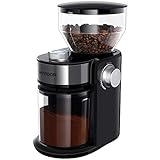
Most espresso-capable grinders use burrs rather than a spinning blade. Burrs crush the beans between two surfaces, while blade grinders chop them unevenly. Some particles become powder and others remain too coarse. That uneven mix can produce both bitter and sour flavors in the same shot.
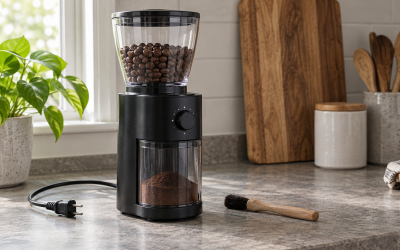
Useful features include fine-grind adjustment, a setting that changes in small increments, a dose timer or measurement control, and a hopper or dosing area that is easy to clean. A compact home grinder may occupy roughly 5 to 8 inches of counter width and stand 10 to 16 inches tall, although exact dimensions vary widely. It is also worth checking whether the grinder can hold a portafilter directly or requires you to transfer the grounds by hand.
Prices range from about $50 to $150 for entry-level electric grinders, $150 to $400 for more capable home espresso grinders, and considerably more for premium models. A very inexpensive grinder may be adequate for occasional pressurized-basket espresso, but it may not provide the precision needed for a traditional non-pressurized basket.
A machine with a built-in grinder can be a practical compromise. For example, the AMZCHEF Espresso Machine With Grinder, Temp Control, and 44 Grind Settings is listed at $199.98. A combined machine saves counter space and eliminates the need to match a separate grinder to your espresso machine, though repair or replacement can be less convenient if one component fails.
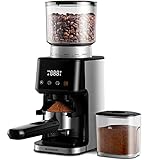
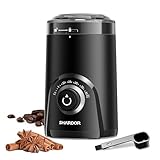
By contrast, the $26.99 SHARDOR Electric Coffee Grinder has a 70-gram capacity and a visual timing knob. It may be useful for basic coffee grinding, French press, herbs, or occasional experimentation, but buyers should verify whether a specific model uses burrs and offers true espresso adjustment. A low price and an espresso reference in a product name do not automatically mean the grinder can deliver café-style consistency.
Pros
- Better control over extraction: You can adjust the grind when a shot runs too quickly, tastes sour, or takes too long and tastes bitter.
- Fresher coffee: Grinding immediately before brewing preserves more aroma than storing coffee after it has already been ground.
- More flexibility: An adjustable grinder can usually serve espresso, moka pot, pour-over, and French press, provided it offers a broad enough range.
- Lower long-term coffee waste: Fine adjustments make it easier to dial in a new bag of beans instead of repeatedly discarding failed shots.
- More useful with non-pressurized baskets: These baskets depend on the grind, dose, and tamp rather than using the basket to create most of the resistance.
- Room to improve: A capable grinder can continue to serve you if you later upgrade to a better espresso machine.
Cons
- Added cost: A suitable grinder can cost as much as, or more than, an entry-level espresso machine.
- Extra counter space: You need room for the grinder, a container or portafilter, and access to the adjustment controls.
- A learning curve: You may need to change the grind by small increments as the beans age, the dose changes, or the weather shifts.
- Cleaning requirements: Coffee oils and fine particles build up in the burr chamber, chute, and hopper. Regular brushing and occasional deeper cleaning are necessary.
- Noise and mess: Electric grinders can be loud, and fine grounds may cling to the chute or spill during transfer.
- Not every “coffee grinder” is an espresso grinder: A blade grinder or a coarse-focused burr grinder may lack the consistency and fine adjustment espresso needs.
Who Should Buy It
Buy an espresso-capable grinder if you plan to use whole beans at least several times a week. It is especially worthwhile if you enjoy comparing beans, want to use a non-pressurized portafilter, or care about improving flavor rather than simply producing a concentrated coffee drink.
It is also a good purchase for households making multiple shots each morning. A grinder with a timer or repeatable dose control can make preparation faster and more consistent. If you already own a decent espresso machine but rely on pre-ground coffee, upgrading the grinder may improve your results more than replacing the machine.
Choose a separate grinder when you want easier upgrades and the ability to keep the grinder if you later replace the espresso machine. Choose a built-in grinder when counter space, simplicity, and a single purchase matter more than component-by-component flexibility.
Who Should Skip It
Skip a dedicated grinder if you make espresso only a few times per year, use espresso pods or capsules, or are satisfied with pre-ground coffee. You can buy small quantities of ground coffee and store them in an airtight, opaque container, although the flavor will generally decline faster than with whole beans.
You may also skip it if your espresso machine has a built-in grinder that provides enough adjustment for your needs. Buying a second grinder does not automatically improve the coffee if the built-in unit is already consistent and easy to use.
Finally, do not buy an expensive espresso grinder just because you own an inexpensive machine with a pressurized basket. That setup can be forgiving. Start with the grinder you have, then upgrade when you can identify a specific limitation.
Cheaper Alternatives
| Option | Cost | Trade-off |
|---|---|---|
| Pre-ground espresso coffee | About $8–$18 per bag | Lowest upfront cost, but freshness and grind control are limited. |
| Manual burr grinder | About $40–$120 | Usually cheaper and quieter than electric, but grinding for several shots takes more effort. |
| Basic electric coffee grinder | About $25–$60 | Affordable for pressurized baskets and other brewing methods; consistency may be poor for demanding espresso. |
| SHARDOR electric grinder | $26.99 | Low-cost and versatile for general grinding, but confirm the model’s burr design and espresso adjustment before relying on it for non-pressurized espresso. |
| Espresso machine with built-in grinder | About $180–$500 | Saves space and simplifies buying, but the grinder and machine cannot be upgraded independently. |
| AMZCHEF machine with grinder | $199.98 | Combines brewing and grinding in one appliance; check capacity, adjustment range, cleaning access, and warranty before purchase. |
FAQ
Can I make espresso without a grinder?
Yes. Use pre-ground espresso coffee, coffee pods, or a machine with a built-in grinder. Pre-ground coffee is the simplest option, but buy smaller amounts and seal the package well. If your machine uses a non-pressurized basket, the grind must be appropriate for that basket, so buying from a shop that can grind for espresso may help.
Can I use a regular coffee grinder for espresso?
Sometimes, but results depend on the grinder. A basic blade grinder usually produces an uneven grind and is difficult to adjust precisely. A burr grinder with a fine range may work with a pressurized basket, especially for occasional use, but a dedicated espresso grinder is more likely to provide repeatable adjustments for traditional espresso.
Is a manual espresso grinder worth considering?
Yes, if you make one or two shots at a time and do not mind the effort. A manual burr grinder can offer useful control at a lower price and creates less noise. It is less convenient for several drinks in a row, and hard beans can require substantial turning, so ergonomics matter.
What should I prioritize when shopping?
Prioritize consistent burr grinding, fine adjustment, easy cleaning, and a repeatable way to measure the dose. Do not judge a grinder only by its wattage, hopper size, or number of advertised settings. Also check the return policy and replacement-burr availability. A grinder that is simple to adjust and clean is often more useful than one with impressive specifications but poor everyday usability.
Ready to decide? Our #1 pick for 2026 is the Pre-ground espresso coffee.
Live price & availability on Amazon.