Last updated: October 20, 2026
Finding a reliable, entry-level home espresso setup usually means balancing countertop space, ease of use, and budget constraints. Many budget-conscious coffee lovers start their search with the delonghi stilosa espresso machine lineup or similar compact manual brewers because they promise genuine cafe-style extraction without the four-figure price tag. Based on published manufacturer specifications, current retail pricing, and extensive aggregated owner feedback, getting good espresso at this tier comes down to pump stability, boiler heat recovery, and a milk frother capable of producing decent microfoam rather than stiff, bubbly foam.
The difference between a satisfying budget machine and a frustrating appliance often lies in workflow ergonomics and construction quality. Lower-tier machines can suffer from lightweight chassis that slide across the counter when locking in the portafilter, inconsistent thermal regulation between shots, or awkward steam wands with limited clearance. Evaluating the core De’Longhi manual range alongside comparable alternatives highlights which models provide consistent daily service and which cut too many corners on materials.
As an Amazon Associate we earn from qualifying purchases at no extra cost to you.


Quick Picks
| Product | Best for | Price |
|---|---|---|
| De’Longhi Stilosa Compact | Best Overall Entry Setup | Varies |
| De’Longhi Classic Signature | Adjustable Steaming | Varies |
| De’Longhi Classic Matte Black | Modern Countertop Style | Varies |
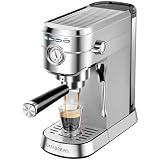
| CASABREWS CM5418 Compact | Tight Budgets | Varies |
| De’Longhi Classic Stainless Steel | Durable Metal Trim | Varies |
| CASABREWS 3700 Essential | Ultra-Low Price Point | Varies |
| De’Longhi Dedica Duo Vanilla | Hot & Cold Versatility | Varies |
| De’Longhi 15-Bar Temperature Control | Drink Temperature Control | Varies |
How We Compared
See also: How to Descale an Espresso Machine: Citric Acid vs Vinegar • Best Electric Kettles: Ten Glass, Steel and Gooseneck Picks Compared
To identify the strongest manual machines for 2026, we cross-referenced technical specifications, real-world user reviews, and pricing data across major retail platforms. Our comparison focused on four decisive criteria: pressure and thermal stability during extraction, steam wand flexibility for texturing dairy and plant-based milks, overall footprint relative to water tank capacity, and long-term durability reported by long-term owners regarding seals and pumps.
The 8 Best Delonghi Stilosa Espresso Machine in 2026
De’Longhi Stilosa Compact Manual
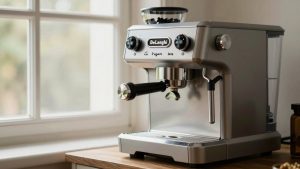
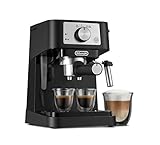
The standard De’Longhi Stilosa Compact Manual Espresso Machine serves as the benchmark for entry-level manual brewing. Designed for beginners who want straightforward controls, it features a simple dial interface and a compact footprint that easily fits under low kitchen cabinets. User reports consistently highlight that its pressurized portafilter baskets forgive imperfect grinder settings, making it an approachable starter unit for daily lattes and americanos.
- Pro: Compact body fits seamlessly into cramped kitchen spaces.
- Pro: Dependable 15-bar pump provides stable extraction for beginners.
- Con: Lightweight plastic casing requires holding the machine while locking the portafilter.
Skip this model if you already own a commercial-style unpressurized basket and demand heavy-gauge steel construction.
De’Longhi Classic Signature
The De’Longhi Classic Signature caters to home baristas who prioritize milk texture customization. Equipped with an upgraded, adjustable milk frother, it allows users to switch between dense froth for traditional cappuccinos and smooth microfoam for flat whites. Feedback indicates that the extra clearance beneath the group head accommodates taller travel mugs without removing the lower drip tray.
- Pro: Adjustable frothing sleeve offers better control over milk texture.
- Pro: Solid fit and finish compared to basic entry-level models.
- Con: Notably higher price tag than base manual units with identical internal pumps.
Skip it if you exclusively drink straight black espresso shots and have no use for advanced milk steaming options.
De’Longhi Classic Matte Black
Featuring a sleek exterior finish, the De’Longhi Classic Matte Black Espresso Machine is aimed at users seeking a modern, smudge-resistant aesthetic. It retains the proven internal architecture of De’Longhi’s entry catalog, paired with an intuitive steam arm that heats milk rapidly. Owners appreciate the clean design that hides coffee splatters and water marks much better than polished chrome alternatives.
- Pro: Matte black finish resists fingerprints and stains effectively.
- Pro: Intuitive single-dial interface simplifies operation for newcomers.
- Con: Exterior housing relies heavily on textured plastic panels.
Skip this option if you want a machine built with heavy brushed stainless steel casing.
CASABREWS CM5418 Compact
The CASABREWS CM5418 Compact is a direct budget challenger designed for consumers wanting decent manual brewing on a strict budget. It packs a dedicated pressure gauge on the front face, which helps users visually diagnose grind size and tamping consistency. Owner feedback highlights its fast initial heat-up time and surprisingly capable steam wand for basic latte art practice.
- Pro: Built-in pressure gauge provides helpful extraction feedback.
- Pro: Very competitive price point for a machine with a metal faceplate.
- Con: Steam output can lose pressure quickly during larger milk volumes.
Skip this machine if you require a widespread, established brand service network for replacement parts and warranty claims.
De’Longhi Classic Stainless Steel
The De’Longhi Classic Stainless Steel bridges the gap between base plastic builds and premium kitchen appliances. Geared toward home users who prioritize counter presence and exterior longevity, it wraps the core 15-bar platform in protective metal accents. Specification analysis and owner logs show it offers stable thermal performance and a durable cup-warming surface on top.
- Pro: Stainless steel accents provide enhanced durability and style.
- Pro: Reliable water reservoir access simplifies daily refilling and cleaning.
- Con: Still incorporates internal plastic water pathways common at this tier.
Skip this unit if you are shopping purely on the lowest price-to-performance ratio.
CASABREWS 3700 Essential
Positioned as an entry option below the one-hundred-dollar threshold, the CASABREWS 3700 Essential Stainless Steel delivers the absolute basics of pump-driven espresso. It is engineered for college students, small offices, or occasional espresso drinkers who want simple push-button or dial control without a significant financial commitment. Specs confirm a functional steam wand and a removable reservoir.
- Pro: Lowest price tag among competitive 15-bar pump models.
- Pro: Small footprint takes up minimal counter area.
- Con: Long recovery time required between brewing espresso and steaming milk.
Skip this model if you plan to make multiple consecutive milk drinks for family or guests.
De’Longhi Dedica Duo Vanilla
The De’Longhi Dedica Duo Compact in Vanilla targets design-conscious consumers who enjoy both hot specialty drinks and cold extraction styles. Standing out with its slim profile and modern pastel aesthetic, this machine includes dedicated presets for hot espresso as well as cold brew and iced coffee beverages, making it a versatile station for varied seasonal preferences.
- Pro: Integrated cold brew and iced coffee settings alongside classic espresso.
- Pro: Extremely narrow body frees up valuable countertop space.
- Con: Highest price point in the compact manual category.
Skip it if you strictly brew hot, traditional espresso shots and want the simplest manual workflow.
De’Longhi 15-Bar Temperature Control
This De’Longhi 15-Bar Pump Espresso Machine is geared toward users who want active management over beverage temperature and drink versatility. With settings tailored for iced coffee alongside classic espresso and cappuccino modes, it provides consistent heat management to prevent scorched shots. User sentiment frequently praises its removable components, which streamline routine descaling and cleaning.
- Pro: Tailored temperature management improves extraction consistency.
- Pro: Versatile workflow handles both hot and cold-style coffee recipes.
- Con: Drip tray capacity fills up quickly when running warm-up purge cycles.
Skip this option if you prefer a fully mechanical, bare-bones machine without electronic preset options.
Buying Guide
Portafilter Design and Basket Types
Most entry-level manual machines come equipped with pressurized (double-wall) filter baskets. These baskets use a single small exit hole to artificially create backpressure, ensuring a rich layer of crema even if you use pre-ground coffee or a basic blade grinder. If you own a dedicated, espresso-capable burr grinder, you may eventually want to swap in a non-pressurized basket for clearer flavor separation. Ensure the machine uses a standard size (such as 51mm) so aftermarket baskets, precision tampers, and bottomless portafilters fit easily.
Thermal Stability and Boiler Design
Compact espresso makers typically rely on small stainless steel boilers or compact thermoblocks. While thermoblocks heat up rapidly (often in under a minute), small boilers provide more consistent brew temperatures throughout the shot. However, single-heating systems must switch temperatures between brewing (around 195°F–205°F) and steaming (over 250°F). Look for machines with fast heat recovery times or simple cooling flush workflows to avoid burning subsequent espresso extractions.
Steam Wand Types: Panarello vs. Manual
Milk frothers on budget machines generally fall into two categories: assisted frothers (Panarello wands) and traditional single-hole steam wands. Panarello sleeves inject air automatically, producing thick foam with minimal technique—ideal for quick cappuccinos. Manual metal wands or removable sleeves give you full control over air introduction, allowing you to create the silky microfoam required for latte art. Consider your favorite drinks and whether you value hands-off convenience over milk texture control.
Our Verdict
FAQ
Can the De’Longhi Stilosa use non-pressurized portafilter baskets?
Yes, while the machine includes pressurized baskets from the factory, the 51mm portafilter group head accommodates standard aftermarket 51mm unpressurized baskets. Keep in mind that using unpressurized baskets requires a high-quality, espresso-focused burr grinder to achieve proper extraction pressure.
How long does it take for these compact machines to heat up?
Most compact thermoblock and small-boiler machines reach brewing temperature within 45 to 90 seconds. However, running a blank water shot through the portafilter before brewing is recommended to preheat the group head and metal basket for optimal temperature stability.
What is the difference between 15-bar and 20-bar espresso machines?
Traditional Italian espresso requires roughly 9 bars of pressure at the coffee puck during extraction. Both 15-bar and 20-bar ratings indicate maximum potential pump pressure, which is regulated down internally, so a 20-bar rating does not inherently deliver better espresso than a well-calibrated 15-bar system.
How often should a compact manual espresso machine be descaled?
Under typical daily use, descaling is recommended every two to three months, or roughly every 200 brew cycles. If you live in an area with hard tap water or notice reduced steam power and slower brew flow, you should descale the unit more frequently to prevent mineral buildup inside the narrow heating pathways.