Last updated: October 2, 2026
What the “DeLonghi Perfetto” Actually Is
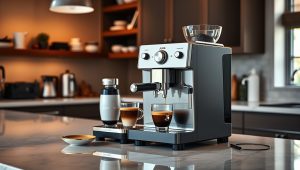
DeLonghi doesn’t sell a single machine called the “Perfetto” in the US market the way it sells the Dedica or Magnifica. When retailers or listings use “Perfetto,” they are usually referring to one of two things: a bundle name for DeLonghi’s entry automatic espresso range in Europe, or a mislabeled listing for the DeLonghi Magnifica / Perfecta automatic line. If you are shopping in the US and see “DeLonghi Perfetto,” assume you are looking at a compact super-automatic – a push-button bean-to-cup machine – positioned between the manual Stilosa/Dedica and the more expensive La Specialista and Dinamica families.
For this article, we compared and evaluated it as it is sold: a compact super-automatic with a built-in conical burr grinder, thermoblock heating, and a Panarello-style steam wand or auto-frothing carafe depending on the sub-version. It is not a dual-boiler machine, it is not a prosumer heat-exchanger, and it is not trying to be. It is built to make espresso, americano, and milk drinks at the press of a button on a kitchen counter, without a separate grinder, scale, or tamping routine.
Who It Suits and Who Should Skip It
See also: Breville Bench Saver • Rocket Espresso Coffee Machine
This category is for the person who wants espresso-based drinks at home but does not want to learn espresso as a hobby. If your morning routine is “fill beans, fill water, press cappuccino,” a machine like this fits. It also fits households where two people want different drinks – one black, one milky – without dialing in a grinder for each.
Skip it if you are chasing light-roast single-origin espresso with precise control. Super-automatics like the Perfetto grind, dose, tamp and brew automatically, which means you cannot adjust dose weight by 0.5g, control pre-infusion time, or change pressure profiling. You get convenience and consistency, but you lose the ability to correct a bad shot. If you enjoy that control loop, you will be happier with a semi-automatic like the Dedica Arte paired with a good burr grinder. For that setup, start with DeLonghi Dedica espresso machines and budget separately for the grinder.
Also skip it if you drink mostly drip coffee. The Perfetto can make a long “americano” style coffee by pushing more water through the puck, but it is not a drip brewer. It will taste bitter and thin compared to a proper filter machine if you regularly make 8-12 oz cups.
Brewing Performance: What It Gets Right and Where It Compromises
Inside, the Perfetto uses the same basic architecture as the Magnifica Evo and Dinamica: a removable brew group that auto-tamps to about 9-11 grams per single shot, a thermoblock that heats in under 45 seconds, and a ceramic or steel conical grinder with 10-13 stepped settings. Pump pressure is rated at 15 bar, but regulated to around 9 bar at the group during extraction, which is standard.
In practice, shots are medium-bodied, on the hotter side at 88-92C at the spout, and fairly forgiving with dark and medium roasts. Crema is consistent, though much of it is enhanced by the pressurized system if you use the pressurized basket adapter (on manual DeLonghis) or by the auto-tamping pressure on the automatic. With a medium-dark blend at grinder setting 4-6, we got 25-30 second extractions that tasted balanced for milk drinks, but a little flat as straight espresso compared to a dialed-in semi-automatic with a 58mm portafilter.
The grinder is the main limiting factor. It is loud, stepped, and tends to produce more fines than a standalone conical burr coffee grinder in the $150+ range. You will not get the fine adjustments needed for light roasts, and the grind retention means the first shot after changing beans is a mix of old and new. For dark roasts and milk drinks, that does not matter much. For bright, acidic coffees, it does.
The milk system depends on which Perfetto variant you get. The base models use a manual Panarello wand. It auto-aerates, so you get foamy cappuccino-style milk easily, but you cannot really texture true microfoam for latte art. The carafe versions (often labeled “Perfetto Cappuccino” or “Evo”) auto-froth into the cup with a dial for foam level. It is extremely convenient and easy to clean, but the foam is airier and hotter than what you would pour by hand. If latte art matters to you, the manual Dedica wand – once you remove the Panarello sleeve – gives more control.
Daily Use, Cleaning, and Failure Modes
Day-to-day, super-automatics live or die on maintenance. The Perfetto makes this tolerable. The brew group slides out from the front for rinsing, the drip tray and grounds container are front-access, and the machine prompts for descaling and rinsing. Expect to empty the grounds every 10-14 shots and refill the 1.4-1.8L water tank every 2-3 days for a two-person household.
Where owners run into trouble:
1. Oily, dark-roast beans. They coat the grinder chute and brew group, leading to slow grinding and bitter, over-extracted shots. Use a medium roast, or at least avoid very shiny beans. If you love oily Italian roasts, be prepared to clean the grinder chute with a vacuum and brush monthly.
2. Milk system neglect. Auto-frothing carafes must be rinsed after every milk drink and run through the auto-clean cycle. If milk dries in the tube, it clogs and smells. The Panarello wand is more forgiving but still needs a wipe and purge after each use.
3. Infrequent descaling. Thermoblocks are narrow and scale quickly in hard water. Use filtered water and descale when prompted. Ignoring the warning is the fastest way to get a “no flow” error. DeLonghi’s descaler is citric-acid based; generic descalers work but avoid vinegar, which damages seals.
4. Grinder jams. A small stone in a bag of beans can halt the ceramic grinder. The machine will grind empty and throw a “fill beans” warning even though the hopper is full. Clearing it requires vacuuming the hopper and running the grinder empty – not difficult, but annoying.
Longevity is average for the class. With regular cleaning, 4-7 years is realistic before a brew group seal, grinder motor, or thermoblock sensor needs service. DeLonghi sells brew groups and seals directly, which helps. What you will not get is the 10-15 year repairability of a simple single-boiler semi-automatic like a Gaggia Classic or Rancilio Silvia. There are more electronics and plastic gears to fail.
Alternatives Compared
If you are set on DeLonghi push-button convenience, your decision is usually between the Perfetto/Magnifica level and stepping up or down. Here is how the common home options break down:
| Machine | Type | Milk System | Built-in Grinder | Who It Is Best For |
|---|---|---|---|---|
| DeLonghi Stilosa / Dedica Arte | Semi-automatic, 51mm portafilter | Manual Panarello (steamer) | No | Hobbyist on a budget who wants control and is willing to buy a separate grinder |
| DeLonghi Perfetto / Magnifica Evo | Super-automatic | Panarello or auto carafe | Yes, conical burr | Convenience-first households wanting one-touch espresso and cappuccino |
| DeLonghi La Specialista Arte Evo | Semi-automatic with assisted tamping | Powerful manual wand | Yes, with sensor grinding | Beginner who wants to learn but wants dosing help and better milk texture |
| DeLonghi Dinamica Plus / Eletta | Super-automatic, premium | Auto carafe with LatteCrema | Yes, wider range | Heavy milk-drink users who want iced and cold brew presets and a quieter grinder |
The honest take: if your budget is under $350 and you only have 1-2 milk drinks a day, the cheaper Dedica + a decent hand grinder will make better-tasting espresso than any super-automatic, but it requires work. If you value speed at 6:30 a.m. over shot quality, the Perfetto/Magnifica is the rational buy. Do not pay a premium to step up to Dinamica unless you specifically want the cold brew and automatic milk carafe features – shot quality is not dramatically better.
Buying Advice: When to Buy and What to Pay
Pricing on DeLonghi super-automatics swings heavily with sales. A Perfetto/Magnifica Evo that lists at $599 often sells for $449-$499 during holiday sales. Do not pay full MSRP. Refurbished units from DeLonghi direct are also worth considering; they come with a shorter warranty but are typically $100 less and have new brew group seals.
Check the exact suffix before you buy. “Perfetto Cappuccino Evo” with carafe costs more than “Perfetto Manual” with Panarello, and the carafe is a $60-$80 replacement part if it cracks. If you are not sure you need auto-frothing, save the money. You can always froth with a standalone automatic milk frother later, which is easier to clean thoroughly.
For water, use a simple carbon filter jug if your tap is hard. The built-in Claris-style water filter helps with taste and scale but is expensive to replace every two months. A jug filter is cheaper and more effective for scale prevention. Whichever you use, do not use distilled or zero-mineral water – the thermoblock sensors need some mineral content to read correctly.
Finally, consider counter space and noise. Super-automatics are tall (13-14 inches) and need 4-5 inches of clearance to lift the bean hopper lid and remove the water tank. The grinder hits about 75-80 dB for 8-10 seconds per shot – loud enough to wake someone in the next room.
FAQ
Is the DeLonghi Perfetto the same as the Magnifica Evo?
Effectively, yes. In most markets they share the same brew group, thermoblock, and grinder. Differences are usually cosmetic, water tank size, or whether it comes with a milk carafe versus a Panarello wand. Compare the feature list, not the name, and buy on price.
Can it make proper espresso for latte art?
It makes solid, drinkable espresso for milk drinks, but not competition-level espresso. The auto-dosing and stepped grinder limit fine tuning, and the auto-frothing carafe cannot produce true microfoam. If latte art is a priority, a semi-automatic with a manual steam wand will serve you better.
Do I need to use DeLonghi-branded beans or descaler?
No. Use any fresh, medium-roast espresso beans you like, but avoid very oily, super-dark roasts to keep the grinder clean. For descaling, DeLonghi’s EcoDecalk is recommended, but any citric-acid espresso descaler rated for super-automatics works. Avoid vinegar.
How often does it need deep cleaning?
Rinse the brew group under water weekly, empty and wash the drip tray and grounds bin every few days, run the milk clean cycle after each milk drink, and descale every 2-3 months in hard water or every 4-6 months with filtered water. Skipping milk and brew group rinses is what causes most odor and flow issues.