Last updated: October 2, 2026
Quick answer: Our top pick in 2026 is the Combination espresso and drip machine — our #1 rated choice. See the full ranked comparison, alternatives and buying advice below.
What “combination” means
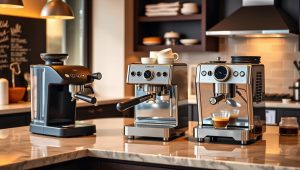
A De’Longhi combination espresso machine is built to make espresso and drip-style coffee from one countertop appliance. That can save space and suit a household where one person wants a cappuccino and another wants a full mug of regular coffee. It is not necessarily a better espresso machine than a dedicated espresso model, though: the two brewing systems share a body, but each still has its own practical limits.
Before buying, check the exact machine’s features and measurements. De’Longhi has sold combination machines with different layouts and controls, and listings can be vague. Look for separate brewing functions, the type of espresso portafilter, how the milk steamer works, and whether the drip side uses a standard filter basket. Don’t assume that a machine advertised as a combination model has a grinder or can brew both sides at once.
Who should buy one
See also: Breville Bench Saver • Rocket Espresso Coffee Machine
A combination machine makes the most sense if you regularly switch between espresso drinks and drip coffee, but don’t have room or budget for two machines. It is also a reasonable choice for a kitchen where espresso is an occasional treat rather than a hobby that demands precise control.
The trade-off is specialization. A compact espresso machine may heat and operate more simply, while a separate drip brewer may make more coffee at once. Combination models can also take longer to understand, since there are separate brewing steps and parts to clean. If you mainly drink one style, you may be paying for a side of the machine that sits unused.
Combination machine vs. separate machines
| Option | Best for | Main advantage | Trade-off |
|---|---|---|---|
| Combination espresso and drip machine | Households that use both styles and have limited counter space | One appliance covers two routines | Neither side may match a dedicated machine for capacity or control |
| Dedicated entry-level espresso machine | Mostly espresso, americanos, or milk drinks | Fewer unused features; often simpler to operate | No built-in drip coffee function |
| Separate espresso machine and drip brewer | Frequent coffee drinkers who have room for both | Each machine can be chosen for its job | More counter space, cost, and cleaning |
If espresso is the priority, compare the combination machine with a De’Longhi espresso machine that focuses on espresso. If drip coffee is your daily default, a dedicated drip coffee maker may be the better use of your money, with a basic espresso machine added only if you’ll use it.
Espresso and milk-drink performance
On the espresso side, the result depends as much on the coffee and grind as on the machine. Many entry-level machines are designed for convenience rather than deep control, and some use pressurized baskets that are forgiving of pre-ground coffee but give you less room to refine extraction. If you already own a grinder, confirm that the portafilter and basket suit the grind you plan to use. A grinder is not a minor extra: poorly ground coffee can make espresso taste weak, harsh, or inconsistent.
For cappuccinos and lattes, check that the machine includes a steam wand and understand whether it requires manual milk texturing. A wand can make good foam with practice, but it adds a step and needs wiping and purging after use. If you want one-button milk drinks, a manual combination machine will likely frustrate you. On the other hand, if you enjoy learning the routine, manual steaming offers more control than a fully automatic milk system.
Drip coffee and capacity
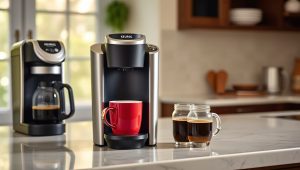
The drip side is useful for brewing a pot or larger serving without pulling multiple espresso shots. Check the stated carafe capacity and whether the machine uses paper filters or a reusable basket. A large advertised capacity does not always mean you can brew that amount quickly or keep it tasting fresh; coffee left on a hot plate can become stale or bitter. For a household that usually makes one cup at a time, a smaller single-serve brewer may be more convenient.
Also consider whether the controls make it clear which side is running. With two brewing systems packed into one appliance, filling the wrong reservoir or using the wrong switch is an avoidable but common nuisance. Read the manual before the first brew, especially for water-fill limits and whether the espresso and drip sides can operate simultaneously.
Maintenance and common failure points
Combination machines have more parts to manage than a simple drip brewer. Expect to rinse the espresso basket, clean the portafilter, wipe the steam wand after every use, and wash the drip carafe and basket. Hard water can lead to scale and slower heating, so follow the manufacturer’s descaling schedule rather than waiting for a problem.
Typical disappointments are not always defects. Espresso that tastes thin may come from stale coffee, a coarse grind, or an unsuitable basket. Milk that won’t foam may be too warm, or the wand may be dirty or used incorrectly. Drip coffee that overflows can point to too much coffee, a filter that is seated poorly, or a basket filled above its limit. If the machine leaks, stops heating, or repeatedly fails despite correct setup and cleaning, check warranty support before attempting repairs.
How to choose the right one
Start with your weekly routine, not the feature list. If you make drip coffee every morning and espresso only now and then, buy for the drip function and accept that the espresso side may be basic. If espresso drinks are the main event, prioritize the portafilter, steam wand, warm-up routine, and compatibility with a separate grinder. For occasional espresso without a learning curve, consider a De’Longhi automatic espresso machine, but compare its footprint and cleaning requirements with a combination model.
Measure the counter space, including room to lift the lid or remove the carafe. Then compare the machine’s capacity and controls with what you actually make. A combination model is a sensible compromise when you’ll use both sides; if you won’t, the cheaper dedicated brewer is often the better buy.
FAQ
Can a De’Longhi combination machine make espresso and drip coffee at the same time?
That depends on the specific model. Check its manual or product specifications; don’t assume simultaneous brewing is supported.
Does it come with a grinder?
Not necessarily. Check the included accessories and specifications. If it has no grinder, you’ll need pre-ground coffee or a separate grinder.
Is a combination machine good for beginners?
It can be, especially if you want both brewing styles and are willing to learn two routines. A dedicated drip maker is simpler if you only want regular coffee.
Are combination machines harder to clean?
Usually, yes, than a basic drip brewer. You’ll need to maintain both the espresso parts and the drip basket or carafe, plus clean the steam wand if you use it.
Ready to decide? Our #1 pick for 2026 is the Combination espresso and drip machine.
Live price & availability on Amazon.