Last updated: October 2, 2026
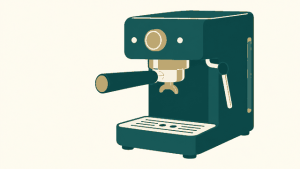
The De’Longhi Stilosa is a compact, inexpensive espresso machine for people who want to make basic espresso drinks at home without buying a large automatic machine. It uses a traditional portafilter, a steam wand, and a simple front control dial. That keeps the price down, but it also means you must grind, dose, tamp, steam, and clean the machine yourself.
It can make enjoyable lattes and cappuccinos when paired with fresh coffee and a suitable grinder. It is not a push-button appliance, and it has clear limits. The most important buying question is whether you want to learn a small amount of espresso technique or simply press a button and receive a consistent drink.
What the Stilosa is
The Stilosa is a compact semi-automatic espresso maker with a thermoblock-style heating system, a pressurized filter setup, and a manual steam wand. It is designed for espresso, Americanos, cappuccinos, and lattes rather than large batches of drip coffee.
The included pressurized baskets are useful for beginners because they create resistance even when the coffee grind is not perfectly dialed in. You can use pre-ground coffee, and the machine is generally more forgiving than a traditional non-pressurized setup. The trade-off is that pressurized baskets produce less control and a less refined shot than a good grinder and standard espresso basket.
Its small footprint is a major advantage. It fits comfortably in kitchens where a larger espresso machine would be inconvenient. The water reservoir is removable, and the controls are uncomplicated. There is no display, programmable dosing, built-in grinder, or automatic milk system to troubleshoot.
How it performs in daily use
See also: Breville Bench Saver • Rocket Espresso Coffee Machine
The Stilosa can produce a pleasant, concentrated coffee with a usable layer of crema, particularly with the included pressurized basket. The results depend heavily on the coffee, dose, tamping, and heat management. Expect a short warm-up, but allow additional time for the machine and portafilter to stabilize before chasing better results.
The steam wand is suitable for learning milk texturing, but it is not especially powerful. Heating a small pitcher of milk takes longer than it does on a more expensive machine, and producing fine microfoam requires practice. If you want glossy milk for latte art, you may find the wand limiting. For ordinary cappuccinos and lattes, it is adequate once you learn to position the pitcher correctly.
As with many small thermoblock machines, switching from brewing to steaming is not instantaneous. You may need to wait for the machine to reach steam temperature, then purge the wand before and after use. Making several milk drinks in succession is possible, but it is slower and less convenient than using a machine with a stronger boiler or more advanced temperature controls.
Main strengths and weaknesses
| Feature | What you get | What to watch for |
|---|---|---|
| Price | Low-cost entry into manual espresso | Accessories and a grinder can raise the total cost |
| Size | Compact and easy to fit on a counter | Small machines have limited capacity and slower steaming |
| Ease of use | Simple controls and forgiving pressurized baskets | You still need to tamp, steam, and clean manually |
| Espresso quality | Good enough for everyday milk drinks with suitable coffee | Less control and consistency than a better machine and grinder |
| Milk drinks | Manual wand offers a path to learning | Modest steam power makes texture and speed a challenge |
Do you need a grinder?
You can start with pre-ground coffee, and the Stilosa’s pressurized baskets are designed to make that approach workable. This is the cheapest way to try the machine. Buy coffee in small quantities, store it airtight, and use it before the flavor becomes flat.
A grinder becomes worthwhile if you want to improve the espresso rather than simply make a milk-based drink. Espresso requires a fine, adjustable grind, so a basic blade grinder is usually a poor match. Look for a burr grinder for espresso with genuinely fine adjustment. A grinder often makes a larger difference than upgrading from one inexpensive machine to another.
There is a catch: once you use freshly ground coffee, the Stilosa’s limitations become more noticeable. The stock pressurized basket hides some grind and extraction problems, while a non-pressurized basket exposes them. That can be rewarding if you enjoy adjusting variables, but frustrating if you want predictable results every morning.
Who should buy the Stilosa?
The Stilosa suits a first-time buyer who primarily drinks cappuccinos, lattes, or Americanos and wants to spend as little as possible. It is also a sensible choice for a small apartment, occasional espresso drinkers, or someone testing whether manual espresso is a hobby they will actually use.
It makes particular sense when you already own a suitable grinder or plan to use pre-ground coffee. The cheaper option is fine here: if your priority is an occasional milk drink and a small machine, spending several times more will not automatically make the coffee taste several times better.
It is less suitable for someone who wants café-style espresso with minimal effort, makes many drinks back-to-back, or expects consistently silky milk foam without practice. For that use, consider an automatic espresso machine. These machines cost more and can be harder to repair, but they reduce the work involved in grinding, dosing, and brewing.
What to consider instead
A more capable semi-automatic machine is worth considering if you are already committed to learning espresso. Look for stronger steaming performance, a sturdier portafilter, better temperature stability, and controls that let you use standard baskets. Pair it with a quality home espresso grinder.
A pod machine is another practical alternative. It is faster, cleaner, and more consistent than the Stilosa, but pods cost more per serving and give you less control over coffee freshness and recipe. Choose a pod system if convenience matters more than the process.
For regular black coffee as well as espresso-style drinks, a drip machine plus a separate espresso maker may be more useful than trying to make every beverage with the Stilosa. The Stilosa is not a replacement for a full-size coffee maker; its small brew size and manual workflow are better suited to individual drinks.
Cleaning and common failure modes
Most poor results from the Stilosa are caused by coffee or milk residue rather than a defective machine. Rinse the portafilter and basket after brewing, wipe and purge the steam wand immediately after steaming, and empty the drip tray regularly. Dried milk can block the wand and create weak, uneven steam.
Scale buildup is another common problem, especially with hard water. Follow the manual’s descaling instructions rather than relying on repeated water-only rinses. If the pump sounds strained, water flow becomes weak, or the machine leaks around the portafilter, check for an overfilled basket, a clogged basket, an improperly seated gasket, or overdue cleaning before assuming the pump has failed.
Do not tamp excessively hard to compensate for a coarse grind. With a pressurized basket, a moderate, level tamp is usually enough. Very fine coffee, too much coffee, or a blocked basket can produce slow flow and a bitter cup.
FAQ
Is the De’Longhi Stilosa good for beginners?
Yes, provided you are comfortable doing a few steps manually. Its pressurized baskets make the first attempts less demanding, but steaming milk and improving espresso still require practice.
Can the Stilosa use fresh coffee beans?
Yes, if you grind them finely enough with a suitable burr grinder. Start with the pressurized basket, then consider a standard basket only after you are comfortable adjusting grind size and dose.
Does it make real espresso?
It makes espresso-style coffee using pressure and a portafilter. With fresh coffee and careful preparation, it can produce a satisfying shot, though it does not offer the control or consistency of more advanced machines.
Is it worth buying if I only drink lattes?
It can be. The machine is capable of making good everyday lattes, but its steam wand is slower and less powerful than those on pricier machines. If you make one or two drinks at a time and do not mind learning, the Stilosa is a reasonable low-cost choice.