Last updated: October 2, 2026
An espresso machine with a built-in burr grinder solves a real problem: counter space and the hassle of matching a separate grinder to a machine. But it also creates a compromise you’ll live with every morning. Here’s how to decide whether a combo unit fits your setup, and what to look for if it does.
Why a built-in grinder makes sense
Fresh grounds go stale fast — espresso ground more than a few minutes before brewing loses aroma and produces a flatter shot. Grinding on demand is the single biggest quality upgrade most home setups can make, and a combo machine gets you there in one footprint and one purchase.
It also removes a compatibility headache. Entry-level machines pair awkwardly with high-end grinders and vice versa. A combo unit’s grinder is sized and calibrated for its own brew head, so there’s no mismatch to troubleshoot.
The trade-offs nobody mentions on the box
See also: Best Espresso Grinders for Home: Burr Size, Workflow and Budget Matched • Breville Smart Grinder Espresso
If the grinder dies, the machine dies. This is the big failure mode. Grinders are the part that wears out — burrs dull, motors burn, plastic adjustment collars crack. On a combo unit, a failed grinder often means shipping the whole 25-pound machine for service. With separate units, you replace the cheap part.
Grinder quality is capped. Combo machines use smaller burrs (usually 38-40mm conical) and offer fewer adjustment steps than a dedicated grinder. Fine for medium-dark espresso blends; limiting if you chase light roasts that need precise micro-adjustment.
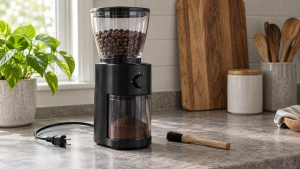
Cleaning is harder. Grounds migrate into the machine’s internals. Oily dark roasts clog the chute between grinder and brew head — the single most common complaint with these machines. Plan on brushing out the chute weekly.
What actually matters when comparing models
Grind adjustment range and step count. Look for at least 15-16 external grind settings, plus ideally an internal “inner burr” adjustment that extends the range for stubborn light roasts.
Brew pressure control. Machines with low-pressure pre-infusion and a 9-15 bar pump handle imperfect grind settings more forgivingly. This matters more than headline bar numbers — anything above 15 is marketing.
Thermocoil vs. thermojet vs. boiler. Thermocoil heats in about 30-45 seconds but has more temperature swing. Thermojet is faster (~3 seconds) and stable enough for most users. A true boiler is best but rare in combo machines under $1,500.
Steam wand type. A proper single-hole or multi-hole wand lets you texture real microfoam. Pannarello-style frothers inject air automatically — easier, but you’ll never pour latte art with one.
| Feature | Entry combo (~$500-700) | Midrange (~$700-1,200) | Separate setup (~$700-1,000) |
|---|---|---|---|
| Burr size | ~38mm conical | 40mm conical or small flat | 40-64mm (flat or conical) |
| Grind settings | 16-18 | 18-25+ | 40+ or stepless |
| Repair path | Whole machine to service | Whole machine to service | Replace grinder alone |
| Upgrade path | None — sell it | None — sell it | Upgrade either piece |
| Best for | First espresso setup, dark/medium roasts | Daily milk drinks, convenience | Light roasts, hobbyists |
Who each option suits
Buy a combo machine if: you’re moving up from pods or a drip machine, you drink milk-based drinks more than straight shots, and you value a tidy counter over adjustability. This is the right call for most people shopping in the $500-900 range — the convenience wins and the grind quality is genuinely adequate for supermarket and mid-tier beans. Browse espresso machines with built-in grinders and filter for models with at least 16 grind settings and a stainless burr (not ceramic-coated plastic).
Buy separates if: you already suspect you’ll get into this as a hobby. A $250-350 dedicated grinder paired with a $400-500 machine outperforms any combo at the same total price, and you can upgrade piece by piece. Check dedicated espresso grinders — look for stepless or near-stepless adjustment.
Skip both if: you want one-touch drinks with zero dialing in. That’s a super-automatic, which is a different category — the grinder inside is aimed at consistency, not quality, and shots will be thinner. If that’s your priority, look at super-automatic machines instead and accept the ceiling.
Common failure modes and how to avoid them
- Clogged grinder chute: caused by oily beans and skipped cleaning. Brush it weekly; switch to a drier-roast bean if it recurs.
- Wet, soupy pucks: usually the grind drifted coarser as burrs aged, or the chute is partially blocked, so less coffee reaches the basket than the dose setting claims.
- Steam wand going weak: scale buildup. Descale on the schedule the manual says, especially with hard water — or use filtered water and descale less often.
- Grind collar slipping: a plastic adjustment ring that wears with use. Some machines let you shim it; on others it’s a service call.
None of these are dealbreakers. They’re maintenance items — the same way a standalone grinder needs burr replacement every few hundred pounds of coffee.
FAQ
Is a built-in grinder as good as a separate one?
Usually not, but it’s close enough for medium and dark roasts. You notice the gap with light roasts, which need finer adjustment steps than most combo grinders offer.
How long do built-in grinders last?
Figure 3-7 years of daily use before burrs dull noticeably. That’s fine for the machine’s expected lifespan, but a dead grinder can idle the whole unit if repair isn’t economical.
Can I use pre-ground coffee as a backup?
Most combo machines include a bypass chute for pre-ground coffee — useful for decaf or when the grinder’s being serviced. Expect weaker shots, since pre-ground is rarely espresso-fine enough.
Is the cheapest combo machine worth it?
Down to about $450-500, yes — you still get fresh-ground espresso that beats pods. Below that, grinders turn into blade or false-burr units and shot quality collapses. At very low budgets, a basic machine plus a hand grinder is better value.