Last updated: October 2, 2026
“Grind amount” on the Breville Barista Express is easy to misunderstand. It does not set a precise dose in grams. Instead, the Grind Amount dial changes how long the built-in grinder runs, while the actual coffee dose depends on grind size, bean density, roast level, burr condition, and how the grounds settle in the portafilter.
That means the dial is useful for repeatability, but it is not a substitute for weighing your coffee. If your espresso tastes inconsistent, the first upgrade is usually a small coffee scale rather than a new machine.
What the Grind Amount dial does
The Barista Express uses a timed grinder. Turning the Grind Amount dial toward a higher setting makes the grinder run longer; turning it lower makes it run for less time. The result is more or fewer grounds in the portafilter.
The number on the dial is not a dose measurement. A setting that gives you roughly 18 grams with one coffee may give you 16 or 20 grams with another. Dark, less-dense beans can fill the basket differently from light-roasted beans, even when the grinder runs for the same duration.
The single- and double-shot buttons also control preset grinding times. You can adjust those times, but they remain time-based. For better control, treat the button as a convenient starting point and use a scale to check the dose.
A practical starting point
See also: Best Espresso Grinders for Home: Burr Size, Workflow and Budget Matched • Breville Smart Grinder Espresso
For the supplied double-wall or single-wall double basket, start around 18 grams if the basket accommodates that dose comfortably. The exact amount depends on the basket and the coffee. The goal is not to hit a magic number; it is to fill the basket consistently without forcing the portafilter into the group head.
Set the Grind Amount dial somewhere in the middle, grind, and weigh the coffee. Adjust the dial until the machine delivers your target dose. Once you know the approximate setting for that particular bean, you can use the dial for convenience and periodically check it with the scale.
A useful espresso starting recipe is:
- 18 grams of ground coffee in the basket
- About 36 grams of espresso in the cup
- Roughly 25 to 30 seconds from pump start
These are starting points, not rules. A coffee may taste better at a shorter ratio or a longer extraction. Taste and flow matter more than matching the numbers exactly.
How to adjust grind amount and grind size
Change one variable at a time. First, choose a dose and keep it steady. Then use the Grind Size dial to control extraction speed. A finer grind usually slows the shot; a coarser grind usually speeds it up. The Grind Amount dial changes how much coffee you use, not how finely it is ground.
If the shot runs too quickly and tastes thin or sour, make the grind finer in small steps. If it drips slowly or tastes harsh and bitter, try a slightly coarser setting. Do not automatically add more coffee when the shot is fast. A larger dose can increase resistance and mask the real problem, while also making the basket overfilled.
After adjusting the grind size, the grinder may deliver a different amount because finer grounds take longer to pass through the burrs. Recheck the dose. This is one reason the same Grind Amount setting can behave differently after a grind-size adjustment.
| What you observe | Likely adjustment | What to watch for |
|---|---|---|
| Fast, pale, sour shot | Grind finer | Recheck dose after changing the grind |
| Very slow, harsh shot | Grind coarser | Do not keep increasing the dose |
| Good taste but inconsistent dose | Weigh the grounds or adjust the timed dose | Beans and retention can change the result |
| Portafilter difficult to lock in | Reduce the dose | The basket may be overfilled or poorly distributed |
The most reliable workflow
Place the empty portafilter on a scale and tare it. Grind into the basket, then check the weight. If the dose is low, increase the Grind Amount dial slightly. If it is high, reduce it. Make small changes rather than turning the dial dramatically.
Distribute the grounds before tamping. The Barista Express grinder can leave a mound or an uneven pile in the basket, particularly with fresh beans or certain grind settings. Tapping the portafilter gently and using a distribution tool or fingertip technique can help, but do not press down before tamping.
Tamp level and with consistent pressure. The tamper does not need extraordinary force; a level, repeatable tamp is more important. Lock in the portafilter, start the shot, and stop it by weight if possible. Record the dose, yield, time, and taste. That simple log is more useful than chasing a particular dial number.
Common problems with the built-in grinder
The dose changes from shot to shot. Some coffee remains inside the grinder and comes out with the next dose. This retention is more noticeable when you change grind size or use only one shot at a time. The beans themselves also vary in density. Weighing the grounds is the clearest fix.
The grinder seems to run but produces little coffee. The burr path may be clogged with compacted grounds, or the upper burr may not be seated correctly after cleaning. Unplug the machine before cleaning, follow Breville’s instructions, and avoid forcing the adjustment ring. Very oily beans can make buildup worse.
The Grind Amount dial is near maximum but the basket is still light. The coffee may be unusually dense, the grinder may need cleaning, or the internal burr setting may be too coarse for your target. Clean first. If the machine is clean and the dose remains inconsistent, a separate grinder can provide better control.
The coffee tastes acceptable but the workflow is frustrating. That is a real trade-off. The built-in grinder saves counter space and money, but it is slower to adjust and less precise than a dedicated espresso grinder. If you switch between espresso and filter coffee often, changing settings on the Barista Express can become tedious.
When a separate grinder makes sense
Keep using the built-in grinder if you make one or two espresso drinks a day, usually buy similar beans, and are satisfied with the results. For those users, a scale and better distribution technique are cheaper and more useful than replacing the grinder.
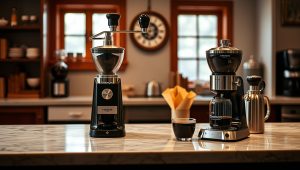
Consider a dedicated espresso coffee grinder if you want finer adjustment, lower dose variation, faster dialing-in, or the ability to keep separate settings for different coffees. The trade-off is cost, counter space, and another appliance to clean.
A coffee scale with timer is the better first purchase for most Barista Express owners. It lets you measure dose and output, making the existing grinder easier to understand. If you mainly brew espresso, choose a compact scale that fits on the drip tray or beneath the cup.
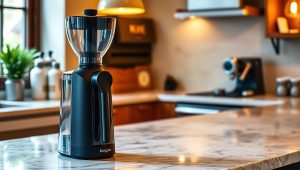
For someone who changes between espresso and pour-over, a single-dose coffee grinder may be more convenient. It avoids repeatedly moving a hopper dial and usually makes switching beans simpler, although retention and workflow vary by grinder.
FAQ
What Grind Amount setting should I use on the Barista Express?
There is no universal setting. Start near the middle, grind, and weigh the coffee. Adjust until your basket receives the dose you want, then fine-tune the grind size for shot speed and taste.
Does a higher Grind Amount setting make coffee stronger?
Usually it adds more ground coffee, which can produce a larger or stronger brew if the other variables stay the same. It can also slow the shot and make extraction uneven if the basket is overfilled.
Should I adjust Grind Amount or Grind Size first?
Set a repeatable dose with Grind Amount first. Then adjust Grind Size to control how quickly the espresso flows. Recheck the dose after every significant grind-size change.
Do I need a separate grinder for the Barista Express?
No. The built-in grinder is fine for many home users. Buy a separate grinder when dose consistency, quick adjustment, or switching between coffees matters more than saving space and money.