Last updated: October 2, 2026
Buying the best single espresso maker depends less on the size of the machine than on how much control you want over each shot. A compact pod machine can make espresso with almost no cleanup. A manual or semi-automatic machine can produce better coffee, but only if you are willing to grind, dose, tamp, and clean it.
For most people, the right choice is a small pod espresso machine for convenience or a compact semi-automatic machine with a separate grinder for better coffee. The cheapest option is not automatically a poor one: if you drink one espresso occasionally and value speed above all else, pods may be the sensible buy.
Quick picks
| Type | Best for | Main advantage | Main drawback |
|---|---|---|---|
| Capsule or pod machine | Fast, consistent single servings | Minimal skill and cleanup | Higher ongoing cost and less control |
| Compact semi-automatic | People who want café-style control | Fresh grounds and adjustable recipes | Requires a grinder and practice |
| Manual lever maker | Hands-on espresso enthusiasts | Small footprint and direct control | Inconsistent results for beginners |
| Stovetop espresso maker | Low-cost, strong coffee | Inexpensive and durable | It does not make true espresso pressure |
Best for most people: a compact pod espresso machine
See also: Breville Bench Saver • Rocket Espresso Coffee Machine
If you want one espresso in the morning without weighing coffee or learning extraction, start with a compact pod espresso machine. It heats quickly, doses a fixed amount of coffee, and usually produces a repeatable shot at the push of a button.
The trade-off is that you are buying into a capsule system. Pods cost more per serving than whole beans, create more packaging waste, and limit your choice of coffee. Some systems also make a short, concentrated drink that tastes closer to strong coffee than to espresso from a well-tuned café machine. That is not necessarily a problem, but expectations matter.
Pod machines are a good fit for one-person households, offices, occasional espresso drinkers, and anyone who does not want a separate grinder. They are also the safest gift when you do not know whether the recipient enjoys the process of making coffee. Choose a machine with a removable water tank and an automatic used-pod container if possible. These small conveniences matter more than extra drink buttons.
Best coffee quality: a compact semi-automatic machine
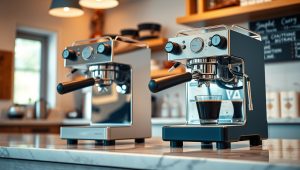
For better flavor and the ability to choose any beans, consider a compact semi-automatic espresso machine. You fill a portafilter with freshly ground coffee, tamp it, lock it into the group head, and start the shot. Some machines include a steam wand for milk drinks.
This category has the highest ceiling, but it also has the most ways to fail. A grind that is too coarse can produce thin, sour espresso. A grind that is too fine can choke the machine or make a bitter, over-extracted shot. Uneven tamping can cause water to rush through one part of the coffee bed. Old beans, an inaccurate grinder, and a dirty group head can all undermine an otherwise capable machine.
The grinder is especially important. A basic blade grinder is usually a poor match because it produces uneven particles. If your budget is limited, it can be better to buy a modest espresso machine and reserve money for a capable espresso burr grinder. Remove the accidental space in the search phrase when shopping; the important feature is an adjustable burr grinder designed to grind finely and consistently.
A semi-automatic machine suits someone who will make espresso several times a week and enjoys adjusting variables. It is less suitable for a person who wants a perfect drink immediately. Expect a short learning period, daily rinsing, and occasional descaling.
Manual and stovetop options
A manual lever espresso maker can be remarkably compact and satisfying. You add ground coffee, apply pressure with a lever, and control the flow yourself. There is no pump or complicated electronics, which can help with longevity and storage.
That simplicity transfers the work to you. Water temperature, grind size, dose, and pressure all affect the result. Manual makers are best for people who enjoy experimenting rather than people who simply need caffeine before work. They may also require a kettle and a separate grinder, so the complete setup can cost more than the small machine suggests.
A stovetop maker is cheaper still. It brews coffee by forcing hot water through grounds with steam pressure, creating a concentrated drink that works well with milk. It does not produce espresso in the technical sense: pressure is much lower than on an espresso machine, and the cup has a different texture and crema. Still, if your priority is inexpensive strong coffee, a stovetop espresso maker is often enough.
The main failure mode is overheating. Leaving one on high heat can scorch the coffee and damage the gasket. Use moderate heat, remove it when the brewing sound changes, and replace the gasket when it becomes brittle or leaks.
What to look for when buying
Size: Check the machine’s depth, not just its width. A compact espresso maker may still need room above or in front for the water tank, portafilter, or lever.
Water tank access: A tank that can be removed without moving the machine is easier to refill and clean. Very small tanks may require refilling after only a few drinks.
Heating system: Basic single-boiler machines are fine for one espresso at a time, but they may need a pause before steaming milk. Thermoblock systems often heat quickly, though temperature stability varies by design.
Milk drinks: If you mainly drink cappuccinos, confirm that the machine has a usable steam wand rather than a separate frothing attachment. A cheap automatic frother is convenient but gives you less control over milk texture.
Cleaning: Look for removable drip trays, accessible brew parts, and clear descaling instructions. Neglected oils and mineral scale are common reasons a machine starts producing weak, bitter, or leaking drinks.
Which one should you buy?
Choose a pod machine if you want the fastest single serving and do not care about using freshly ground beans. Choose a semi-automatic machine if flavor, fresh coffee, and recipe control are worth learning. Choose a manual lever machine if the preparation itself is part of the appeal. Choose a stovetop maker if you want the lowest price and can accept coffee that is espresso-like rather than true espresso.
Spending more only makes sense when it solves a problem you actually have. A premium machine will not fix stale coffee or a poor grinder, and a beginner may get better results from a simple pod machine than from an expensive manual setup they find frustrating. For one espresso per day, convenience is a practical feature, not a compromise.
FAQ
What is the easiest single espresso maker to use?
A capsule or pod machine is usually the easiest. It handles dosing and brewing automatically, although you still need to empty the pod container and clean the brew area.
Is a cheap espresso machine worth buying?
It can be, if you mainly want occasional espresso and accept slower heat-up, basic controls, and a less capable steam wand. The grinder and fresh coffee often matter more than moving to a slightly more expensive machine.
Do I need a grinder for a semi-automatic espresso maker?
Yes, unless you buy pre-ground coffee. A consistent burr grinder gives you far more control than a blade grinder and usually makes dialing in the shot easier.
Can a stovetop maker make real espresso?
No. It makes concentrated coffee with lower pressure and a different texture. It is a good inexpensive alternative if you do not require traditional espresso crema and extraction.