Last updated: October 2, 2026
Best Simple Espresso Machine for Home
The best simple espresso machine for most homes is a basic semi-automatic machine with a pressurized basket, a single boiler or thermoblock, and a separate steam wand. It gives you real control over the drink without forcing you to learn commercial café technique on day one.
That said, “simple” can mean two different things. Some people want to press one button and get a consistent coffee with almost no cleanup. Others want a traditional espresso machine that is easy to understand and can improve as their skills improve. Those are different purchases, and choosing the wrong type is the main reason buyers become frustrated.
Quick picks for different buyers
See also: Breville Bench Saver • Rocket Espresso Coffee Machine
| Machine type | Best for | Main advantage | Main drawback |
|---|---|---|---|
| Capsule machine | Maximum convenience | Fast, clean, repeatable drinks | Higher ongoing capsule cost and less control |
| Basic semi-automatic | Most beginners | Good balance of simplicity, cost, and control | Requires ground coffee and some practice |
| Manual lever machine | Hands-on enthusiasts | Quiet operation and direct control | Least forgiving workflow |
| Super-automatic | One-touch milk drinks | Grinds and brews with minimal effort | More expensive and harder to repair or clean |
The best choice for most people: a basic semi-automatic
A simple semi-automatic espresso machine is the safest recommendation for a first purchase. Look for a machine with a pressurized filter basket, a portafilter around the common home size, a removable water tank, and a steam wand that is physically separate from the coffee outlet.
A pressurized basket is particularly useful when you are using supermarket pre-ground coffee or an inexpensive grinder. It creates resistance for you, so small mistakes in grind size and tamping are less likely to produce a weak, fast shot. The trade-off is that the espresso can taste less nuanced than coffee brewed with a quality grinder and a non-pressurized basket.
This category suits buyers who want cappuccinos, lattes, and Americanos but do not want a fully automated appliance. You will still need to dose coffee, lock in the portafilter, start the shot, and wipe the steam wand after use. Those tasks take only a few minutes, but they are not optional.
When a capsule machine is the better buy
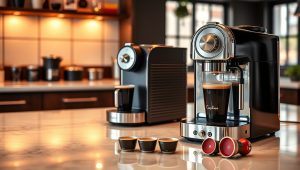
If your priority is a drink before work with almost no mess, choose a capsule espresso machine. It eliminates the grinder, dosing, tamping, and most of the loose coffee grounds. For a household that makes one or two drinks a day, that convenience can matter more than maximum flavor.
The cheaper option is fine here if you mainly drink short black coffee and accept the capsule system. Spending more may add a milk system, larger water reservoir, programmable buttons, or compatibility with more capsule styles, but it will not turn every capsule into café-quality espresso.
The failure mode is long-term cost and limited flexibility. Capsules cost more per serving than beans or ground coffee, create packaging waste, and restrict your choice of coffee. Milk capsules or built-in milk systems also add cleaning requirements. A capsule machine is simple at the point of brewing, not necessarily maintenance-free.
When to buy a super-automatic machine
A super-automatic espresso machine is the right category if several people want different drinks and nobody wants to learn espresso technique. These machines grind beans, dose coffee, brew, and sometimes froth milk at the touch of a button.
Convenience comes with compromises. Built-in grinders and milk systems create more parts to clean, and a clogged chute or poorly maintained milk circuit can stop the machine from performing well. The espresso is usually adequate and consistent rather than endlessly adjustable. Repairs can also be more expensive than repairs on a basic semi-automatic machine.
Buy one when convenience is worth the higher purchase price and maintenance burden. Do not buy one simply because it seems like the “best” machine. If you mostly drink milk-based beverages and value speed, it may be ideal. If you care about dialing in different coffees, a separate grinder and semi-automatic machine offer better control.
Features that matter—and those that do not
A good steam wand matters if you drink milk beverages. A basic wand can make fine foam, but it requires practice and may take longer than a café steam wand. Avoid assuming that a machine with a powerful-looking wand is automatically easy; control and heat-up behavior matter more than marketing language.
A removable water tank makes refilling and cleaning easier. A tank with a wide opening is more practical than one that technically comes out but is awkward to handle under a faucet.
A stainless-steel exterior can improve appearance and durability, but it does not guarantee better espresso. Internal temperature control, the basket design, and your coffee grinder affect the cup more.
Programmable volume buttons are convenient but not essential. They can stop a shot at a repeatable amount, although you may still need to adjust the coffee dose or grind as the beans age.
A built-in grinder saves counter space, but a weak grinder can become the machine’s limiting factor. If you are buying a semi-automatic machine, pairing it with a dedicated espresso coffee grinder is usually the better upgrade than paying for extra display features.
Common beginner problems
Fast, watery espresso usually means the coffee is too coarse, the dose is too small, or the coffee is stale. A pressurized basket can hide some of this, but it cannot rescue very old coffee.
A bitter shot often comes from running too much water through the same dose or using an excessively fine grind. Shortening the shot and making a small grind adjustment is more useful than tamping harder.
Weak milk foam commonly comes from holding the steam tip too deep in the milk. Add a little air at the surface first, then lower the tip to circulate the milk. Always wipe and purge the wand immediately afterward. Dried milk is difficult to remove and can block the tip.
Finally, do not ignore water and cleaning. Empty the drip tray, rinse the portafilter and basket, and follow the manufacturer’s descaling instructions. A simple machine that is cleaned regularly is easier to live with than a sophisticated machine that is neglected.
My buying advice
Choose a capsule machine for the least effort, a basic semi-automatic for the best balance, and a super-automatic for one-touch drinks shared by a busy household. For most first-time buyers who want espresso and milk drinks, the basic semi-automatic is the sensible middle ground. Spend less if you are uncertain how often you will use it; spend more only for a specific improvement such as a better grinder, easier milk system, or larger capacity—not for extra buttons.
FAQ
Is a cheap espresso machine good enough for a beginner?
Yes, if it has a pressurized basket, a usable steam wand, and a removable water tank. A cheaper machine is fine for milk drinks and learning the workflow. Expect less temperature stability, slower steaming, and simpler construction than on a premium machine.
Do I need a grinder for a simple espresso machine?
Not immediately. Pre-ground coffee works best with a pressurized basket. If you want better flavor and the ability to adjust shots, a grinder capable of fine espresso grinding becomes the most important upgrade.
Are capsule machines cheaper to use?
They are often cheaper or similar at the initial purchase, but capsules usually cost more per drink than ground coffee or beans. They are worth considering when saving time and avoiding mess matters more than minimizing serving cost.
How much cleaning does a home espresso machine need?
Plan to rinse the basket and portafilter after brewing, wipe and purge the steam wand after every use, and empty the drip tray regularly. Descaling and deeper cleaning depend on the machine, water hardness, and usage.