Last updated: October 2, 2026
Ariete coffee machines sit in an awkward middle ground in the US market: they’re not as cheap as the budget no-name espresso makers, and not as expensive as Breville or De’Longhi’s mid-range lineup. Most of the price confusion comes from the fact that Ariete sells very different machines under the same vintage-looking design language. A small moka-style electric brewer and a full 15-bar espresso machine can both say “Ariete” on the front and look similar in photos, but they do completely different jobs and cost very different amounts.
If you’re shopping by price, you need to know which Ariete you’re actually looking at.
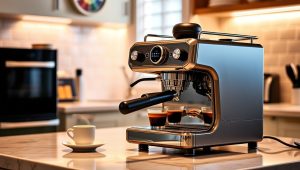
Quick answer: Our top pick in 2026 is the Ariete 1389 Vintage — our #1 rated choice. See the full ranked comparison, alternatives and buying advice below.
What Ariete coffee machines actually cost right now
In the US, Ariete prices fall into three clear tiers. These are street prices on Amazon and other major retailers, not the inflated MSRP you see on Ariete’s own site:
1. Electric moka and filter machines: $60 – $120
This is the Ariete 1363 Moka Aroma, 1358 Vintage Drip, and similar. They are not espresso machines in the true sense. The Moka Aroma is an electric moka pot that heats water automatically — convenient, but it makes moka coffee, not crema-topped espresso. Nice if you like that style, pointless if you want lattes.
2. Entry 15-bar espresso machines: $110 – $180
This is where most buyers land. Models like the Ariete 1388 Eccellenza, 1389 Vintage, and 1318 Moderna. Single boiler, pressurized portafilter, Panarello steam wand, small 0.9L – 1L water tank. They compete directly with De’Longhi Stilosa and Mr. Coffee Cafe Barista.
3. Espresso machines with built-in grinder or larger boiler: $200 – $320
Models like the Ariete 1314 Moderna with integrated grinder and the larger 1312. You pay for the grinder and a more substantial chassis, not for better temperature control. Above $300, Ariete stops making sense against a Breville Bambino or Gaggia Classic.
Prices swing 20-30% around holidays. Ariete is heavily discounted for Black Friday and Prime Day, often dropping $30-50 on the entry espresso models. If you see an Ariete 1389 listed at $249, wait — it routinely sells for $159-$179.
Which Ariete makes sense by budget
See also: Breville Bench Saver • Rocket Espresso Coffee Machine
Under $100: Only buy the electric moka if you already like moka. The Ariete Moka Aroma is genuinely useful if you love moka pot coffee but hate standing over the stove. It keeps the ratio consistent and shuts off automatically. It will not make espresso, it will not steam milk well, and the aluminum boiler needs regular cleaning or it gets bitter. For straight black coffee, a simple drip machine does a better job for less money. The cheaper option is fine here if you just want hot coffee fast.
$110 – $180: The sweet spot, but with trade-offs. This is the classic pastel-colored Ariete with the manometer on the front. You get a real pump, a 15-bar system with a pressurized filter, and a steam wand that can make passable foam for cappuccinos.
What you don’t get: stable brew temperature, a good grinder, or durability. These machines use a lot of plastic internally, heat up quickly but also overheat if you pull two shots back-to-back, and the thermoblock takes 30-45 seconds to switch from brew to steam. The pressurized basket hides a bad grind — helpful for beginners with pre-ground coffee, limiting if you want to learn real espresso.
Who it suits: someone who wants milk drinks at home without spending $400, uses pre-ground or a cheap blade grinder, and makes 1-2 drinks at a time. If you plan to buy a proper burr grinder and dial in single-origin beans, you’ll outgrow this machine in months.
$200+: Think twice before paying for the built-in grinder. An Ariete espresso machine with grinder looks like a good deal because a separate grinder costs $120+ alone. In practice, the integrated grinders on Ariete 1314 and similar are stepped, loud, and produce a lot of clumps and fines. You cannot adjust them finely enough for true espresso, and when the grinder breaks, your whole machine is down. A separate burr coffee grinder for espresso paired with a cheaper Ariete 1389 usually gives better results and lasts longer.
Ariete vs. competitors at the same price
Ariete wins on looks and loses on parts availability in the US. That’s the core trade-off. De’Longhi and Breville have US warehouses, cheap gaskets, portafilters, and filters available everywhere. Ariete parts are harder to find and support is slower.
| Machine | Typical US Price | Boiler / Heating | Filter Type | Best For |
|---|---|---|---|---|
| Ariete 1389 Vintage | $149 – $179 | Thermoblock, ~900W | Pressurized (non-pressurized included) | Style + milk drinks on a budget |
| Ariete 1314 Moderna w/ Grinder | $229 – $299 | Thermoblock + integrated grinder | Pressurized | Small kitchens that need all-in-one |
| De’Longhi Stilosa EC260 | $99 – $129 | Single boiler | Pressurized | Cheapest way to learn milk steaming |
| Breville Bambino | $299 – $349 | ThermoJet, 3 sec heat-up | Pressurized + non-pressurized | Better temperature stability, faster workflow |
| Casabrews CM5418 | $139 – $169 | Thermoblock, 20 bar | Pressurized + non-pressurized | Budget pick with better accessories |
If your budget is strict $150, the De’Longhi Stilosa is cheaper and easier to fix than the equivalent Ariete, but the Ariete looks better on the counter and often includes a temper and better filters in the box. If you can stretch to $300, the Breville Bambino is a clear step up in shot consistency and steam power. Ariete at $250+ is hard to justify unless you specifically want the vintage design.
Common failure modes and running costs
Ariete machines are not built for heavy use. The most common issues reported after 12-18 months:
1. Steam wand clogging. The Panarello tip gets milk baked inside if you don’t purge and wipe immediately after each use. Soak the tip in hot water weekly.
2. Pressurized filter clogging. The tiny valve underneath gums up with fine coffee or hard water scale. Backflush with water only (no detergent on these machines) and descale every 2-3 months with soft water, more often if you have hard tap water.
3. Portafilter gasket wear. The rubber group gasket hardens and leaks around the portafilter. Replacement is cheap but sourcing the exact Ariete size can take weeks in the US. Keep a spare if you buy one.
4. Inconsistent temperature. Thermoblocks overshoot. If your shots taste burnt one day and sour the next, that’s normal for this class. Let the machine heat for at least 2 minutes, pull a blank shot to stabilize, then brew. Don’t pull shots immediately after steaming.
Running costs are low: pressurized filters let you use pre-ground coffee like Lavazza or Cafe Bustelo, and you won’t need expensive descaler if you use filtered water. Budget $15-20 a year for descaler and maybe $12 for a replacement gasket. The charcoal water filter, if your model has one, is optional — filtered water in the tank does the same thing for less.
Who should and shouldn’t buy an Ariete
Buy an Ariete if you want a stylish, compact machine for occasional lattes and cappuccinos, you use pre-ground coffee or will buy a separate entry burr grinder later, and you care about how the machine looks in a small kitchen. For that user, the $149-$179 models are a fair deal on sale.
Skip Ariete if you want to learn true espresso with a non-pressurized basket, you make 4+ drinks in a row for family, or you want strong US support and easy parts. In that case a Breville Bambino espresso machine or Gaggia Classic costs more upfront but saves frustration. Also skip the electric moka models if you actually want espresso — they are a different drink entirely.
The honest price answer: Ariete is worth it at $120-$180 on discount. At full MSRP of $229-$299, you are paying for design, not better coffee. Wait for a sale, use filtered water, and don’t expect cafe-quality shots from a pressurized filter — expect convenient milk drinks that beat instant and pod coffee.
FAQ
Is Ariete a good brand for espresso?
For beginner milk drinks, yes. It makes decent cappuccinos with pressurized filters and pre-ground coffee. For learning real espresso with fresh beans and precise control, brands like Breville, Gaggia, and Rancilio offer better temperature stability and accessories at a similar or slightly higher price.
Why is the same Ariete model listed at very different prices?
Ariete’s MSRP is high, but US retailers discount heavily. Import sellers also list the European 220V version at a lower price — do not buy that in the US. Check that it’s 110-120V and sold by a US retailer, then compare the sale price, not the list price.
Do I need a separate grinder with an Ariete?
If you buy a model without a built-in grinder, yes, if you want fresh beans. A basic burr grinder that can grind fine enough for pressurized espresso costs $60-$90 and is worth it. If you use pre-ground espresso from the store, you can skip the grinder entirely at first — pressurized baskets are designed for it.
How long does an Ariete coffee machine last?
With filtered water and regular descaling, 3-5 years of light home use (1-2 drinks per day) is typical. Heavy use, hard water, or never cleaning the steam wand will cut that to 1-2 years. The pump and thermoblock usually fail before the chassis wears out.
Ready to decide? Our #1 pick for 2026 is the Ariete 1389 Vintage.
Live price & availability on Amazon.