As an Amazon Associate we earn from qualifying purchases at no extra cost to you. Product prices and availability are accurate as of the date shown and are subject to change.

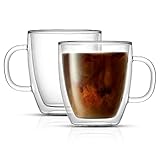
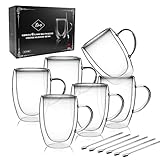


TL;DR: Double walled glass coffee mugs keep your drink hot longer than single-wall glass or thin ceramic, look stunning on any coffee bar, and eliminate condensation on the outside. They’re the ideal vessel for latte art, cappuccinos, and any drink where you want to see the layers — without burning your hands or watching your coffee go cold in minutes.
Best Double Walled Glass Coffee Mugs: Style Meets Heat Retention
Single-wall glass mugs are beautiful and terrible at keeping coffee hot. Double walled glass mugs fix both problems that plague standard glassware — rapid heat loss and a surface too hot to hold comfortably — while preserving everything that makes glass appealing: visual clarity, flavor neutrality, and a clean modern aesthetic that works on any coffee bar setup.
If you’re considering a double walled glass mug for your home coffee ritual, here’s what actually matters when comparing options and how to choose the right size and style for your brewing habits.
- Quick Comparison
- Top Double Walled Glass Coffee Mugs
- How Double Wall Insulation Actually Works
- Borosilicate vs. Regular Glass: Why It Matters
- Choosing the Right Capacity for Your Drinks
- Double Walled Glass vs. Other Mug Materials
- Spec Comparison: Double Walled Glass Mugs
- Care and Handling
- FAQ: Double Walled Glass Coffee Mugs
- About the Author
- Frequently Asked Questions
Quick Comparison
| Product | Brand | Price | Rating |
|---|---|---|---|
| De’Longhi DeLonghi Double Walled Thermo Latte Glasses | — | $27.49 | 4.6/5 |
| JoyJolt Savor Double Wall Insulated Glasses – Coffee Mu… | JoyJolt | $20.16 | 4.5/5 |
| BTaT- Double Walled Glass Coffee Mugs | BrewToATea | $36.99 | 4.4/5 |
| 12 Oz Double Walled Glass Coffee Mugs with Handle | Wells | $17.99 | 4.4/5 |
| YUNCANG Double Wall Coffee Mugs | YUNCANG | $29.99 | 4.4/5 |
Top Double Walled Glass Coffee Mugs
See also: How to Season a New Coffee Grinder (2026): Step-by-Step • How to Clean a Moka Pot Safely (2026): Step-by-Step
How Double Wall Insulation Actually Works
A double walled glass mug is exactly what it sounds like: two layers of borosilicate glass with an air gap sealed between them. That air gap is the insulating layer. Air is a poor conductor of heat, so the gap dramatically slows the rate at which heat transfers from your hot beverage to the outer wall — and from there to the ambient room temperature.
The practical result is threefold. Your drink stays hot significantly longer than in single-wall glass. The outer surface of the mug stays close to room temperature, so you can hold it comfortably even when the coffee inside is freshly poured. And because the outer wall stays cool, you get zero condensation — the surface never chills below the dew point of the surrounding air, so no water droplets form on the outside.
The insulation isn’t as aggressive as vacuum-sealed stainless travel mugs, which eliminate the air gap entirely and replace it with a vacuum. Double wall glass retains heat for 30–60 minutes effectively — longer than single-wall ceramic, shorter than a Yeti. For attentive home coffee drinking, that window is more than adequate.
Borosilicate vs. Regular Glass: Why It Matters
Quality double walled mugs are made from borosilicate glass — the same material used in laboratory glassware and high-end kitchen equipment like Pyrex. Borosilicate has a significantly lower coefficient of thermal expansion than soda-lime glass (regular glass). In plain terms, it handles sudden temperature changes without cracking. You can pour boiling water directly into a cold borosilicate glass mug without risk of thermal shock fracture.
Budget double walled mugs sometimes use regular glass, which is cheaper to manufacture but significantly more fragile under thermal stress. The failure mode is abrupt — a visible crack or complete shatter when you pour hot liquid into a cold glass. Always verify that a double walled glass mug specifies borosilicate before purchasing. Any reputable product in this category will state it explicitly in the product description.
The wall thickness of the inner layer matters too. Thinner inner walls mean the glass heats up faster with your drink, which actually improves the floating or suspended visual effect many people buy these mugs for — espresso layered in milk looks different (better) in a thin-walled glass than a thick one.
Choosing the Right Capacity for Your Drinks
Double walled glass mugs are available in a wide range of capacities. Matching capacity to your primary drink type is important — these mugs are meant to be full or nearly full, and visual appeal suffers when a large glass holds a small drink.
80–100 ml (3 oz) sizes are espresso-specific — double shot capacity, ideal for pulling a ristretto or regular double directly into the glass. These are show-piece vessels; the clarity lets you see the crema layer clearly.
200–250 ml (7–9 oz) is the cappuccino and flat white range. This is the most popular size for home espresso drinkers who want to appreciate latte art or see espresso and milk blending. Pair these with a coffee thermometer to nail your steam temperature — over-steamed milk loses its silkiness and the visual appeal of the pour is diminished. See our guide on coffee thermometers and steam pitchers for setup guidance.
300–400 ml (10–14 oz) suits lattes, larger Americanos, and filter coffee. At this size, double wall insulation provides a noticeable practical benefit — a 350 ml latte cools more slowly than in a porcelain mug of equivalent size.
Double Walled Glass vs. Other Mug Materials
Each mug material occupies a different position in the home coffee toolkit. Double walled glass is not the most durable option or the best heat retainer — it occupies a specific niche where aesthetics and moderate insulation combine with flavor neutrality. Compared to alternatives:
Porcelain mugs offer similar flavor neutrality with better durability and lower price per mug, but no visual appeal for layered drinks. For matched sets that cover multiple beverage formats, a porcelain coffee mug set remains the practical workhorse choice. Double walled glass is the display piece.
Stainless travel mugs retain heat for hours but completely obscure the drink, are heavier, and can impart subtle metallic notes in cheaper alloys. Double walled glass gives you most of the heat benefit for home use with none of the flavor or visual downsides.
Spec Comparison: Double Walled Glass Mugs
| Feature | Single-Wall Glass | Double-Wall Glass | Porcelain | Stainless Insulated |
|---|---|---|---|---|
| Heat retention (30 min) | Poor | Good | Very good | Excellent |
| Condensation | Yes | No | No | No |
| Drink visibility | Full | Full | None | None |
| Flavor neutrality | Excellent | Excellent | Excellent | Good (quality alloys) |
| Thermal shock resistance | Low | High (borosilicate) | High | N/A |
| Durability | Low | Moderate | Good | Excellent |
| Typical price range | $8–$25 | $15–$50 | $20–$60 (set) | $25–$60 |
Care and Handling
Double walled glass mugs require more careful handling than ceramic or stainless. The air gap between the walls is sealed — if that seal is compromised by impact or sudden thermal stress, the insulating effect is lost and condensation reappears on the outer wall. Handle these mugs with more care than you’d give standard coffee cups.
Most double walled borosilicate mugs are technically dishwasher safe on the top rack, but hand washing is recommended for longevity. The dishwasher’s high-pressure spray jets and detergent can gradually stress the seal points over dozens of cycles. A gentle hand wash with dish soap and a soft sponge takes 20 seconds and keeps the mugs in service significantly longer.
Avoid sudden extreme temperature changes even with borosilicate — moving directly from a freezer to a boiling pour is beyond the design tolerance of most consumer glassware. Normal use (room temperature or pre-warmed mug, hot coffee poured in) is well within spec.
FAQ: Double Walled Glass Coffee Mugs
How much longer does a double walled glass mug keep coffee hot?
In controlled testing, double walled borosilicate glass retains beverage temperature roughly 1.5–2x longer than single-wall glass of equivalent size. A fresh espresso-based drink that would cool to undrinkable temperature in 15 minutes in a single-wall glass typically stays in the comfortable drinking range for 25–35 minutes in a double walled mug. This is notably less than vacuum-insulated stainless (which can maintain temperature for 4–6 hours), but appropriate for home use where you’re drinking the coffee within 30–45 minutes of brewing.
Are double walled glass mugs safe to use in the microwave?
Most double walled glass mugs are not recommended for microwave use. The sealed air gap can heat unevenly, potentially building pressure or stressing the seal. Some manufacturers explicitly prohibit microwave use; others say “microwave safe” but with caveats. Check the product specifications for your specific mug. If you need to reheat a drink in a double walled glass, do it on the stovetop in a small saucepan and return it to the mug — it takes 60 seconds and avoids any risk to the seal. The good news is that the insulation means you’re less likely to need reheating in the first place.
Why does my double walled mug have condensation on the outside?
Condensation on the outer wall of a double walled mug indicates the air gap seal has been compromised. This can happen from a sharp impact, a thermal stress fracture in the glass, or — in cheaper mugs — a manufacturing defect in the original seal. Once the seal is broken, the insulating air gap fills with ambient air and moisture, and the mug behaves like a single-wall glass. The seal is not repairable; a mug with condensation on the outside has lost its double-wall insulating function. If the mug is new and already showing condensation, it’s a warranty issue — contact the manufacturer or retailer.
What is the best double walled glass mug size for cappuccino?
A traditional cappuccino is 150–180 ml (5–6 oz) — a double espresso plus 100–120 ml of steamed milk. A double walled glass in the 180–220 ml range is ideal: large enough to hold the drink with a small headspace for the foam layer, small enough that the drink looks properly proportioned and retains temperature well. At this size, the latte art or foam pattern is visible through the clear glass walls, which is a significant aesthetic advantage over ceramic at the same capacity.
Can I use a double walled glass mug for cold drinks?
Yes, and it works exceptionally well. The same air gap that slows heat loss also slows cold loss, keeping iced coffee and cold brew colder longer than single-wall glass. The no-condensation benefit is arguably even more useful for cold drinks — single-wall glass with iced coffee sweats immediately in a warm room, soaking napkins and leaving rings on furniture. Double walled glass stays dry on the outside regardless of how cold the contents are. Borosilicate handles the temperature differential between cold liquid and warm ambient air without any stress concerns.
Frequently Asked Questions
How well do double walled mugs actually insulate?
The air gap between the two walls slows conduction, keeping coffee hot roughly twice as long as a single-wall glass while the exterior stays comfortable to hold. They will not match a vacuum-insulated steel tumbler, which pulls a true vacuum rather than simply trapping still air.
Does the glass type matter?
Yes, look specifically for borosilicate. It handles thermal shock far better than soda-lime glass, so pouring boiling water into a cool mug will not crack it, and it is lighter and clearer. Cheap soda-lime double-wall mugs are the ones that typically fail within the first year.
Are they dishwasher and microwave safe?
Most borosilicate mugs are microwave safe and nominally dishwasher safe, but hand washing is strongly recommended. High-pressure jets and rack knocks chip the thin rims, and repeated heating cycles can compromise the seal, which leads to condensation permanently trapped between the two walls.
Why is there water trapped between the walls?
The seal at the base has failed, usually from thermal shock or a dishwasher cycle. There is no way to dry it out and the mug will fog every time you use it from then on. Treat it as a warranty claim rather than something you can repair.
What size should I buy for espresso versus latte?
Around 2 to 3 oz for espresso, 5 to 6 oz for cappuccino, and 8 to 12 oz for lattes. Since the visual appeal of double-wall glass is the layering, latte drinkers usually want the taller 8 to 12 oz shape rather than a wide bowl.
Ready to decide? Our #1 pick for 2026 is the De'Longhi DeLonghi Double Walled Thermo Latte Glasses.
Live price & availability on Amazon.