Last updated: October 2, 2026
De’Longhi single-serve coffee makers cover two different buying decisions: machines that brew regular coffee one cup at a time, and espresso machines that use ground coffee or capsules. They are not interchangeable. A compact espresso machine can make a concentrated shot for lattes, while a single-serve coffee maker is better for a travel mug of ordinary coffee.
Before buying, decide what you mean by “single serve.” If you want the simplest morning routine, look at De’Longhi single-serve coffee makers. If you want café-style drinks, compare espresso machines instead of assuming a pod brewer will do the same job.
What De’Longhi single-serve means
De’Longhi is best known for espresso machines, including compact manual models and automatic machines that grind beans. Its single-serve range has also included pod-based and bean-to-cup designs, depending on the market and current stock. Features can vary considerably, so check the exact machine’s brewing format before ordering.
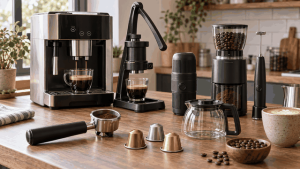
There are three common formats:
- Capsule machines: Insert a sealed pod and press a button. These are clean and convenient, but you are limited to compatible capsules and their cost.
- Ground-coffee espresso machines: Fill a portafilter, tamp the coffee, and brew a small shot. They offer more control but require a grinder, some practice, and regular rinsing.
- Bean-to-cup single-serve machines: The machine grinds beans for each drink and handles most of the brewing process. They are convenient, but more expensive and mechanically complex.
A “single serve” label does not automatically mean the machine brews a large mug. Espresso models often produce one or two small shots, not 8 or 12 ounces of coffee. Check the listed cup sizes and whether the drip tray accommodates your travel mug.
Which format is right for you?
See also: Breville Bench Saver • Rocket Espresso Coffee Machine
| Type | Best for | Main advantage | Main drawback |
|---|---|---|---|
| Capsule brewer | Fast, low-mess coffee and espresso-style drinks | Simple operation and consistent portions | Ongoing capsule cost and packaging waste |
| Manual espresso machine | People who want control over espresso and milk | Better ability to adjust grind, dose, and shot size | More work; a poor grinder can limit results |
| Bean-to-cup machine | Frequent espresso drinkers who value convenience | Freshly ground coffee with minimal preparation | Higher price and more cleaning inside the machine |
| Single-serve drip brewer | One mug of regular black coffee | More suitable for a full-size cup | Usually cannot make true espresso |
Choose a single-serve coffee maker for ground coffee if you want regular coffee and do not want capsules. This is often the better value for someone who drinks one mug in the morning and already buys ground coffee. The cheaper option is perfectly adequate when speed, cup size, and low purchase cost matter more than espresso quality.
What to check before buying
Brewing format comes first. Some machines accept only a proprietary capsule system, while others use a particular pod standard. “Pod compatible” is not a universal guarantee. Confirm that the coffee you already buy will fit.
Water-tank size affects convenience. A small tank saves counter space but may require refilling after every cup or two. That is not a serious problem for one person, but it becomes irritating in a shared kitchen. A removable tank is easier to fill at the sink and easier to clean.
Look at cup clearance. Many compact machines fit a small cup but not a tall travel mug without removing the drip tray. Measure your mug and the available counter space, including room above the machine for a water reservoir or capsule insertion.
Milk systems need extra attention. A steam wand gives you more control and can produce better-textured milk, but it requires practice and wiping immediately after use. An automatic milk container is easier for repeatable drinks, yet it adds parts that must be rinsed and refrigerated or emptied. Dried milk is one of the most common causes of poor performance and unpleasant smells.
Check the controls and portion settings. One-touch buttons are convenient, but a programmable volume does not make a machine produce a stronger espresso. If too much water is pushed through a small dose of coffee, the drink can taste thin or bitter. Manual control is useful if household members prefer different cup sizes.
Common problems and trade-offs
A capsule machine can taste consistent but flat if the capsules are old, poorly stored, or simply not to your preference. The machine is not able to fix stale coffee. Capsule prices also add up: the low upfront cost may be offset by frequent purchases over several years.
Manual espresso machines can make better drinks, but only if paired with a capable espresso coffee grinder. Pre-ground supermarket coffee is convenient, but it may not produce the same flavor or crema as freshly ground coffee. Inconsistent tamping, an unsuitable grind, and an overheated machine can all cause weak or bitter shots.
Bean-to-cup machines reduce preparation but are not maintenance-free. Coffee oils and fine grounds collect in the brew group and chute. If cleaning tablets, rinsing, and descaling are ignored, the machine may develop restricted flow, watery coffee, or error messages. The convenience is worthwhile for someone who makes several drinks daily; it is harder to justify for an occasional espresso drinker.
All De’Longhi machines also need water-quality consideration. Hard water can leave scale inside the heating system. Use the manufacturer’s recommended filter or descaling schedule, and do not assume that bottled water is always better. Extremely low-mineral water may also be unsuitable for some machines.
Who should buy one?
Buy a capsule model if several people need coffee quickly, nobody wants to weigh beans or tamp espresso, and you accept the long-term capsule expense.
Buy a manual espresso machine if you enjoy the process, want to use fresh beans, and are willing to buy or already own a grinder. This is the most rewarding route for hands-on espresso drinkers, but it is not the lowest-effort choice.
Buy a bean-to-cup model if convenience is worth paying for and you drink espresso-based beverages often. It suits a busy household better than a hobbyist who wants to fine-tune every shot.
Buy a regular single-serve coffee maker if your target drink is a full mug of black coffee. Spending extra for espresso hardware will not improve that use case and may leave you with a smaller, stronger drink than you wanted.
FAQ
Does a De’Longhi single-serve machine make regular coffee?
Some models do, but many De’Longhi machines are espresso-focused. Check the brewing volume and product description. A machine designed for espresso may not produce a satisfactory full-size mug.
Are De’Longhi capsule machines worth it?
They can be worthwhile for convenience, consistent portions, and low cleanup. They are less attractive if you drink several cups daily, dislike capsule waste, or want to choose any coffee from a local roaster.
Is a manual De’Longhi espresso machine difficult to use?
It has a learning curve, especially if you steam milk. The machine is approachable, but results depend heavily on grind size, dose, tamping, and fresh coffee. Expect some trial and error.
How often should I clean it?
Rinse the brewing parts regularly, empty the drip tray before it overflows, wipe a steam wand immediately after use, and follow the manual for descaling and deeper cleaning. Milk systems usually need attention after every use.