Last updated: October 2, 2026
Quick answer: Our top pick in 2026 is the Rialto (used/discontinued) — our #1 rated choice. See the full ranked comparison, alternatives and buying advice below.
What the DeLonghi Rialto Actually Is
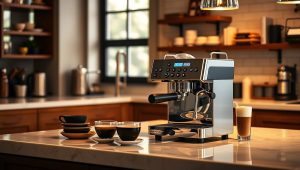
The DeLonghi Rialto is not one of DeLonghi’s current mainstream home machines, and that is the first thing to understand if you are shopping for one. In most markets, DeLonghi’s lineup is built around the Dedica, Magnifica, Dinamica, Eletta, and La Specialista families. The Rialto shows up as a discontinued, low-volume model that was sold in limited regions, often through department stores or as part of a bundle. It is a compact, entry-level automatic machine — essentially a small thermoblock-based unit with a pressurized filter system, not a true prosumer semi-automatic.
In practice, that means it was designed to make espresso and milk drinks quickly with minimal learning curve, using pre-ground coffee or ESE pods depending on the exact variant, and a panarello-style steam wand. You will not find much official documentation for it today. DeLonghi’s own support site rarely lists it, manuals are hard to locate, and parts diagrams are inconsistent. If you see one for sale now, it is almost always used, refurbished, or old new-stock from a third-party seller. That matters more than the spec sheet, because support and parts availability will determine how long you can actually live with it.
Who It Suits and Who Should Skip It
See also: Breville Bench Saver • Rocket Espresso Coffee Machine
The Rialto makes sense for a very narrow buyer: someone who wants a tiny, simple DeLonghi automatic for a vacation apartment, office nook, or first espresso machine, and who finds one at a genuinely low price — think under $150 in good working order. If you primarily drink milk-based drinks, prefer push-button convenience, and are not chasing dialed-in light roasts, its pressurized system will cover you. It is forgiving with supermarket pre-ground coffee and does not require a separate grinder, which keeps the initial cost down.
You should skip it if you want to learn real espresso, control dose and extraction, or pull consistent shots with freshly ground specialty coffee. The Rialto does not have a PID, OPV adjustment, or a proper commercial-style portafilter. The steam power is weak and wet compared to even a modern Dedica, so microfoam for latte art is difficult. And if you need reliability and warranty coverage as a daily driver, a current production model is a safer bet. When the cheaper used option is not actually cheap once you factor in descaling, gaskets, and potential pump failure, the value disappears.
What It Is Like to Live With Day to Day
On the counter, the Rialto’s advantage is size. It is narrower and lighter than a Magnifica or La Specialista, and it heats in under a minute. Workflow is straightforward: fill the small 0.8 to 1.0 liter water tank, add pre-ground coffee to the pressurized double-shot filter, tamp lightly — the pressurized basket does most of the work — and press brew. The thermoblock will push water through at a fixed profile. Crema will look decent even with stale beans, but it is aerated crema from the pressurized basket, not emulsified oils from a good extraction. For many casual drinkers that is fine, but you will not taste the clarity you get from a non-pressurized basket and fresh grind.
Milk steaming is where you feel the limits. The panarello wand is designed to auto-froth by sucking in air, which gives you big, bubbly foam quickly but not the silky texture you need for flat whites. You can remove the outer panarello sleeve on some variants to get closer manual control, but the boiler is small and pressure drops fast. Expect 45-60 seconds to steam a small pitcher, with a wait to reheat before you can brew again. Drip tray capacity is also small, so you will empty it often if you make back-to-back drinks. None of this is unusual for this class, but it is worth knowing before you buy.
Common Drawbacks and Failure Modes to Check
Because most Rialtos you find now are older, condition matters more than features. The most common issues we see on this generation of small DeLonghi thermoblock machines are scale-related. Hard water clogs the thermoblock and solenoid valve, leading to weak flow, loud pump noise, or no water at all. If the seller cannot show you a shot being pulled and steam coming out strongly, assume it needs descaling at minimum and a pump or valve replacement at worst. Ask when it was last descaled and what water was used. A machine run on unfiltered hard water for years without descaling is a risky buy.
Other failure points are the portafilter gasket and the pressurized basket valve. The gasket hardens with age and starts to leak around the portafilter — cheap to replace if you can find the correct size, annoying if you cannot. The small silicone valve inside the pressurized basket also gums up with coffee oils and can stick, causing no crema or blocked flow. The steam knob and its O-rings can weep as well. None of these parts are expensive individually, but for a discontinued model, sourcing the exact gasket or knob insert can take weeks. If you are not comfortable ordering parts by measurement and watching disassembly videos, factor in service cost or buy a model with readily available spares. For a new purchase with parts support, it is often simpler to look at current DeLonghi automatic espresso machines where filters, gaskets, and descaler are standardized.
How the Rialto Compares to Current DeLonghi Options
If you are deciding between a used Rialto and a new entry-level DeLonghi, the comparison is less about taste and more about ownership experience. Here is how it stacks up against the models you are most likely to be cross-shopping:
| Machine | Boiler / Heating | Filter System | Milk System | Best For |
|---|---|---|---|---|
| Rialto (used/discontinued) | Single thermoblock, no PID | Pressurized only | Panarello, low power | Ultra-compact, low-cost second machine when found cheap |
| Dedica EC680 / EC685 | Thermoblock, fast heat, 15-bar pump | Pressurized + optional non-pressurized | Panarello convertible to manual | Beginners who want to learn and still fit a small kitchen |
| Magnifica S / Evo | Thermoblock with auto grinder | Automatic brew unit | Panarello or Automatic Cappuccino system | Push-button convenience, no separate grinder |
| La Specialista Arte / Prestigio | Thermoblock with PID and active temp control | Non-pressurized, with dosing kit | Powerful manual wand (My LatteArt) | Hands-on control without going prosumer |
The table makes the trade-off clear. The Rialto competes only on size and price. A Dedica costs more new but gives you a path to non-pressurized brewing and better steam, while a Magnifica removes the grinder question entirely. If you know you want to use fresh beans, looking at espresso machines with built-in grinders or pairing a Dedica with a capable burr grinder will produce noticeably better shots than any pressurized-only machine, including the Rialto.
Should You Buy a Rialto Today?
Buy a Rialto only if three conditions are met: the price is low enough to treat it as disposable, you can test it in person, and you accept that you are buying without warranty. Run water through it, brew a shot, and steam for 20 seconds. Check for leaks at the group head, listen for a steady pump tone rather than a strained whine, and look inside the water tank for scale flakes. If it passes those checks and costs less than a new Dedica on sale, it can be a fine stopgap or a guest-room machine.
For most buyers who need a daily machine, the cheaper option that is actually fine is not a used Rialto but a new entry-level DeLonghi on promotion. The DeLonghi Dedica espresso machines regularly drop to a price where the warranty, available gaskets, and better steam are worth the premium over a 7- to 10-year-old compact. You also get safer descaling instructions, measurable temperature stability, and accessories you can actually replace. If you already own a Rialto and it still works, keep using it with softened or filtered water, descale on schedule, and backflush the pressurized basket weekly — you will extend its life significantly. If it fails and parts are unavailable, put the repair budget toward a current model rather than hunting obscure spares.
FAQ
Is the DeLonghi Rialto still available new?
Rarely. Most listings are used or old stock from marketplace sellers. DeLonghi no longer lists it as a current model in most regions, so warranty and official parts support are limited. If you need a new machine with support, choose a current Dedica, Magnifica, or La Specialista model.
Can the Rialto use freshly ground coffee and a non-pressurized basket?
Most Rialto variants shipped only with pressurized baskets and are tuned for pre-ground coffee. Even if you fit a non-pressurized basket, the lack of temperature control and limited pump regulation makes consistent extraction difficult. It is not a good platform for learning dialed-in espresso.
What should I check before buying a used Rialto?
Ask for a live demo of brewing and steaming. Check for leaks around the portafilter, weak or sputtering flow, scale in the tank, and a steam wand that actually produces dry steam. Budget for a new gasket, descaling, and possibly a pump if service history is unknown.
Is it better to buy a Rialto or a new Magnifica if I want convenience?
For convenience, a Magnifica-style automatic with built-in grinder is the better buy. It grinds, doses, and brews at the touch of a button, handles milk more consistently, and has standard consumables. A Rialto only wins if you need the smallest footprint and the lowest upfront cost.
Ready to decide? Our #1 pick for 2026 is the Rialto (used/discontinued).
Live price & availability on Amazon.