Last updated: October 2, 2026
DeLonghi’s “Easy Serving Espresso” machines are manual espresso makers designed to work with both ground coffee and Easy Serving Espresso (ESE) paper pods. They are aimed at people who want a traditional portafilter machine without weighing beans, dialing in a grinder, or dealing with plastic capsules.
The important detail is that “Easy Serving Espresso” usually describes ESE-pod compatibility rather than one single DeLonghi model. DeLonghi has sold several compact manual machines with similar layouts, so check the exact listing before buying. Look for explicit wording that the machine accepts 44 mm ESE pods if that is the feature you want.
Quick answer: Our top pick in 2026 is the DeLonghi machine with ESE pods — our #1 rated choice. See the full ranked comparison, alternatives and buying advice below.
What a DeLonghi Easy Serving Espresso machine does
An ESE-compatible DeLonghi is a small pump espresso machine. You fill the portafilter with ground coffee or place a pre-portioned paper pod in the appropriate basket, lock it into the group head, and start brewing. A separate steam wand heats and froths milk for drinks such as cappuccinos and lattes.
ESE pods contain finely ground coffee sealed inside a round paper filter. They are less messy than loose grounds and more consistent for beginners, although they do not offer the same control as freshly ground coffee. The paper pod also goes into the trash or compost stream according to local rules, rather than into a plastic capsule recycling system.
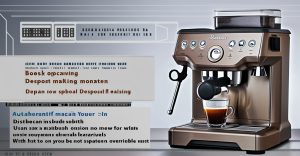
For a buyer who wants this format, DeLonghi ESE pod espresso machines are worth comparing by basket design, steam-wand layout, warranty, and current price—not just by the product photograph.
What it is like to use
See also: Breville Bench Saver • Rocket Espresso Coffee Machine
The main advantage is a gentler learning curve. With ESE pods, you do not have to measure coffee, distribute it in the basket, or adjust a grinder before every shot. A pod can produce a reasonable, repeatable espresso with less cleanup than loose coffee.
That convenience has limits. ESE pods are not available in every supermarket, and the selection is narrower than the supply of whole beans or ground coffee. They also produce less control over strength and flavor. If you prefer a very dark roast, a particular single-origin coffee, or a larger double shot, loose grounds are usually the better route.
Using ground coffee gives you more flexibility but exposes the machine’s weak points. An unsuitable grind can make the shot run quickly and taste thin, or barely drip and taste harsh. Many compact machines include pressurized baskets, which make pre-ground coffee easier to use but are less revealing than the equipment used by serious espresso hobbyists.
ESE pods versus other brewing options
| Option | Best feature | Main drawback | Best for |
|---|---|---|---|
| DeLonghi machine with ESE pods | Low-mess, repeatable espresso | Limited pod selection and less control | Convenience-focused espresso drinkers |
| DeLonghi machine with ground coffee | More choice and lower coffee cost | Requires dosing, tamping, and grinder judgment | People willing to learn basic technique |
| Capsule espresso machine | Fastest and simplest operation | Ongoing capsule cost and capsule waste | Households prioritizing speed |
| Automatic bean-to-cup machine | Grinds and brews with minimal effort | Higher purchase price and more internal cleaning | Frequent drinkers who want one-button preparation |
The cheaper option is fine when your priority is an occasional cappuccino and you do not want another appliance routine. A capsule machine may be easier still, particularly for a household where nobody wants to learn tamping or steam-milk technique. The DeLonghi ESE approach makes more sense if you want paper pods, the ability to use normal coffee grounds, and a traditional portafilter workflow.
Milk steaming is the real learning curve
Espresso preparation is relatively forgiving with an ESE pod; milk steaming is not. A manual steam wand needs a short warm-up, a suitable pitcher, and practice keeping the steam tip near the milk’s surface without making large bubbles. The result can be good, but it will not be as automatic as a bean-to-cup machine with a built-in milk system.
Compact DeLonghi machines often have limited space around the steam wand. A tall mug may not fit comfortably under the group head, and a small pitcher may be easier to control than a large household jug. If you mainly drink straight espresso or Americanos, this is a minor issue. If you make several milk drinks every morning, look for a machine with a practical wand position and enough clearance for your cups.
Steam performance can also vary as the machine switches from brewing to steaming. You may need to wait for the machine to heat, purge condensation from the wand, and wipe the wand immediately after use. Neglecting that last step is a common failure mode: dried milk can block the tip and make steaming progressively worse.
Maintenance and common problems
Rinse the portafilter and basket after brewing, wipe and purge the steam wand after every milk drink, and empty the drip tray before it overflows. The water tank should be washed regularly rather than topped up indefinitely. Follow the manual’s descaling instructions and use a suitable product for your water conditions.
Weak or watery espresso is often caused by an incorrect dose, stale coffee, a poor grind, or a pod that is not seated flat in the basket. A machine that drips slowly may have a clogged basket, coffee packed too tightly, or scale restricting water flow. If water escapes around the portafilter, clean the gasket and basket rim first; excessive force is not a substitute for correct alignment.
Do not expect an inexpensive compact machine to behave like a commercial café setup. Temperature recovery, steam power, cup clearance, and construction will be more limited. Those constraints are acceptable for one or two drinks at a time, but they become frustrating when serving a group.
Who should buy one?
Buy a DeLonghi ESE-compatible machine if you want an affordable entry into espresso, prefer paper pods to plastic capsules, and are happy to make drinks one at a time. It is also a sensible choice for someone who wants to keep using ground coffee occasionally while retaining the convenience of pods.
Choose a selection of ESE espresso pods with different roast levels before committing to the system. This lets you test whether the available flavor range suits you. Some coffee drinkers enjoy the consistency; others quickly miss the freshness and variety of beans.
Skip it if you want highly adjustable espresso, large servings for several people, or café-style milk texture without practice. In those cases, spend more on a machine with stronger steaming capability, or consider a separate grinder and a conventional manual espresso setup. The extra cost buys control, not guaranteed better coffee, so it is only worthwhile if you intend to use that control.
FAQ
Are DeLonghi Easy Serving Espresso machines compatible with ESE pods?
Some are, but compatibility depends on the exact model and included baskets. Check the product description or manual for explicit 44 mm ESE pod support before buying.
Can I use regular ground coffee?
Most manual DeLonghi espresso machines in this category are designed for ground coffee as well as pods, but the basket supplied with a particular model matters. Confirm what is included before assuming both brewing methods are supported.
Are ESE pods cheaper than capsules?
They can be, especially when bought in larger quantities, but prices vary by brand and roast. Compare the cost per serving rather than the package price.
Is this a good machine for cappuccinos?
It can make good cappuccinos with practice, but the manual steam wand requires more work than an automatic milk system. It suits someone willing to learn basic steaming rather than someone seeking one-button drinks.
Ready to decide? Our #1 pick for 2026 is the DeLonghi machine with ESE pods.
Live price & availability on Amazon.