Last updated: October 2, 2026
Quick answer: Our top pick in 2026 is the E61 — our #1 rated choice. See the full ranked comparison, alternatives and buying advice below.
What a Group Head Actually Does
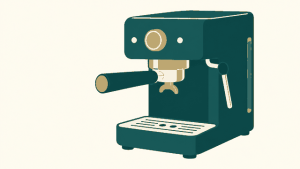
The group head is where your espresso machine meets the coffee. It’s the heavy metal assembly on the front of the machine that you lock the portafilter into, and where hot water under pressure is delivered to the puck. It does three jobs at once: it holds the portafilter gasket and brew basket tightly, it disperses water evenly over the coffee through a shower screen and dispersion block, and it helps control brew water temperature right before it hits the grounds.
On drip coffee makers and pod machines there is no true group head — just a shower head or needle. The term matters for espresso machines, whether semi-automatic, automatic, or lever. If you are comparing home espresso machines, the group head design tells you a lot about temperature stability, warm-up time, maintenance, and how forgiving the machine will be if you pull several shots in a row.
The Main Types You’ll See at Home
See also: Breville Bench Saver • Rocket Espresso Coffee Machine
There are four common designs in home machines. They all make espresso, but they get there differently.
1. E61 (Faema E61) Group: The classic chrome, angled group you see on many prosumer machines. Invented in 1961, it uses a heavy brass mass (about 4kg), a thermosiphon loop that constantly circulates hot water from the boiler through the group, and a mechanical lever that lifts a cam to start pre-infusion. It’s not heated electrically — it relies on that circulation to stay hot.
2. Saturated / Integrated Group: The group is bolted directly to the boiler or is part of the boiler itself. Water surrounds the brew chamber. Found on machines like La Marzocco, Breville/Sage Dual Boiler, Decent, and many modern PID-controlled single and dual boiler machines. Temperature is controlled directly by a PID sensor in the boiler/group, with very little offset.
3. Semi-Saturated / Ring Group: A compromise. The group is not fully saturated but is actively heated with water or an electric element and bolted to the boiler. Common on Rancilio, Ascaso, and Lelit models. Lighter and faster to heat than E61, more stable than a simple thermoblock group.
4. Thermoblock / Thermocoil with Attached Group: Found on most sub-$500 home machines (De’Longhi, entry Breville/Sage, Calphalon, etc.). Water is flash-heated on demand through a coiled block and delivered to a lightweight, often aluminum, group head. Very fast warm-up, but less thermal mass and less stability shot-to-shot.
E61 vs. Saturated vs. Thermoblock: How They Compare
No design is best for everyone. The trade-off is thermal mass and stability versus speed, energy use, and cost.
| Group Type | Warm-Up Time | Temperature Stability | Maintenance | Best For |
|---|---|---|---|---|
| E61 | 25-40 minutes to fully stable | Very good once hot; can run hot on heat-exchanger models without flush | More gaskets, cam, lever, thermosiphon needs periodic cleaning | Hands-on hobbyists, heat-exchanger or dual-boiler prosumer machines |
| Saturated / Integrated | 10-20 minutes | Excellent, fast recovery, PID accurate to ~1°F/0.5°C | Simpler mechanically, but electronics/PID dependent | Repeatability, back-to-back shots, light roasts that need precise temp |
| Semi-Saturated / Ring | 10-15 minutes | Good, better than thermoblock, slight offset to learn | Low; few wearing parts | Small kitchens, energy-conscious buyers who still want stability |
| Thermoblock / Thermocoil | 1-3 minutes | Okay for one or two shots; drifts with back-to-back shots | Lowest; descale regularly, replace shower screen/gasket | Beginners, milk-drink lovers on a budget, fast morning workflow |
If you want a classic prosumer machine with that heavy feel and you don’t mind a 30-minute heat-up, an E61 espresso machine is still hard to beat for steaming power and repairability. If you value fast, accurate temperature changes for different coffees, a machine with a saturated group head espresso machine will save you time and flushing. For most beginners who just want decent espresso and lattes without a ritual, the cheaper thermoblock group is genuinely fine — spend the savings on a good grinder.
What Actually Matters When You Choose
Don’t buy a group for looks alone. Think about how you brew.
Temperature control and workflow: E61 is stable but slow. Its mass holds heat, which is great once it is saturated, but that same mass means you can’t change brew temperature quickly. If you buy light-roasted single origins and like to experiment between 93°C and 96°C, a PID-controlled saturated group will respond in seconds, while an E61 HX will need a cooling flush and guesswork. On a heat-exchanger E61, you’ll learn to do a 3-7 second flush before locking in if the machine has been idling — otherwise the first shot can taste bitter and ashy from overheated water.
Capacity: Do you pull one shot in the morning or four back-to-back when guests are over? Lightweight thermoblock groups lose temperature quickly. The third shot in a row will often be sour because the group has cooled. Heavy E61 and saturated groups recover much faster and keep shot quality consistent.
58mm vs. smaller groups: Most E61 and saturated prosumer groups are 58mm, the commercial standard. That gives you the widest choice of baskets, precision screens, and tampers. Many entry thermoblock machines use 54mm, 53mm, or 51mm groups. They work, but accessories are fewer and baskets are often pressurized to fake crema with inconsistent grinds. If you plan to upgrade your grinder and learn to dial in, 58mm saves you rebuying tools later.
Size, weight, and energy: An E61 head sticks out 6-8 inches from the machine and adds significant weight. It also acts like a radiator. In a small apartment kitchen, a ring-group machine like those from Ascaso or Lelit will heat in 10 minutes and use less power. If you turn your machine on and off with a smart plug, that faster warm-up is a real daily benefit.
Maintenance and Common Failure Modes
The group head is the dirtiest and hardest-working part of the machine. Knowing the failure points helps you budget for upkeep, not just the purchase price.
Gasket and shower screen: Every group has a rubber (now often silicone) gasket that seals the portafilter and a metal shower screen that distributes water. Gaskets harden and leak — you’ll see water sneaking around the portafilter handle or a loose lock-in. On home machines, expect to replace the gasket every 9-18 months and the screen every 1-2 years. E61 gaskets are cheap and universal; proprietary 54mm groups sometimes cost more. A good espresso group head cleaning brush and gasket kit and weekly backflushing with water (and occasional detergent backflush if your machine has a 3-way solenoid) prevents bitter, rancid oil buildup.
Thermosiphon stall (E61): If an E61 HX machine is left on for hours without pulling a shot, the loop can stall and the group overheats. The fix is a cooling flush, but repeated overheating cooks the gasket faster. Machines with PID and saturated groups don’t have this issue.
Scale and clogging: Dispersion blocks and solenoid valves clog with scale, especially with hard water. Thermoblocks are most sensitive. If your flow slows to a dribble even without coffee, or the machine gets loud and hot, it likely needs descaling or a blocked shower screen cleaned. Using soft but not distilled water (around 50-100 ppm TDS) and a water filter slows this down more than any cleaning product.
Chrome plating and corrosion: Cheap thermoblock groups with chrome-plated aluminum can pit and flake over years, especially if you use harsh descalers. Solid brass or stainless saturated groups last decades with basic care. That is one reason prosumer E61 and saturated groups hold resale value.
Cheaper is not always short-lived, though. If you pull one or two milk drinks a day and descale on schedule, a well-kept entry machine will last 5-8 years. You just get less repair support and fewer spare parts than with an E61 platform where every seal and spring is sold individually.
Who Should Buy What
Buy E61 if: you enjoy the ritual, want a machine you can service yourself for 10+ years, mostly make medium to dark roasts, and have space and time for a full warm-up. You are okay learning cooling flushes.
Buy saturated/PID if: you switch coffees often, brew light roasts that need exact temperature, or make 3-6 drinks in a row. You want to set a number and get that number without flushing. It is the most forgiving for beginners who still want high-quality shots.
Buy thermoblock/ring group if: your budget is under $600, your kitchen is small, or convenience beats perfection. The cheaper option is fine if you pair it with a capable burr grinder and fresh beans — that improves taste more than an expensive group head with pre-ground coffee ever will.
FAQ
How long should I warm up a group head before pulling a shot?
Thermoblock groups are ready in 1-3 minutes. Ring and saturated groups need 10-20 minutes. E61 needs 25-40 minutes for the whole mass to stabilize; pulling earlier will give sour, unstable shots even if the boiler says it is ready. A smart plug on a timer solves the wait.
Do I need to do a cooling flush on every machine?
No. Only heat-exchanger machines with an E61 group typically need it. Dual-boiler E61, saturated, and thermoblock machines are either temperature-controlled or not hot enough to need flushing. If your machine has a PID, trust the PID and skip the flush.
Is a 58mm group head better than 54mm or 58mm?
Bigger is not automatically better for taste, but 58mm gives you far more options for precision baskets, tampers, and screens. If you plan to get serious about espresso, 58mm makes upgrading easier. If you will stay with pressurized baskets and convenience, the group size matters less.
Why does water leak around my portafilter?
Most often the group gasket is worn, hardened, or dirty. Try cleaning the group and gasket groove with a brush. If it still leaks, replace the gasket — it is a $8-15 part and takes five minutes on most machines. Overfilling the basket or overtightening the portafilter can also cause leaks.
Ready to decide? Our #1 pick for 2026 is the E61.
Live price & availability on Amazon.