Last updated: October 2, 2026
Quick answer: Our top pick in 2026 is the Barista Plus — our #1 rated choice. See the full ranked comparison, alternatives and buying advice below.
What the Breville Barista Plus Actually Is
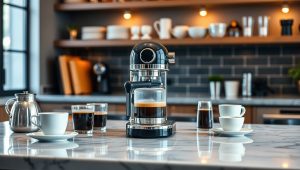
The Breville Barista Plus sits in that crowded middle ground Breville owns: an all-in-one home espresso machine with a built-in conical burr grinder, PID temperature control, and an auto-steam wand. If you have shopped Breville before, think of it as a refreshed Barista Express formula with a faster thermojet-style heating system and a few workflow fixes borrowed from the Barista Pro. It is not a prosumer dual-boiler and it is not trying to be. It is a compact, 15-bar pump machine designed to get you from beans to flat white in under two minutes without a separate grinder on the counter.
In the box you get the machine, a 54mm portafilter with single and dual-wall baskets, a Razor dose tool, a tamper, and a stainless milk jug. The water tank is 64 oz and pulls out from the back, the drip tray is full-size, and the grinder hopper holds about half a pound. Dimensions are nearly identical to the Barista Express at roughly 13.5 x 13 x 16 inches, so it still fits under most upper cabinets.
Who It Suits and Who Should Skip It
See also: Breville Bench Saver • Rocket Espresso Coffee Machine
This machine is for the person who wants to learn real espresso but does not want to build a separate grinder + machine setup yet. You get hands-on control over dose, grind, and tamp, but you also get enough automation that you will not waste a whole bag dialing in.
It is a good fit if you drink one to four milk drinks a day, want better microfoam than a pod machine or super-automatic can give you, and prefer a single appliance footprint. If you entertain often or pull six back-to-back lattes, the single thermoblock/thermojet system will slow you down. You cannot brew and steam at the same time, and recovery between shots is slower than a dual boiler.
Skip it if you are already deep into light-roast single origin espresso. The integrated grinder is capable for medium and medium-dark roasts, but it lacks the fine adjustment and consistency you get from a dedicated espresso grinder for home in the same price range. In that case, a Bambino Plus paired with a good standalone grinder will give you more headroom.
Grinder and Workflow in Daily Use
The built-in grinder is a 16 to 18-step conical burr unit with timed dosing. You grind directly into the portafilter, level, tamp, and lock in. Breville added the assisted tamping and dosing feedback you see on the Barista Express Impress line, which helps beginners avoid the classic errors of wildly inconsistent dose and a crooked tamp. It is not auto-tamping, but the visual guide and the Razor tool reduce waste.
Heat-up is where the Plus feels modern. The thermojet reaches brew temperature in about 3 seconds and steam temperature in about 10-15 seconds. In practice that means you can turn it on, grind, and brew without the 20-minute wait of a traditional single boiler.
The interface is simple: a pressure gauge, grind size dial on the left, grind time knob, single/double and steam buttons, and a hot water button. There is no touchscreen like the Barista Touch, which is actually a plus for reliability. Fewer electronics to fail, and you still get PID control holding brew temperature within about +/- 2 degrees Fahrenheit.
Cleaning is straightforward but not optional. The grinder needs purging when you change beans, the steam wand needs a wipe and purge after every use, and Breville will prompt you for a cleaning cycle and descaling every 2-3 months depending on water hardness. Use filtered water. Hard water will scale the thermojet quickly and that is the most common service issue.
What the Espresso Tastes Like
With fresh beans roasted within the last 2-4 weeks and ground correctly, the Barista Plus pulls a solid, syrupy shot with decent crema. It uses a 54mm portafilter, so the puck is thicker than a 58mm commercial basket, which makes it a bit more forgiving of grind errors but also caps extraction slightly. You will get sweet, chocolate-forward shots easily. Bright, high-acidity light roasts are harder to extract fully. You can push the grind finer and bump the temperature up one notch, but you will hit the grinder’s limit before you hit the bean’s potential.
The dual-wall (pressurized) baskets are included if you are using pre-ground or stale supermarket coffee. They will give you crema-like foam and keep the machine from choking, but the taste is flat compared to the single-wall baskets with fresh coffee. If you buy this machine, plan to buy whole beans and use the single-wall baskets from day one.
Steaming and Milk Drinks
The steam wand is a four-hole tip with automatic temperature sensing and auto-purge. You can set three milk temperature levels and three foam levels. For beginners, the auto-steam is genuinely helpful. It stops at temperature and produces consistent microfoam for lattes and cappuccinos without you having to learn to surf the steam by ear.
Experienced users can switch to manual steaming. The steam pressure is adequate but not powerful. It takes 45-60 seconds to texture 6 oz of milk, compared to 15-20 seconds on Breville’s Dual Boiler or any heat-exchanger machine. The foam quality is good if you keep the tip just below the surface and keep the jug cold. Whole milk and oat barista blends both work; skim milk will give you stiff, dry foam that does not pour well for latte art.
How It Compares to Other Brevilles
This is where most buyers get stuck. Breville has four machines in a tight price band. Here is how the Barista Plus stacks up for a home buyer deciding what to live with for 3-5 years.
| Machine | Grinder | Heat System | Brew + Steam | Best For |
|---|---|---|---|---|
| Barista Plus | Built-in conical, 16 steps, timed dose with dosing guide | ThermoJet, 3-sec heat up, PID | No, sequential | Beginners who want fast workflow and auto milk without a touchscreen |
| Barista Express | Built-in conical, 18 steps, timed dose | Thermocoil, 30-45 sec heat up, PID | No, sequential | Budget all-in-one if found on sale; slower heat-up, same shot quality |
| Barista Pro | Built-in conical, 30 steps, faster grind | ThermoJet, 3-sec heat up, PID | No, sequential | Users who want finer grind control and a clearer LCD without jumping to Touch |
| Bambino Plus + Standalone Grinder | None (requires separate grinder) | ThermoJet, 3-sec heat up | No, sequential | Enthusiasts who want better grind quality and a smaller machine footprint |
If the Barista Plus and the Barista Express are within $100 of each other, get the Plus for the faster heat-up and improved dosing. If you find a Breville Barista Express espresso machine at a steep discount, the cheaper option is fine. Shot quality in the cup is very close, and the Express has a longer track record for parts.
The Bambino Plus route costs about the same once you add a $200-$300 grinder, but it gives you a real upgrade path. You can keep the grinder if you later move to a prosumer machine. With any integrated Breville, the grinder and brewer live and die together.
Drawbacks and Common Failure Modes
No machine in this class is perfect. Here are the issues that actually come up after 6-18 months of daily use:
Grinder clumping and retention. The built-in grinder retains 1-2 grams between doses and can clump on oily dark roasts. Purge 2-3 grams after changing grind settings and avoid very oily beans. If the grinder jams, it is usually a rock or an overly oily bean. Breville’s burrs are not designed to be user-replaced easily.
Solenoid and thermojet scaling. The three-way solenoid gives you a dry puck, but it will stick if you never backflush with water. Run a water backflush weekly. Descale only with Breville’s recommended solution and soft or filtered water. Using vinegar or ignoring descale warnings is the fastest way to kill the thermojet.
54mm ecosystem. Most precision baskets, tampers, and distribution tools are built for 58mm. You can find 54mm accessories, but the selection is smaller and often more expensive. The included tamper is acceptable but light; many owners upgrade to a calibrated 54mm tamper.
Single boiler workflow. You pull the shot, then steam. If you steam first, you have to flush the system to bring temperature back down or your next shot will be bitter. This is normal for all thermoblock machines, but it is annoying if you make multiple milk drinks in a row.
Build quality is mostly plastic with some stainless panels. It will not feel like a $1,500 chrome machine, but it keeps weight and cost down. Expect 3-5 years of reliable service with regular cleaning; beyond that, pumps and solenoids are wear items.
Alternatives Worth Considering
If you want less hands-on work and primarily drink milk drinks, a super-automatic will be more convenient, though the espresso will be weaker and you lose control over extraction. If you want to maximize taste per dollar and do not mind a learning curve, look at a Gaggia Classic Pro or Bambino Plus paired with a standalone grinder like the Baratza Encore ESP or Eureka Mignon. That combo takes more counter space and practice, but it rewards you with better shots from light roasts.
For households where two people make very different drinks at the same time, stepping up to a Breville Dual Boiler or a small heat-exchanger machine makes sense. You pay more upfront, but you get simultaneous brew and steam and far better temperature stability.
If you decide the all-in-one format is what you will actually use every morning, the Barista Plus is the sensible middle pick in the current lineup. Check pricing on Breville Barista Plus espresso machine deals before you buy, since Breville pricing fluctuates and bundles with cleaning tablets or extra baskets can save you $30-$50.
FAQ
Is the Breville Barista Plus good for beginners?
Yes. The dosing guide, PID, and auto-steam remove the most common beginner mistakes. You still learn to grind, dose, and tamp, but the machine keeps temperature and milk more consistent than a fully manual single boiler.
Can it make good espresso without the pressurized baskets?
Yes, and you should use the single-wall baskets once you have fresh whole beans and a few days to dial in. The pressurized baskets are only for pre-ground coffee or as a backup when your grind is far off.
How often does it need cleaning?
Wipe and purge the steam wand after every use, backflush with water weekly, clean the grinder chute weekly, and run the cleaning tablet cycle and descale when prompted. With hard water, use filtered water and descale more often to protect the thermojet.
Should I buy the Barista Plus or a Bambino Plus with a separate grinder?
Buy the Barista Plus if you want one appliance and the simplest workflow. Buy the Bambino Plus plus a separate grinder if you care more about long-term shot quality, want to explore light roasts, or plan to upgrade the machine later and keep the grinder.
Ready to decide? Our #1 pick for 2026 is the Barista Plus.
Live price & availability on Amazon.