Last updated: October 2, 2026
The Bialetti Moka Express is not an espresso machine, even though it says “espresso” on the box and every cafe in Italy uses one. It makes strong, concentrated coffee that looks like espresso, drinks like espresso if you add hot water or milk, but it brews at 1-2 bars of pressure, not the 9 bars of a real espresso machine. That matters if you are deciding what to buy — because for $30-$50, it might be exactly what you want, or it might leave you wishing you had saved for something else.
I have brewed on Bialettis daily for years alongside pump machines that cost 20x more. Here is where the Moka pot shines, where it falls flat, and how to choose the right one without wasting coffee.
Quick answer: Our top pick in 2026 is the 1-cup (60ml) — our #1 rated choice. See the full ranked comparison, alternatives and buying advice below.
What Moka Pot “Espresso” Actually Is
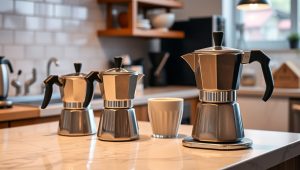
A Moka pot has three parts: a bottom boiler, a funnel filter that holds the grounds, and a top collector. You put water in the bottom, coffee in the middle, screw it together, and heat it. Steam pressure pushes hot water up through the coffee and into the top. The whole process takes 4-5 minutes on a stovetop.
The result is a small, intense cup — about 60ml per “cup” by Bialetti’s measurement, which is closer to a double shot. It has more body and bitterness than pour-over, more clarity than French press, and a little foam on top that looks like crema but is not. True crema comes from emulsified oils under high pressure. Moka foam is just aerated coffee and dissipates quickly. It will not support latte art and it will not taste like a shot from a good espresso machine.
That is not a flaw. It is just a different drink. In Italy, that is home coffee. If you like a strong, slightly bitter, chocolatey cup you can drink straight, with sugar, or topped up with hot water (an Americano-style) or steamed milk, the Moka pot is honest and hard to beat for the price.
How It Brews and Why Taste Varies So Much
See also: Breville Bench Saver • Rocket Espresso Coffee Machine
Two variables control everything: grind and heat. Get them wrong and you get either thin, sour water or bitter, metallic sludge — the two classic Moka failure modes.
Grind should be finer than drip but coarser than espresso. Think table salt. If you use true espresso-fine grounds, the pot will sputter, over-pressurize, and blast bitter coffee into the top. If you go too coarse, water rushes through with no resistance and you get weak, under-extracted coffee.
Heat should be low to medium. High heat boils the water too fast, scorches the grounds in the funnel, and gives you a burnt, ashy taste. The sweet spot is when coffee starts to flow gently into the collector, steady like honey, not gushing or sputtering. Take it off the heat as soon as you hear a gurgling sound — that is steam, not coffee, and it will make everything bitter.
Water matters too. Start with hot water in the bottom boiler (not cold). It shortens brew time, reduces the time the grounds sit on a hot metal funnel, and cuts that metallic bitterness many people blame on the pot. Do not fill past the bottom of the safety valve.
Sizes and Models: Which Bialetti to Buy
Bialetti makes several lines. For most people, the classic aluminum Bialetti Moka Express is the right call. It is cheap, light, and brews exactly like the more expensive ones. The stainless steel Venus is the better pick if you have an induction cooktop, since aluminum will not work on induction.
The Brikka is the odd one out. It has a weighted valve that builds slightly more pressure and produces more foam. It looks closer to espresso but tastes harsher and the valve needs cleaning. Do not buy it expecting real crema.
Sizing is where most buyers mess up. A Bialetti is not variable — a 6-cup pot is designed to make 6 small cups. If you half-fill the basket to make less, extraction is poor and coffee is thin. Buy the size you will actually brew most mornings.
| Model / Size | Capacity (in) | Capacity (out) | Best For | Trade-off |
|---|---|---|---|---|
| 1-cup (60ml) | ~70ml water | ~1 small cup / ~2 oz | Solo drinker who wants one strong cup | Tiny, easy to overheat; fiddly to clean |
| 3-cup (130ml) | ~150ml water | ~4-5 oz / one mug | Best all-rounder for 1-2 people | Most forgiving; my default recommendation |
| 6-cup (270ml) | ~300ml water | ~9-10 oz / two mugs | Couples or making for guests | Heavy when full; needs proper low heat to avoid burning |
| 9-cup (400ml+) | ~450ml water | ~14 oz+ | Small gatherings | Hard to get even extraction; better to brew two 3-cup batches |
If you are torn between 3-cup and 6-cup, get the 3-cup. You can always brew twice. If you regularly need induction, look for Bialetti Venus induction Moka pot instead of the aluminum Express. It costs a bit more but will actually heat on your stove.
What You Need to Get Right (And Common Failure Modes)
The Moka pot is simple, but it has a few ways it will punish you:
1. Over-tamping. Do not tamp the grounds like espresso. Just fill the basket, level it, and leave it fluffy. Tamping creates too much resistance and can cause the safety valve to vent or the gasket to fail.
2. Old gasket and filter plate. The rubber gasket and metal screen wear out every 6-12 months with daily use. When coffee leaks down the side, sputters violently, or tastes weak even with the right grind, replace both. A Bialetti Moka pot gasket replacement set costs a few dollars and takes 30 seconds to swap. Keep a spare.
3. Dishwasher and detergent. Aluminum Moka pots oxidize. The interior will darken — that is normal and actually helps. Do not put it in the dishwasher or scrub it with steel wool. Rinse with hot water, wipe, and let it dry open. Soap leaves a taste that is hard to rinse out of the old gasket.
4. Leaving it on the heat. If you walk away and let it gurgle for a minute on the burner, you have just steamed your coffee. It will be bitter and thin. Pull it early. The residual heat will finish pushing the last bit up.
5. Wrong stovetop size. Use a burner that matches the base. If the flame or element is much larger than the pot, you overheat the handle and the coffee. Center it, keep the handle away from direct heat.
Moka Pot vs. Real Espresso Machine vs. Other Brewers
If you are choosing between categories, be honest about what you want to drink:
Moka pot: Strong, full-bodied coffee with some sediment and bitterness. No crema, no espresso-based drinks as a barista would make them. Cost is $30-$60 plus a basic grinder. Almost nothing to break. Perfect for someone who wants a daily strong cup without another appliance on the counter.
Entry pump espresso machine ($150-$400): Can make true espresso at 9 bars, steam milk, and make a latte. Needs a much better (read: more expensive) grinder, more counter space, and more cleaning. Better if you specifically want lattes, flat whites, or you enjoy dialing in shots. More variables, more frustration.
AeroPress / Pour-over: Cleaner, sweeter coffee, less body. More forgiving, easier to make one great mug. Not concentrated like Moka. Better if you like black coffee with clarity and do not want intensity.
The cheaper option is fine here if you do not need milk drinks. A Moka pot with good beans will beat a cheap $120 pressurized espresso machine that comes with a bad grinder. Where a real machine wins is texture — steamed microfoam and true espresso extraction that the Moka cannot replicate no matter the trick.
Who Should (and Shouldn’t) Buy a Bialetti
Buy it if: You want strong coffee fast without learning espresso technique. You have a gas or electric coil stove, limited space, or you want a durable pot for a cabin or travel. You drink coffee with milk or sugar and want something bolder than drip but simpler than espresso.
Skip it if: You want true espresso for lattes, or you are sensitive to bitter flavors. Moka coffee is inherently more bitter than pour-over. Light roasts also struggle in a Moka — they need the temperature control of a pour-over or machine to taste bright rather than sour. If you love light, fruity beans, you will get more from a different brewer.
For gifts, the 3-cup Express is a safe, low-risk pick. It is inexpensive enough that it does not feel like a commitment, and even if the recipient already has an espresso setup, they will still use it for camping or quick morning coffee. Pair it with a bag of freshly roasted medium or medium-dark beans and a note about hot water + low heat, and it is a much better gift than another novelty mug.
FAQ
Is Moka pot coffee actually espresso?
No. It is strong brewed coffee made with steam pressure (around 1-2 bars). Real espresso requires about 9 bars and a different grind and extraction. Moka coffee is concentrated and can be used in milk drinks, but it will be thinner and more bitter than true espresso.
What grind should I use for a Bialetti?
Medium-fine — finer than drip, coarser than espresso. If the coffee sputters violently or tastes burnt and bitter, go coarser. If it flows too fast and tastes weak or sour, go finer. Do not tamp the grounds; just level the basket.
Can I use a Moka pot on induction?
The classic aluminum Moka Express does not work on induction. You need a stainless steel model like the Bialetti Venus, Moka Induction, or another stainless Moka pot. Check the base is marked “induction compatible” before you buy.
Why does my Moka pot taste metallic or bitter?
Usually three reasons: heat too high, leaving the pot on until it gurgles, or an old gasket. Try pre-heated water, low heat, and removing it from the burner as soon as coffee stops flowing steadily. If the gasket is hard, cracked, or more than a year old, replace it.
Ready to decide? Our #1 pick for 2026 is the 1-cup (60ml).
Live price & availability on Amazon.