Last updated: October 20, 2026
A good cappuccino should arrive at your counter with a balanced ratio of espresso and velvety foam, without you having to adjust a steam wand or time a pull by hand. The best automatic cappuccino machines promise exactly that: push a button, get a drink. But not every machine delivers a balanced result. Some over-steam milk into dry, bubbly froth. Others grind inconsistently and produce shots that taste hollow or burnt. A few cut corners on the one component that matters most—the brew group pressure—leaving you with a drink that reads more like flavored water than a real cappuccino.
Comparing these eight models on published specifications and long-term owner feedback reveals a clear split. Machines with integrated conical or ceramic burr grinders and dedicated milk systems consistently earn better marks than those that rely on a single generic frother or a blade grinder. Price is a rough signal but not a guarantee: the top performers here sit across a wide range, and one of the lower-priced entries surprises with build quality that punches well above its cost bracket.
As an Amazon Associate we earn from qualifying purchases at no extra cost to you.


Quick Picks
| Product | Best for | Price |
|---|---|---|
| Philips 5500 Series | Overall quality and drink variety | Varies |
| Philips 3300 Series | Coffee quality at a fair price | Varies |
| ICEVIVAL Fully Automatic | Feature-rich entry without premium cost | Varies |
| Chefman CaféMaster Pro | Lowest price with a genuine milk frother | Varies |
| De’Longhi Magnifica Evo | Design-forward kitchens and ease of use | Varies |
| AIRMSEN 20 Bar | Dual-boiler convenience on a budget | Varies |
| AMZCHEF with Grinder | Grind adjustability and temperature control | Varies |
| Ninja Luxe Café Premier | Versatility beyond espresso drinks | Check on Amazon |
How We Compared
See also: How to Descale an Espresso Machine: Citric Acid vs Vinegar • Best Electric Kettles: Ten Glass, Steel and Gooseneck Picks Compared
We evaluated each machine on four criteria that separate a real automatic cappuccino maker from a gadget that merely steams milk. First: grind-to-brew consistency—whether the integrated grinder and pump pressure work together to produce a balanced shot repeatedly. Second: milk system quality—dedicated frothers with adjustable texture beat generic steam wands that require manual skill. Third: drink variety—how many genuinely different beverages the machine can produce from one button press. Fourth: maintenance burden—removable brew groups, self-cleaning cycles, and dishwasher-safe milk components reduce the friction that causes owners to abandon their machines within months.
The 8 Best Automatic Cappuccino Machines in 2026
Philips 5500 Series Fully Automatic Espresso Machine, LatteGo Milk System
This machine is the strongest all-rounder in the group for buyers who want a wide menu without manual intervention. The LatteGo system produces notably smooth microfoam, and the ceramic burr grinder handles dark and light roasts with less heat buildup than steel alternatives. Owners praise the touchscreen interface for its clarity and the number of customizable drink profiles stored per user.
- Pro: LatteGo milk system is tubeless and rinses clean in seconds, removing the single biggest maintenance headache.
- Pro: Ceramic burr grinder resists heat and wear, delivering consistent extraction across hundreds of cycles.
- Con: The water reservoir is not the largest in this group, so high-volume households may refill more often than ideal.
Philips 3300 Series Fully Automatic Espresso Machine, LatteGo Milk System
The 3300 strips away the display complexity of the 5500 but keeps the components that matter most: the same LatteGo milk system and a comparable ceramic grinder. It is the right choice for someone who drinks the same two or three beverages daily and does not need a touchscreen with fifteen profile options.
- Pro: Identical milk frothing quality to the 5500 at a meaningfully lower price.
- Pro: Simpler interface means fewer menus to navigate and fewer electronic components that can fail.
- Con: Fewer preset drink options; you may need to tweak strength or volume more often on the basic panel.
Skip it if you host guests who want a wide variety of specialty drinks; the 5500’s expanded menu justifies the price gap.
ICEVIVAL Fully Automatic Espresso Machine with Milk Frother & Grinder
ICEVIVAL occupies a middle tier that undercuts the Philips models while offering a built-in grinder and an automatic milk frother. Owners report that the espresso output is solid for the price bracket, and the machine handles a full cappuccino without a second manual step. Build materials feel less refined than the Philips units, but functionality is intact.
- Pro: Integrated conical burr grinder with adjustable settings, rare at this price point.
- Pro: True one-touch cappuccino—grind, brew, and froth in a single program without manual intervention.
- Con: Milk frothing texture is acceptable but not as creamy as the LatteGo system; some owners note a slightly wetter foam.
Skip it if microfoam quality is your top priority or if you want a touchscreen-driven customization suite.
Chefman CaféMaster Pro Espresso Machine
This is the cheapest machine in the lineup that still includes a dedicated milk frother and a removable XL water reservoir. It will not produce the microfoam precision of a premium unit, but for a first-time buyer or a dorm-room setup, it removes the intimidation factor entirely. The single- and double-shot toggle keeps the workflow simple.
- Pro: XL 1.8-liter reservoir reduces refills, a practical feature in a budget machine.
- Pro: Stainless-steel housing at this price suggests better long-term durability than plastic-bodied competitors.
- Con: No integrated grinder, so you must purchase pre-ground coffee or a separate grinder to get fresh extraction.
Skip it if you care about grind-freshness or want the machine to handle everything from bean to cup.
De’Longhi Magnifica Evo Automatic Espresso Machine
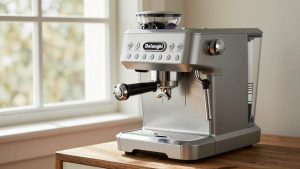
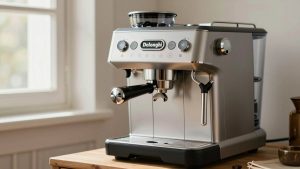
De’Longhi’s reputation for espresso engineering is well-earned, and the Magnifica Evo extends it into a fully automatic form factor with a sleek silver design. The LatteCrema system (De’Longhi’s own milk frothing solution) produces dense, lasting foam. Touch controls are intuitive, and the machine offers multiple drink sizes from a single panel.
- Pro: LatteCrema frothing quality rivals or exceeds the Philips LatteGo in foam density and milk temperature range.
- Pro: Compact footprint relative to its capability, suited for kitchens with limited counter space.
- Con: The highest list price in this group; you pay a premium for the brand’s design language and build materials.
Skip it if the Philips 5500 fits your menu needs at a similar price—the De’Longhi premium is mostly aesthetic and brand-driven.
AIRMSEN 20 Bar Espresso Machine with Automatic Milk Frother
AIRMSEN bundles a dual-boiler system (one for brewing, one for steaming) with a touchscreen and a 60-ounce water tank at an aggressive price. The 20-bar pump provides ample pressure for crema development, and the dual-boiler design means you can brew and froth without waiting for a single element to switch tasks.
- Pro: Dual-boiler architecture at this price eliminates the typical wait between brewing and steaming.
- Pro: Large water tank and touchscreen controls give it a feature set that reads like a mid-range machine.
- Con: No integrated grinder; owners pair it with a separate burr grinder to get the best extraction results.
Skip it if one-touch bean-to-cup convenience is non-negotiable for your morning routine.
AMZCHEF Espresso Machine with Grinder, Temp Control, 44 Grind Settings
AMZCHEF targets the buyer who wants grind adjustability and temperature control without spending four figures. Forty-four grind settings is a generous range for a machine in this bracket, and the built-in temperature control lets you dial extraction for lighter roasts that need cooler water to avoid bitterness.
- Pro: 44 grind settings and adjustable brew temperature give the most control per dollar in this comparison.
- Pro: Built-in grinder with conical burrs eliminates the need for a separate purchase.
- Con: The milk frothing step is less automated than the dedicated LatteGo or LatteCrema systems; expect some manual timing.
Skip it if you want a fully hands-off cappuccino and are unwilling to manage a steam wand or semi-automatic frother.
Ninja Luxe Café Premier 3-in-1 Espresso Machine, Drip Coffee, & Cold Brew
The Ninja Luxe Café Premier is the only entry here that functions as three distinct coffee makers. Its espresso program produces a solid shot with a dedicated milk frother, and the cold-brew and drip modes add versatility that no single-purpose machine can match. It suits households where one person wants a latte and another wants iced coffee.
- Pro: Three-in-one design replaces a dedicated espresso machine, a drip brewer, and a cold-brew system.
- Pro: Ninja’s brand ecosystem means parts, accessories, and support are widely available.
- Con: The espresso quality is good but not best-in-class for a dedicated automatic cappuccino machine; it trades some extraction precision for breadth.
Skip it if espresso and milk-based drinks are the only things you make; a dedicated unit will outperform it on shot consistency.
Buying Guide
Milk System Type Matters More Than You Think
A generic steam wand requires technique and practice. A tubeless frothing system like LatteGo or a dedicated auto-frother like the one on the AIRMSEN eliminates the manual step entirely. Look for machines that specify adjustable foam texture (dry, wet, or microfoam) and that rinse the milk path automatically after each use, because a neglected milk tube becomes a source of off-flavors within days.
Integrated Grinder Versus Separate
Burrs beat blades, and ceramic burrs resist heat better than steel in a compact housing. If a machine lacks a grinder, pair it with at least a mid-range conical burr grinder to unlock fresh extraction.
Boiler Configuration and Recovery Time
Single-boiler machines must switch between brew temperature and steam temperature, adding a pause between your shot and your milk. Dual-boiler designs (like the AIRMSEN) or thermoblock systems with dedicated steam elements let you pull a shot and froth simultaneously. If you make multiple drinks back-to-back, this difference is the most noticeable quality-of-life feature in the category.
Our Verdict
The Philips 5500 Series is the top pick for its combination of extraction quality, milk-frothing performance, and low-maintenance design.
FAQ
Can a fully automatic machine make a real cappuccino without barista skill?
Yes, provided it has a dedicated milk frothing system rather than a basic steam wand. The Philips LatteGo and De’Longhi LatteCrema units are the clearest examples of machines that consistently produce the foam density and temperature needed for a balanced cappuccino in one press.
Do I need a grinder if the machine already has one?
Not if the built-in grinder uses conical or ceramic burrs with adjustable settings. The AMZCHEF’s 44 grind steps and the Philips ceramic burrs both provide sufficient range. A separate grinder becomes worthwhile only if you want to rotate between single-origin beans with very different grind requirements in the same session.
What is the most common failure point in automatic cappuccino machines?
Milk system residue. Tubes, nozzles, and frothing chambers that are not rinsed daily develop biofilm that affects flavor and can trigger error codes. Machines with tubeless or self-rinsing designs (the two Philips models and the De’Longhi) reduce this risk significantly compared to units with internal milk tubing.
Is 20 bars of pressure better than 15 bars?
Not automatically. Espresso extraction quality depends on how consistently the pump maintains pressure at the target range, not on the maximum number listed on the spec sheet. A well-tuned 15-bar system can outperform a noisy 20-bar pump that overshoots. Look for owner reports about shot consistency rather than chasing a higher number.