Last updated: November 23, 2026
Choosing among the best philips superautomatic espresso machines comes down to a simple trade: how much drink variety and control do you want, and how much daily upkeep are you willing to do in return. Philips builds its superautomatic range around the same core idea in every model — whole beans go in, a ground and brewed drink comes out at the touch of a button, and milk drinks happen without a manual steam wand on LatteGo models. What changes as you move up the range is the number of one-touch drinks, the display, the milk system, and the number of adjustments you can make to each cup. This guide compares four Philips superautomatic machines that cover the full arc of the lineup, from a two-drink entry model with a classic milk frother to a twenty-drink model with user profiles.
At a glance
| Product | ASIN | Best for |
|---|---|---|
| Philips 2200 EP2220/14 | B07VBPLPH5 | Simple black coffee and espresso with a manual milk frother |
| Philips 3200 LatteGo EP3241/54 | B07VFY4MXM | Easy one-touch milk drinks with fast cleanup |
| Philips 3300 LatteGo EP3341/50 | B0CZ4GN5YT | Hot and iced drinks with quieter grinding |
| Philips 4300 LatteGo EP4347/94 | B08SJ7NFY1 | A wider drink menu with a clear touch display |
How to choose a Philips superautomatic
See also: Best Compact Philips Espresso Machines for Espresso Setup Replacements • Best DeLonghi Superautomatic Espresso Machines for Espresso Menu Customization
1. Count the drinks you actually make. A two-drink machine suits a household that drinks espresso and black coffee. Five drinks cover cappuccino and latte macchiato as well. Six hot and iced presets add cold drinks, and eight drinks cover flat white and cafe au lait.
2. Decide how milk should work. LatteGo models froth milk automatically in a two-part carafe with no tubes, and the parts are dishwasher safe. The 2200 uses a classic milk frother instead, which gives you practical control of milk texture but needs you to froth by hand. If milk drinks are daily, automatic frothing is the easier routine.
3. Look at the grinder. Philips uses a ceramic grinder across this range, with 12 grind settings on several models. Ceramic runs cooler than steel and grinds quietly, which helps when the machine runs early in the morning. A removable brew group and an AquaClean filter support the same goal: consistent cups with less frequent descaling.
4. Check the display and controls. Touch displays with drink icons make the machine usable by everyone in the household, including guests. Adjustable strength, coffee volume, and milk quantity matter more than a long preset list, because they let you tune the drinks you already like.
5. Weigh footprint against tank and hopper access. Superautomatics are deeper than they look. Measure width, depth, and height, then check that you can open the bean hopper lid and slide out the water tank without pulling the machine away from the wall.
6. Plan the cleaning routine you will actually follow. The best machine is the one whose cleaning you will do. Rinsing the LatteGo carafe takes seconds. Rinsing the brew group weekly, emptying the dregs drawer, and following the descaling schedule keep flavour consistent.
Philips 2200 EP2220/14

The 2200 is the entry point in this group, and it is the clearest choice when milk drinks are occasional rather than daily. It makes two coffee varieties — espresso and coffee — with a classic milk frother for the days you do want a cappuccino. Key details include a ceramic grinder, an intuitive touch display, an AquaClean filter, and Aroma Seal for the bean hopper.
Strengths are simplicity and focus. Two drinks mean no menu to learn and no presets you never touch. The classic milk frother lets you heat and texture milk by hand, which suits someone who enjoys that small ritual or who only froths milk a few times a week. Limitations are the mirror of that simplicity. Two drinks will feel narrow if you regularly want cappuccino, latte macchiato, or iced coffee, because each milk drink needs manual frothing. There is no automatic milk carafe, but there is also no one-touch milk drink. This machine suits a household that drinks mostly espresso and black coffee, a first superautomatic buyer who wants to keep the routine short, or a second machine for a room where milk drinks are rare.
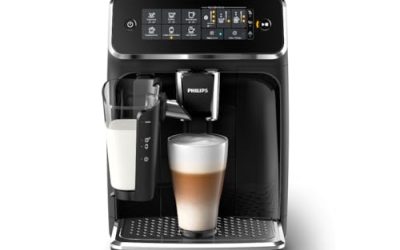
Philips 3200 LatteGo EP3241/54

Philips 3200 LatteGo EP3241/54
The 3200 is the default Philips superautomatic for many households, because it adds automatic milk drinks without adding much complexity. It makes five coffee varieties, including cappuccino and latte macchiato, with the LatteGo milk frother. Key details include a ceramic grinder, an intuitive touch display, an AquaClean filter, and My Coffee Choice controls for strength and volume. The LatteGo carafe has two parts and no tubes, and it is dishwasher safe.
Strengths are the one-touch milk routine and the fast cleanup that follows it. Press a drink icon, and the machine grinds, brews, and froths in sequence. Rinsing the carafe under the tap takes seconds, which matters on a weekday morning. Limitations are a narrower menu and airy foam. Five drinks do not include flat white or iced coffee, and LatteGo foam is light and consistent rather than dense microfoam for latte art. If you want to dial in light roasts or control dose and shot timing by hand, a semi-automatic gives more headroom. This machine suits a household that wants a latte at home without learning barista skills, a family with varied milk-drink tastes, or anyone who values a milk system that cleans in seconds over a wider preset list.
Philips 3300 LatteGo EP3341/50

Philips 3300 LatteGo EP3341/50
The 3300 is the newer middle model, and its main addition is iced coffee alongside hot drinks. It makes six hot and iced coffee presets, with a LatteGo milk system and an integrated grinder. Key details include SilentBrew for quieter grinding, a 15-bar pump, and a glossy black finish. Strength, volume, and milk quantity can be adjusted from the touch controls, and the LatteGo carafe follows the same two-part, tube-free design as the 3200.
Strengths center on all-season use. An iced latte in summer and a hot cappuccino in winter come from the same machine with no extra equipment. Quieter grinding is a real benefit in an open-plan kitchen or an early morning household. Limitations are modest. Six presets still leave out drinks that the 4300 covers, and there are no user profiles for storing individual preferences. This machine suits a household that drinks iced coffee through the year, a kitchen near a living area where grinding noise matters, or a buyer who wants the newest Philips LatteGo design without moving to the eight-drink 4300.
Philips 4300 LatteGo EP4347/94

Philips 4300 LatteGo EP4347/94
The 4300 widens the menu to eight coffee varieties while keeping the LatteGo system that makes the 3200 easy to live with. It is the pick in this group for a household that wants more choice without stepping up to a twenty-drink flagship. Key details include a LatteGo milk frother, an intuitive touch display, a ceramic burr grinder with 12 grind settings, and an AquaClean filter. The TFT colour display shows drink choices clearly, and strength, temperature, and volume can be adjusted.
Strengths include a menu that covers espresso, coffee, americano, cappuccino, latte macchiato, flat white, and cafe au lait territory without a second machine. The ceramic grinder and removable brew group keep daily cups consistent, and the touch display reduces wrong selections during busy mornings. Limitations are about the top end. It does not have user profiles, so each person adjusts strength and milk by hand, and it does not cover the iced range or the twenty-drink list of the 5500. The foam is LatteGo foam — airy and repeatable, not hand-steamed microfoam. This machine suits a household with several coffee drinkers who want different milk drinks, a home where guests often ask for a flat white or a cafe au lait, or a buyer who wants the widest menu in this four-model set.
Comparison
| Machine | One-touch drinks | Milk system | Grinder | Display | Best for |
|---|---|---|---|---|---|
| Philips 2200 EP2220/14 | 2 | Classic milk frother, manual | Ceramic | Touch display | Espresso and black coffee, occasional milk |
| Philips 3200 LatteGo EP3241/54 | 5 | LatteGo, no tubes | Ceramic | Touch display | Everyday one-touch milk drinks |
| Philips 3300 LatteGo EP3341/50 | 6 hot and iced | LatteGo, no tubes | Integrated ceramic, SilentBrew | Touch display | Hot and iced drinks, quieter grinding |
| Philips 4300 LatteGo EP4347/94 | 8 | LatteGo, no tubes | Ceramic burr, 12 settings | TFT touch display | Widest menu in this set |
Frequently asked questions
Which Philips superautomatic should I buy first?
Begin with the drinks you make every week. If you drink espresso and black coffee, the 2200 covers you. If milk drinks are daily, the 3200 LatteGo is the simplest one-touch choice. Choose the 3300 when iced drinks matter, and the 4300 when your household asks for eight different drinks.
What is LatteGo, and why does it matter?
LatteGo is Philips two-part milk carafe with no narrow milk tube. The machine froths milk automatically, and you rinse the two parts under the tap or put them in the dishwasher. That short cleanup is the main reason many households choose a LatteGo model over a tube-based milk system or a manual steam wand.
How often does a Philips superautomatic need cleaning?
Rinse the LatteGo carafe after milk use, empty the dregs drawer when the machine prompts you, and rinse the removable brew group on a weekly routine. The AquaClean filter stretches the interval between descaling cycles. Follow the prompts on the display and the schedule in the manual rather than waiting for flavour to change.
Conclusion
The best Philips superautomatic is the one that matches your drink list and your cleaning habits. The 2200 suits black-coffee drinkers who froth milk by hand. The 3200 LatteGo is the easy one-touch milk-drink pick for most households. The 3300 LatteGo adds iced drinks and quieter grinding. The 4300 LatteGo widens the menu to eight drinks for households with varied tastes. Count the drinks you actually make, choose the milk system you will clean, and let the preset list follow that — not the other way round.
Disclosure: As an Amazon Associate, we may earn a commission from qualifying purchases made through links in this article, at no extra cost to you.