Last updated: October 17, 2026
The Bonavita Enthusiast 8-cup is the best automatic pour over coffee maker with bloom for most people, because it adds a dedicated Bloom button to an SCA-certified brewer, so you decide whether the grounds get a pre-soak. The runner-up is the Chemex Ottomatic 2.0, which wraps a staged pre-infusion and pulsing water bath around a classic Chemex carafe. If you want the pre-soak built in at a gentler price, the KRUPS Essential Brewer does the same job without a button to press.
Bloom is the short pause at the start of a pour over, when a little hot water wets the grounds and lets trapped carbon dioxide escape. Skip it and the gas pushes water away from the coffee, which can cause uneven extraction. Doing it by hand is easy with a kettle and a timer, and the appeal of an automatic pour over machine is getting the same ritual with the push of a button. This guide covers seven machines that handle the bloom for you, compares them in a table, explains how to judge them, and ends with a buying guide, a worked brewing example and answers to common questions.
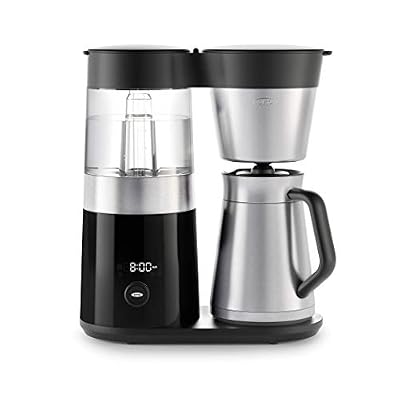
OXO Brew 9-Cup Drip Coffee Maker – Programmable Machine, Stainless Steel | Stainless Steel, Single Serve Or Full Carafe Option, SCA Certified Home Brewer, Temperature Controlled, Rainmaker Shower Head
Included for 'Best Automatic Pour Over Coffee Makers That Bloom Your Grounds' because the listing specifies Programmable Machine and Stainless Steel, details this guide uses to compare options.
View on AmazonQuick answer: Our top pick in 2026 is the Bonavita Enthusiast 8-Cup — our #1 rated choice. See the full ranked comparison, alternatives and buying advice below.
- Top Picks at a Glance
- Quick Comparison Table
- Bloom, Explained With Numbers
- 1. Bonavita Enthusiast 8-Cup: Best Overall
- 2. KRUPS Essential Brewer: Best Value With Built-In Bloom
- 3. Chemex Ottomatic 2.0: Best Classic Pour Over Ritual
- 4. Brooklyn Steel Co. PrecisionPour: Best Hand-Pour Imitation
- 5. xBloom Studio: Best Premium All-in-One
- 6. BALMUDA The Brew: Best for One to Three Cups
- 7. WILLOW 8-Cup Pour Over Coffee Maker: Best Budget Pick
- Also Consider
- How We Chose
- Buying Guide
- Common Mistakes
- Frequently Asked Questions
- Which One Should You Buy?
- Sources
Top Picks at a Glance
- Best Overall: Bonavita Enthusiast 8-cup with an optional Bloom (pre-infusion) button and a thermal carafe.
- Best Value With Built-In Bloom: KRUPS Essential Brewer 8-cup, SCA-certified, with blooming technology.
- Best Classic Pour Over Ritual: Chemex Ottomatic 2.0, with staged pre-infusion and a Chemex carafe.
- Best Hand-Pour Imitation: Brooklyn Steel Co. PrecisionPour, with a rotary spiral pour, built-in scale and weight sensors.
- Best Premium All-in-One: xBloom Studio, which grinds, weighs and pours to a recipe you set in an app.
- Best for One to Three Cups: BALMUDA The Brew, a compact, precision-temperature brewer.
- Best Budget Pick: WILLOW 8-cup pour over maker with a reusable metal filter, with the caveat that its bloom details are not listed.
Quick Comparison Table
See also: Best XLR Cables for Clear, Reliable Audio • Best Women’s Leather Boots: Styles Worth Buying
| Product | Best for | Key specs | Watch for | Price tier |
|---|---|---|---|---|
| Bonavita Enthusiast 8-Cup | Daily brewing with bloom on demand | 8 cups (about 40 oz); 195 to 205 F; SCA certified; thermal carafe; Bloom button | Plastic tank and basket; wattage listed as 1200 to 1500 W | Mid-range to premium |
| KRUPS Essential Brewer | Automatic bloom without fuss | 8 cups; SCA certified; 5-hole shower head pre-soak; dishwasher-safe parts | Needs #4 paper filters; no permanent filter included | Mid-range |
| Chemex Ottomatic 2.0 | Chemex fans, hot or iced coffee | 40 oz tank; 30 oz carafe; 197.6 to 204.8 F; pre-infusion and pulsing spray head | One-year warranty; descale every 40 cycles | Premium |
| Brooklyn Steel Co. PrecisionPour | Control and a spiral pour | 1 L (34 oz) tank; 25 oz carafe; built-in scale; programmable start; auto and manual modes | Bloom time and volume not published | Mid-range to premium |
| xBloom Studio | Recipe-driven brewing | 48 mm conical burrs; 80 grind steps; 32 oz tank; app control | Needs the app to program stages | Premium |
| BALMUDA The Brew | One to three cups | About 490 ml tank; regular, strong and iced modes; 4 to 7 minute brews | Small capacity; high cost per cup | Premium |
| WILLOW 8-Cup | Tight budgets, reusable filter | 8 cups (42 oz); glass carafe; metal filter; hot and iced; auto shut-off | Bloom spec not listed for the 8-cup | Mid-range |
Bloom, Explained With Numbers
A fresh roast holds carbon dioxide that escapes as soon as hot water touches it. The common guidance among coffee professionals is to wet the grounds with about twice their weight in water and wait 30 to 45 seconds before the main pour. In practice, a bloom is short, and the exact numbers vary with roast date and grind. Darker and older coffee blooms less; a light roast roasted last week blooms a lot.
Here is the arithmetic for a full carafe. The Specialty Coffee Association’s Golden Cup guidance is about 55 grams of coffee per liter of water. A 40-ounce tank is roughly 1.18 liters, so you want about 65 grams of coffee. The bloom uses twice that weight in water, so about 130 grams, or 130 milliliters, wets the bed before the machine continues. That is a bloom of about 11 percent of the total water, which is why the stage is brief. When a machine says it blooms, it should do roughly this, then pause before pouring the rest.
Most machines in this guide do not publish the bloom volume or the length of the pause, so we do not claim a number for them. Where the maker documents the stage, such as Bonavita’s Bloom button and the Chemex pre-infusion, we say so.
1. Bonavita Enthusiast 8-Cup: Best Overall
- Capacity: 8 cups (about 1.2 L or 40 oz) with a stainless steel thermal carafe
- Brew temperature: 195 to 205 degrees Fahrenheit, per the maker
- Certification: SCA Golden Cup certified
- Bloom: optional pre-infusion mode with a Bloom button; four-button panel also handles brew and descale
- Power and size: 1200 to 1500 watts depending on the source; about 15 by 6 by 12.5 inches and 6 pounds; one-year limited warranty
Best for: people who want to choose when to bloom: skip it for stale pre-ground coffee, use it for fresh beans. Skip if: you want a single-cup brewer or a glass carafe.
The Bloom button is the reason this model leads the guide. Some automatic brewers always run a pre-soak, which is fine until you use a coffee that does not need it. The Bonavita lets you press the button for a pre-infusion phase that off-gases carbon dioxide before the main brew, then leave it off when you want a quicker cup. The SCA certification means the brewer has met the association’s standards for brew temperature and time, and the maker says a full carafe takes about six minutes.
The thermal carafe is practical for a household that drinks coffee over a few hours: retailers describe it as keeping coffee hot for up to four hours, with no hot plate to scorch the pot. The trade-off is materials. The water tank, lid, filter basket and showerhead are BPA-free plastic. The basket, lid and showerhead are dishwasher safe, and a one-touch descale button helps with maintenance. It uses flat-bottom paper filters, which are easy to find.
Pros: Bloom on demand; SCA certified; thermal carafe; removable tank. Cons: plastic parts; sources disagree on wattage; one-year warranty.
2. KRUPS Essential Brewer: Best Value With Built-In Bloom
- Capacity: 8 cups, stainless steel body in silver
- Bloom: blooming technology with a five-hole shower head that pre-soaks the grounds
- Certification: SCA-certified, per the maker
- Controls: buttons for sweetness enhancement, half-drip and keep-warm adjustment for smaller batches
- Care: carafe, filter, aroma tube and shower head are dishwasher safe; size about 12.7 by 6.3 by 13.7 inches
Best for: cooks who want the bloom handled automatically with no extra steps and a simple interface. Skip if: you want to switch the bloom on and off or prefer a thermal carafe.
The KRUPS takes the guesswork out of blooming. A shower head wets the grounds first, releasing carbon dioxide, and then the main brew continues. The maker describes this as bringing out natural sweetness, which is a marketing way of saying that even extraction tastes better. Independent confirmation of the precise bloom timing is limited, so treat the process as a design feature rather than a measured result.
Extra controls help in everyday use. The half-capacity setting adapts the keep-warm temperature when you brew only half a carafe, which prevents the burnt taste that a hot plate can give. Cleaning is straightforward, and a fast-blinking power button signals when it is time to descale. It uses number four cone paper filters, which you buy separately; a permanent filter is not included.
Pros: automatic bloom; SCA certified; dishwasher-safe parts; clear descale reminder. Cons: hot plate rather than thermal carafe; paper filters required; no bloom on/off.
3. Chemex Ottomatic 2.0: Best Classic Pour Over Ritual
- Capacity: 40 oz water tank; includes a six-cup carafe that holds 30 oz
- Brew temperature: about 197.6 to 204.8 degrees Fahrenheit
- Bloom: staged cycle with pre-infusion, temperature and contact-time management through a pulsing spray head
- Hot plate: automatic shut-off, with sources giving 30 to 90 minutes
- Size: about 12.5 by 7.5 by 13 inches; one-year limited warranty; descale every 40 cycles or three months
Best for: Chemex fans who want the same carafe and filter style with a machine doing the pouring. Skip if: you prefer a thermal carafe or a lower price tier.
The Ottomatic 2.0 does not pour like a person. Instead, the Chemex spray head pulses a water bath over the coffee to hold temperature and wet the bed evenly, running a cycle with pre-infusion rather than a single continuous pour. The result is brewed in a real Chemex carafe with bonded paper filters, which tends to give a clean, bright cup. It works for hot or iced coffee.
The tank holds 40 ounces, but the six-cup carafe holds 30. Chemex warns not to exceed the carafe’s capacity, so fill according to your carafe. It also fits other Chemex sizes including the three-, five- and eight-cup. The glass is attractive, though glass and a hot plate require more care than a steel thermal carafe.
Pros: staged pre-infusion; Chemex carafe and filters; hot or iced; stylish. Cons: premium price; short warranty; capacity wording can confuse; hot plate.
4. Brooklyn Steel Co. PrecisionPour: Best Hand-Pour Imitation
- Capacity: 1 L (34 oz) glass water tank; 25 oz glass carafe
- Bloom: blooms the grounds first, then pours in stages using weight and temperature sensors
- Pour: patented rotary water delivery in a spiral
- Controls: built-in scale, adjustable coffee-to-water ratio, brew temperature control, programmable start, auto and manual modes
- Size: about 12.1 by 8.2 by 19.8 inches; 1200 watts; maintenance mode for descaling
Best for: enthusiasts who want to adjust ratio and temperature and enjoy watching a spiral pour. Skip if: you need documented bloom volume or a short warranty history.
This machine comes closest to hand pouring in the list, replacing a gooseneck kettle with a rotating arm. The integrated scale and sensors let it monitor how much water has been delivered, which is how it tries to replicate a barista’s bloom and slow extraction. The adjustable ratio is a real advantage: set the strength to your taste rather than accepting a fixed recipe.
The unknowns matter. The manufacturer’s published information does not give a specific bloom time, bloom volume or temperature range, so we cannot tell you exactly how long it waits. It is also a taller machine than most, so measure under-cabinet clearance. The carafe is 25 ounces, so the 1 L tank will not fill it entirely in a single brew.
Pros: spiral pour; built-in scale; programmable; adjustable ratio. Cons: bloom specs not published; tall; glass carafe.
5. xBloom Studio: Best Premium All-in-One
- Grinder: 48 mm conical burrs with 80 grind settings
- Brewer: vibrating pouring arm with centered, circular and spiral pour patterns; kettle heats up to 203 degrees Fahrenheit or boiling point
- Scale: up to 2000 g with 0.1 g resolution on lighter loads
- Tank and size: 946 ml (32 oz) tank; about 6.7 by 8 by 16.8 inches and 11.3 pounds
- Control: app over Bluetooth for recipes; Autopilot, Copilot and Freesolo modes
Best for: people who want to program bloom volume, rest time and pours in an app and have the machine grind fresh beans. Skip if: you want a simple one-button experience or are on a limited budget.
The xBloom turns bloom into a parameter. In the app you set grind size, flow rate, water-to-coffee ratio, the number of pours and the rest between pours, which includes the bloom stage. Recipes can be loaded from an NFC card or from the machine’s automatic mode. Because it grinds, weighs and brews, it replaces three separate devices.
It is also the most complicated pick. You cannot program the stages from the machine alone; the app is required for custom recipes. Dosing capacity is a few dozen grams per brew, so it suits cups and small carafes rather than a family pot. The price is the highest in the guide.
Pros: fully programmable bloom; integrated grinder and scale; precise temperature. Cons: premium price; app dependent; limited batch size.
6. BALMUDA The Brew: Best for One to Three Cups
- Capacity: about 490 ml (16.5 oz) tank; carafe about 500 ml (17 oz) double-walled stainless
- Modes: regular, strong and iced, plus a cleaning mode
- Process: steam, extraction and finishing stages with bypass pouring; brews in about 4 to 7 minutes
- Filter: standard cone paper filters
- Size: about 5.5 by 11.7 by 14.9 inches; 7.5 pounds; 1450 watts for the US model
Best for: one or two people who value a compact, quiet design and tightly controlled temperature. Skip if: you brew a full pot.
Balmuda designed the brew in stages. A first steaming stage wets the grounds, much like a bloom, then extraction continues with water dripped in tiny increments, and a finishing stage adds water through a second spout. The company states that it regulates temperature at each stage, though it publishes no specific degree values in the sources we found.
The capacity is small at 1 to 3 cups, so the cost per cup is high compared with an 8-cup brewer. Buy it for the ritual and design, not for volume.
Pros: staged brewing; compact; quiet design; iced mode. Cons: premium price; small batch; temperature figures not published.
7. WILLOW 8-Cup Pour Over Coffee Maker: Best Budget Pick
- Capacity: 8 cups (42 oz) with a glass carafe
- Filter: reusable metal filter; listing says hot and iced brew and auto shut-off
- Materials: described as an eco brewer made with 99 percent recycled materials
- Size: about 7.25 by 12.4 by 14 inches
- Bloom: not listed for the 8-cup; the maker’s 10-cup sibling is described with bloom technology
Best for: a lower price tier and reusable filter fans. Skip if: a documented bloom stage is a must.
The WILLOW is here because it sells as an automatic pour over style maker and sits near the bottom of the price range for this category. We have to be careful: the information we found about bloom applies to the 10-cup model, and we found no bloom duration or water volume for the 8-cup. If you buy it for the bloom feature, read the manual first.
The reusable metal filter saves paper but passes more fine particles than paper does, so the cup is fuller-bodied and slightly less clean. One reviewer of a related model said the glass carafe feels thin, so handle it carefully.
Pros: low price tier; reusable filter; hot and iced; large capacity. Cons: bloom unspecified; thin glass reports; metal filter body.
Also Consider
- Technivorm Moccamaster KBGV Select (10-cup): an SCA-certified, 1.25 L brewer with a 5-year warranty. It has no dedicated pre-infusion setting; its pulsing arm and nine-hole showerhead bloom the grounds much like a manual pour over.
- SimplyGoodCoffee THE BREWER (8-cup): a plastic-free automatic pour over brewer built to the Gold Cup standard, at a premium price tier.
- OXO Brew Pour Over with Water Tank: a semi-manual brewer where you pour water into a tank and it showers the grounds, which is better suited to those who want to control the bloom timing themselves.
- Bodum 34 oz Pour Over: a manual glass pour over for those who want to bloom by hand at a very low price.
How We Chose
We did not physically test any of these brewers. This is a research-based guide built from the products in this site’s catalog, checked against manufacturer pages, retailer listing details and independent reviews. We focused on machines that either document a bloom or pre-infusion stage or are explicitly marketed as automatic pour over brewers, and we noted when a spec is not published. Where sources disagree, such as the Bonavita wattage or the hot plate shut-off time on the Chemex, we say so.
We kept to a maximum of two products per brand, covered budget to premium tiers and used tier words instead of prices because they change often. The SCA references are to the association’s published brewing standards and certification programs.
Buying Guide
Check how the bloom is controlled
There are three designs. Always-on bloom, as on the KRUPS, soaks the grounds every time. Optional bloom, as on the Bonavita, lets you choose. Programmable bloom, as on the xBloom and Brooklyn Steel, lets you set volume or rest time. For fresh specialty beans, optional or programmable is better, because older or very dark coffee does not need a long pause.
Look at temperature and certification
The SCA’s brewing standard calls for water between about 195 and 205 degrees Fahrenheit at the coffee bed. The Bonavita, Chemex and Moccamaster all publish ranges inside that window. A machine that reaches only 180 to 185 degrees, like the Willow 10-cup figure reported by its maker, will under-extract many coffees. Certification does not guarantee a great cup, but it shows the temperature and time were checked.
Choose a carafe style
Thermal carafes keep coffee hot for hours without scorching. Glass carafes on hot plates are cheaper and let you see the brew but can leave coffee tasting stewed after 30 to 60 minutes. If you drink slowly, choose thermal.
Mind the capacity wording
A cup in a coffee maker is usually 5 ounces, not 8. An 8-cup brewer makes about 40 ounces. The Chemex Ottomatic is a good example of how the tank, the carafe and the cup count can all differ. Buy by ounces if you brew for a household.
Filters and maintenance
Paper filters give the cleanest cup. Metal filters save money and add body. Plan to descale every one to three months, depending on water hardness: Chemex says every 40 brew cycles or three months. Using filtered water slows scale build-up.
Common Mistakes
- Believing “bloom” is a guarantee. Many machines mention a pre-soak without giving volume or time, so check the manual.
- Using stale coffee. Old grounds barely bloom, so the feature adds little.
- Too coarse or too fine a grind. Medium grind is typical for flat-bottom baskets; coarser for Chemex-style filters.
- Skipping descaling. Scale lowers brew temperature over time.
- Filling past the carafe. Know your carafe size, not just the tank size.
Frequently Asked Questions
What is bloom in coffee?
Bloom is the first short pour that wets the grounds and lets carbon dioxide escape. It usually lasts 30 to 45 seconds and uses about twice the coffee’s weight in water. It helps water move evenly through the bed.
Do automatic pour over machines really bloom the coffee?
Some do and some only claim to. Makers such as Bonavita, KRUPS and Chemex describe a pre-infusion stage, while others do not publish details. Read the manual before assuming a timed pause.
Is an automatic pour over better than a regular drip machine?
Not always. A good drip brewer with a bloom stage and the right temperature can match many pour over machines. The advantage of the pour over style is a shower head or arm that wets the bed evenly.
What temperature should the water be?
Between about 195 and 205 degrees Fahrenheit, according to the SCA’s standard. Machines that stay below that range tend to give weak or sour coffee.
Can I use pre-ground coffee with a bloom feature?
Yes, but the effect is smaller. Pre-ground coffee has already lost much of its carbon dioxide, so you may notice little difference between bloom and no bloom.
Do I need paper filters?
It depends on the model. The KRUPS and Balmuda use paper cone filters, the Chemex uses bonded paper filters, and the Willow uses a reusable metal filter. Check which one your machine takes.
How often should I descale?
Every one to three months for most households. Follow your maker’s instruction; Chemex gives every 40 brew cycles or three months, and Bonavita provides a one-touch descale button.
Which One Should You Buy?
For most households, buy the Bonavita Enthusiast if you want control over the bloom and a thermal carafe, or the KRUPS Essential Brewer if you want the bloom done automatically for less. Choose the Chemex Ottomatic 2.0 for the Chemex style, the Brooklyn Steel PrecisionPour if you want to tweak ratio and watch a spiral pour, and the xBloom Studio if you want a fully programmable machine that also grinds. The Balmuda suits small households, and the WILLOW is the budget entry as long as you accept that its bloom details are not documented.
Sources
- Bonavita Enthusiast product and specification pages
- KRUPS Essential Brewer product listing and manual
- Chemex Ottomatic 2.0 product page
- Brooklyn Steel Co. PrecisionPour brand page
- xBloom Studio product page and CoffeeGeek review
- BALMUDA The Brew product page
- Specialty Coffee Association Golden Cup brewing standards
Last updated: October 2026
Ready to decide? Our #1 pick for 2026 is the Bonavita Enthusiast 8-Cup.
Live price & availability on Amazon.