Last updated: November 23, 2026
A group head cleaner is the product that removes coffee oils from the parts water touches on its way to the cup. Every shot leaves a thin film of oil on the shower screen, inside the portafilter basket, and along the valves behind the group head. Rinsing with plain water moves loose grounds, but it does not dissolve that oil. Left alone, the film turns stale, adds bitter notes to later shots, and can clog the small passages that keep pressure steady during extraction.
The cleaners in this guide are powders and tablets made for backflushing and soaking, the two routines that reach those oiled surfaces. A powder dissolves into a solution for a backflush cycle with a blind filter, or becomes a soak for portafilters, baskets, and shower screens. A tablet does the same job in a pre-measured dose, with no scoop and no measuring. Both formats clean the brew group, and neither descales the boiler, so a cleaner and a descaler remain two separate purchases.
As an Amazon Associate, we earn from qualifying purchases.
Quick Answer
For most home baristas, the Urnex Cafiza2 powder in the large tub is the best overall pick, covering months of backflushing and soaking. Puly Caff Plus is the Italian alternative with a scale inhibitor, while Cafetto Espresso Clean is the eco-minded powder in a full kilogram tub. Tablet users should take the ACTIVE 120-count jar for broad compatibility, or the CleanEspresso 40-count pack made for Breville machines.
Table of Contents
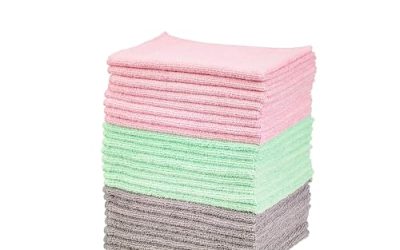
See also: Best Espresso Machine Cleaning Cloths for Home Baristas • Best Espresso Machine Cleaning Cloths for Home Baristas
- The 5 Best Group Head Cleaners
- How to Choose a Group Head Cleaner
- Who Should Skip a Group Head Cleaner
- Frequently Asked Questions
- Final Verdict
- Product and ASIN Reference
The 5 Best Group Head Cleaners
1. Urnex Cafiza2 Espresso Machine Cleaning Powder, 900 g

The Urnex Cafiza2 powder is the best overall pick because it is the standard that cafes and home bars have relied on for years, and the large tub makes it the most practical size for a household that backflushes on a regular schedule. It is a concentrated powder that dissolves in hot water, lifts coffee oils and residue from group heads, valves, and lines, and leaves no odor behind. The formula is NSF certified for use on espresso equipment.
Use it two ways. For a backflush, a small dose goes into a blind filter in the portafilter, the machine runs short cycles that push the solution back through the group head, and plain-water cycles rinse it out. For a soak, portafilters, baskets, and shower screens sit in a basin of the dissolved powder until the film loosens, then rinse clean. The tub holds 900 g, so a household that cleans weekly will work through it slowly.
Specs
- Type: Cleaning powder for backflushing and soaking
- Size: 900 g tub
- Certification: NSF certified for espresso equipment
- Scent: Odorless
- Use: Group heads, valves, lines, portafilters, baskets, and shower screens
- Tier: Premium
2. Puly Caff Plus Espresso Machine Cleaning Powder, 570 g

Puly Caff Plus is the Italian-made powder in this roundup, and it earns its place with a formula that adds a scale inhibitor to the cleaning action. That matters for home bars in hard-water areas, where mineral deposits build up alongside coffee oils. The powder removes residue and fats from the group head, drain tray, water lines, filter, and portafilter, and the scale inhibitor helps keep new deposits from forming as quickly between cleanings. It carries NSF certification, like the Cafiza2 powder above.
The tub holds 570 g, a middle size for a household cleaning weekly. Dosing follows the same routine: a small amount in the blind filter for a backflush, or dissolved in a basin for soaking removable parts. Rinse thoroughly after every cycle, since any cleaner left in the lines will flavor the next shot.
Specs
- Type: Cleaning powder with scale inhibitor
- Size: 570 g tub
- Origin: Made in Italy
- Certification: NSF certified
- Use: Group head, drain tray, water lines, filter, and portafilter
- Tier: Mid-range
3. Cafetto Espresso Clean Espresso Machine Cleaning Powder, 1 kg

Cafetto Espresso Clean is the eco-minded powder in this guide, made by an Australian company that builds its cleaners around rapidly biodegradable ingredients. It is a concentrated powder for backflushing group heads and soaking portafilters and baskets, and it passes NSF Protocol P152 for health effects and corrosivity of commercial espresso machine chemical cleaners. That protocol tests whether a cleaner is safe for the metals it touches.
Specs
- Type: Cleaning powder for backflushing and soaking
- Size: 1 kg tub
- Origin: Made in Australia
- Certification: NSF Protocol P152
- Use: Group heads, portafilters, and baskets
- Tier: Mid-range
4. ACTIVE Espresso Machine Cleaning Tablets, 120 Count
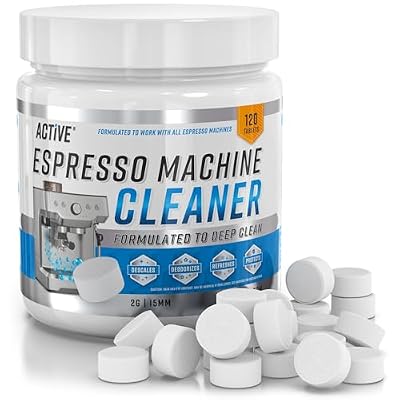
The ACTIVE tablets are the best tablet pick for households that want no measuring at all. Each tablet is pre-measured, so one tablet goes into the portafilter per cleaning cycle, with no scoop to wash and no powder to spill on the counter. The jar holds 120 tablets, which covers a long run of weekly cycles before a replacement is needed. The formula is alkaline, built to cut coffee oils rather than dissolve mineral scale, so it pairs with a separate descaler on the maintenance schedule rather than replacing one.
Compatibility is the strength of this jar. The tablets are made for semi-automatic and super-automatic machines across a wide range of brands, including Breville, DeLonghi, Gaggia, Jura, Lelit, Rancilio, and E61-group machines. That breadth makes them the safe choice when more than one machine shares a shelf.
Specs
- Type: Pre-measured cleaning tablets
- Count: 120 tablets per jar
- Formula: Alkaline, for coffee oils
- Compatibility: Semi-automatic and super-automatic machines, including Breville, DeLonghi, Gaggia, Jura, and Lelit
- Use: Backflush cleaning cycles and group head cleaning
- Tier: Budget
5. CleanEspresso Breville-Compatible Cleaning Tablets, 40 Count

CleanEspresso makes the most focused tablet in this roundup, a 2 g tablet sized for Breville machines. It fits the cleaning cycle on the Barista Express, Barista Pro, Bambino, Infuser, Dual Boiler, and Oracle lines, matching the dose Breville machines expect. For a Breville owner, that exact fit removes the guesswork: the tablet drops into the portafilter with the cleaning disc, the machine runs its cycle, and the rinse cycles finish the job.
The pack holds 40 tablets, enough for a household that runs the cleaning cycle every week or two. One limit to note is that the tablets do not fit every Breville model, so owners of the Barista Touch and newer Oracle models should check the compatibility notes for their machine before ordering. For the models listed above, the 2 g dose is the right size.
Specs
- Type: Pre-measured cleaning tablets, 2 g each
- Count: 40 tablets per pack
- Fit: Breville Barista Express, Barista Pro, Bambino, Infuser, Dual Boiler, and Oracle
- Use: Breville cleaning cycles with a blind filter or cleaning disc
- Not for: Some Barista Touch and newer Oracle models, check compatibility notes
- Tier: Budget
How to Choose a Group Head Cleaner
Start with the format. Powder suits households that clean often and want to size the dose to the job, since a scoop can be small for a light backflush or larger for a long soak. Tablets suit households that want the same dose every time with no measuring, and they store neatly because there is no loose powder to spill. Either format cleans the group head well, so the choice is about routine rather than cleaning strength.
Next, match the cleaner to the machine. Most powders and broad-compatibility tablets work across semi-automatic machines with a three-way solenoid valve, which is the valve that makes backflushing possible. Machines without that valve cannot backflush, so their owners should use the cleaner as a soak for removable parts instead. Breville owners get the simplest result from a tablet sized for Breville cleaning cycles, while owners of super-automatic machines should check whether the manual calls for a specific tablet size.
Check the certification before buying. A cleaner that is NSF certified for espresso equipment has been tested for safety on the metals and seals inside the brew group. Finally, think about size. A large tub is the better value for a household that backflushes weekly, while a small pack of tablets is the better buy for a household that cleans monthly and wants the tablets to stay fresh.
Who Should Skip a Group Head Cleaner
Anyone whose machine lacks a three-way solenoid valve and has no removable parts to soak has little use for a backflush cleaner, since the cycle itself is what moves the solution through the group. Pod machines and most single-serve brewers fall into this group, and their manuals usually call for a descaler rather than a group head cleaner. Owners of super-automatic machines should also skip generic powders and tablets unless the manual allows them, since some automatics run a cleaning cycle that expects a tablet of a specific size and shape.
A group head cleaner also does nothing for problems that live in the water circuit. If shots taste flat because of scale in the boiler, or the machine heats slowly, the fix is a descaler, not a cleaner. Households that already clean on a strict schedule with one of the products above gain nothing from buying a second cleaner in a different format.
Frequently Asked Questions
How often should I clean the group head?
For a machine used daily, run a backflush with cleaner about once a week, and soak the portafilter and basket in cleaning solution at the same time. Machines used less often can stretch to once every two weeks. Always rinse with plain water after the cleaning cycles until the discharge runs clear.
Is a group head cleaner the same as a descaler?
No. A group head cleaner is an alkaline product that removes coffee oils from the brew group, portafilter, and valves. A descaler is an acidic product that dissolves mineral scale from the boiler and water lines. Most machines need both, on different schedules.
Can I backflush any espresso machine?
No. Backflushing needs a three-way solenoid valve, which most semi-automatic machines have, but many entry-level and pod machines lack. Machines without the valve should use the cleaner as a soak for removable parts only.
Do I need a blind filter to use a group head cleaner?
Yes, for a backflush. The blind filter, also called a blind basket or cleaning disc, blocks water from leaving the portafilter, forcing the cleaning solution back through the group head. Without it, the solution runs straight through and never cleans the valves behind the group.
Final Verdict
The Urnex Cafiza2 powder is the best overall pick for most home baristas, since the large tub covers months of backflushing and soaking with a proven, NSF-certified formula. Puly Caff Plus is the pick for hard-water households that want a scale inhibitor in the same powder, and Cafetto Espresso Clean is the pick for buyers who want an eco-minded formula in the largest tub here. Tablet users should take the ACTIVE 120-count jar for its broad compatibility across brands, or the CleanEspresso 40-count pack when the machine on the counter is a Breville. Clean weekly, rinse until the water runs clear, and keep a descaler on the shelf for the separate job of removing scale.
Product and ASIN Reference
| Product | ASIN |
|---|---|
| Urnex Cafiza2 Espresso Machine Cleaning Powder, 900 g | B005CG8FMM |
| Puly Caff Plus Espresso Machine Cleaning Powder, 570 g | B0084UX4AQ |
| Cafetto Espresso Clean Espresso Machine Cleaning Powder, 1 kg | B01EUGVTIQ |
| ACTIVE Espresso Machine Cleaning Tablets, 120 Count | B0C8ZSWK4B |
| CleanEspresso Breville-Compatible Cleaning Tablets, 40 Count | B0725948BY |