Last updated: October 19, 2026
The best electric pressure cooker for most small kitchens is the Instant Pot Duo 6 Qt: it covers pressure cooking, rice, slow cooking and sauté at a mid-range tier and fits where an espresso machine and grinder already crowd the counter. If you want finer control and are willing to pay more, the Breville Fast Slow Pro is the runner-up, and if space is the problem, the Instant Pot Rio Mini 4 Qt gives most of the function in a smaller body.
This guide is written for people who already have a home coffee setup and a limited amount of counter. An electric pressure cooker is a bulky, 1000-watt appliance that competes with your espresso machine, grinder, kettle and toaster for outlets and inches. We look at footprint, wattage, steam direction, noise and daily-use routines such as steel-cut oats, hard-boiled eggs, beans and stock. The guide is research-based. We did not personally use these products, and we mark anything we could not confirm as “not listed”. Prices appear as tiers only.

Instant Pot Duo 6 Qt 7-in-1 Electric Pressure Cooker, Stainless Steel | Slow cooks, makes rice and yogurt, steams, sautés, warms and sterilizes, with an app featuring 800+ recipes.
Included for 'Best Electric Pressure Cooker for Small Counters and Daily Use' because the listing specifies Stainless Steel and Slow cooks, details this guide uses to compare options.
View on Amazon
Cosori Pressure Cooker 6QT, 9-in-1, Ceramic Coating Pot, 12 Safety Features | Rice Cooker, Slow Cook, Sous Vide, Saute, Stainless Steel, 1100W, Silver
Included for 'Best Electric Pressure Cooker for Small Counters and Daily Use' because the listing specifies 9-in-1 and Ceramic Coating Pot, details this guide uses to compare options.
View on Amazon
Sweetcrispy 16-in-1 Electric Pressure Cooker 8QT, 12-Preset Multi Cookers with Ceramic Pot, Slow Cook Rice Steamer Sauté Soup Yogurt Maker and More, Recipe Book
Included for 'Best Electric Pressure Cooker for Small Counters and Daily Use' because the listing specifies 12-Preset Multi Cookers with Ceramic Pot and Slow Cook Rice Steamer Sauté Soup Yogurt Maker and More, details this guide uses to compare options.
View on Amazon
DUMOS 16-in-1 Electric Pressure Cooker, 6QT Programmable Multi Cooker with 12 One-Touch Presets, Soup Steam Yogurt and More, Ceramic Inner Pot Delay Start & Keep Warm, Includes Recipe Guide, Black
Included for 'Best Electric Pressure Cooker for Small Counters and Daily Use' because the listing specifies 6QT Programmable Multi Cooker with 12 One-Touch Presets and Soup Steam Yogurt and More, details this guide uses to compare options.
View on Amazon- Top Picks at a Glance
- Comparison Table
- The Coffee-Bar Counter Problem
- 1. Instant Pot Duo 6 Qt 7-in-1: Best Overall
- 2. Cosori 6 Qt 9-in-1: Best Value Upgrade
- 3. Breville Fast Slow Pro 6 Qt: Best Premium Control
- 4. Instant Pot Pro 6 Qt 10-in-1: Best Feature Set
- 5. Instant Pot Rio Mini 4 Qt 7-in-1: Best Compact
- 6. Ninja HyperHeat 6.5 Qt 9-in-1: Best for Bigger Households
- Worked Example: Circuit Load and Running Cost
- Morning Routines That Suit a Pressure Cooker
- Cleaning Around a Coffee Station
- Decision Matrix by Kitchen Situation
- Ownership Realities: What Wears First
- Also Consider
- How We Chose
- Buying Guide
- Common Mistakes
- Frequently Asked Questions
- Which One Should You Buy?
- Sources
Top Picks at a Glance
- Best Overall: Instant Pot Duo 6 Qt 7-in-1, for the best balance of function, parts and price tier.
- Best Value Upgrade: Cosori 6 Qt 9-in-1, for a ceramic-coated pot and 13 presets.
- Best Premium Control: Breville Fast Slow Pro 6 Qt, for 8 pressure levels and automatic release modes.
- Best Feature Set: Instant Pot Pro 6 Qt 10-in-1, for sous vide and a gentle release switch.
- Best Compact: Instant Pot Rio Mini 4 Qt 7-in-1, for tight counters and one to two people.
- Best for Bigger Households: Ninja HyperHeat 6.5 Qt 9-in-1, for a larger bowl and 1200 W heating.
Comparison Table
See also: Types of Pressure Cooker Explained: 7 Models, One per Style • Stand for Cutting Board: 7 Racks and Holders for Small Kitchens
| Product | Best for | Key specs | Watch for | Price tier |
|---|---|---|---|---|
| Instant Pot Duo 6 Qt | Everyday cooking | 6 qt; 1000 W; 14.6 lb | Loud standard steam release | Mid-range |
| Cosori 6 Qt 9-in-1 | Easy cleanup | 1100 W; ceramic-coated pot; 11.9 lb | Coating wear | Mid-range |
| Breville Fast Slow Pro | Pressure control | 1100 W; 1.5-12 psi; 4.5 qt max fill | Smaller max fill; price | Premium |
| Instant Pot Pro 6 Qt | Sous vide, programs | 10 functions; 28 programs; about 13 in deep | Wattage differs by seller | Premium |
| Instant Pot Rio Mini 4 Qt | Tight counters | 800 W; 10.9 lb; 10.08 in tall | Smaller batches | Mid-range |
| Ninja HyperHeat 6.5 Qt | Larger batches | 1200 W; 17.64 lb; 9 functions | Heavy; pressure psi not listed | Mid-range |
The Coffee-Bar Counter Problem
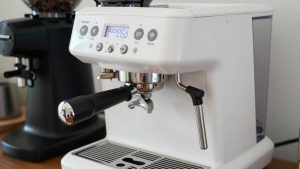
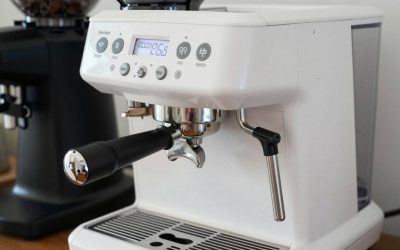
If you own a home espresso setup, you know the counter is not empty. A machine, a grinder, a knock box, a kettle and a scale already take most of the space. Adding a pressure cooker raises three practical questions that standard reviews skip. How deep is it, how much steam does it throw, and what happens to your electrical circuit when two high-wattage appliances run at once?
On depth and height, the Rio Mini measures about 10.08 inches tall, 13.82 wide and 12.52 deep, and the Instant Pot Pro is about 13 inches deep and 12.8 inches tall. Under a typical 18-inch gap between counter and wall cabinet, the lid of a 6-quart cooker will fit, but the steam release will hit the underside of a cabinet if you vent in place. A move of two feet to an open counter, or a cooker with a diffused release such as the Pro, solves the problem. Never vent steam toward a grinder or the water tank of an espresso machine.
On electrical load, a standard US kitchen circuit is rated for 15 amps at 120 volts, or about 1800 watts, and most codes call for small-appliance circuits of 20 amps, about 2400 watts. A pressure cooker at 1000 to 1200 watts plus an espresso machine at 1200 to 1500 watts can exceed the limit if they run on the same circuit at the same time. Practical advice is simple: do not run both at full power together, avoid extension cords for either, and check your circuit if breakers trip. This is general guidance, not an electrical inspection.
1. Instant Pot Duo 6 Qt 7-in-1: Best Overall
- Capacity and power: 6 quarts, 1000 W.
- Functions: pressure cook, slow cook, sauté, steam, rice, yogurt, keep warm.
- Pressure: 10.2-11.6 psi high, 5.8-7.2 psi low per the manual.
- Timers: delay start up to 24 hours.
- Weight: 14.6 lb.
Best for: daily cooks who want one pot that does most things. Skip if: your outlet is on the same circuit as your espresso machine and you run both at once.
The Duo is the sensible reference point. It has a stainless inner pot that takes metal utensils, a steam rack and a sealing ring that you can replace for a few dollars. Morning routines suit it: steel-cut oats cook while you pull shots, and hard-boiled eggs finish in minutes. The standard release valve is noisy, so release steam away from the coffee station.
At 14.6 pounds, it is movable enough to store in a cabinet and bring out on use days. If you cook with it daily, leave it on the counter and treat it like another appliance on your station.
Pros: versatile; trusted parts; stainless pot. Cons: loud release; ring absorbs odors; bulky.
2. Cosori 6 Qt 9-in-1: Best Value Upgrade
- Capacity and power: 6 quarts (5.7 L), 1100 W.
- Pot: aluminum with ceramic nonstick coating; stainless exterior.
- Presets: 13 presets and 9 functions; 12 safety features.
- Size: about 12.6 in deep, 13.4 in wide, 12.5 in tall; 11.9 lb.
Best for: people who hate scrubbing a pot. Skip if: you use metal tools or abrasive pads.
The Cosori pitches itself as an alternative to the Instant Pot, with a coated pot that releases oats and rice more easily than bare stainless steel. For a coffee-station kitchen, the practical advantage is weight: at about 12 pounds it is lighter than the Duo and easier to slide in and out of a cabinet. The 1100 W rating is slightly higher than the Duo’s.
The coating needs care. Use silicone or wood tools, wash by hand if you want it to last and avoid heating the empty pot. If the coating wears, the pot can often be replaced, but we could not confirm replacement-pot availability from the maker in our sources.
Pros: easy release; lighter; many presets. Cons: coating wear; some specs sourced from reviews; fewer accessories.
3. Breville Fast Slow Pro 6 Qt: Best Premium Control
- Capacity: 6 quarts nominal; 4.5 qt max fill, 1 qt min.
- Pressure: 8 levels from 1.5 to 12 psi.
- Release: automatic Quick, Pulse and Natural.
- Slow cook: 2 to 12 hours on high or low.
- Dimensions: about 13.5 in wide, 12.5 in deep, 14 in tall.
Best for: espresso people who enjoy dials and precision. Skip if: you need to fill a full 6 quarts.
Breville designs for the same crowd that buys a dual-boiler espresso machine, and the Fast Slow Pro reflects that: adjustable pressure, a clear display and automatic steam release. Lowering pressure helps with delicate foods that suffer at high pressure. The 14-inch height is the biggest planning issue, because it needs more clearance than a Duo.
The automatic release is the feature that matters for a crowded counter. The cooker manages steam for you, which cuts the chance that a jet hits a nearby cabinet or device. Because the max fill is 4.5 quarts, plan batch sizes accordingly.
Pros: fine control; automatic release; dishwasher-safe lid. Cons: premium tier; tall; smaller fill.
4. Instant Pot Pro 6 Qt 10-in-1: Best Feature Set
- Functions: pressure cook, slow cook, sous vide, sauté, rice, sterilizer, yogurt, warmer, cake baker, steamer.
- Programs: 28 settings and 5 favorites.
- Release: gentle steam release switch with diffuser.
- Pot: 18/8 stainless with aluminum core.
Best for: cooks who want sous vide and a quiet release. Skip if: you want the lowest price.
The Pro makes sense if you like a water-bath approach to coffee tasks. Sous vide mode can hold a water temperature steady for many hours, which suits custard, eggs and some desserts, though it is not a substitute for a dedicated immersion circulator when precision matters. Wattage is listed as 1200 W by some sellers and 1400 W by another, so assume the higher figure when planning circuit loads.
The diffused release is the headline for small counters because it reduces the jet that a standard valve produces.
Pros: sous vide; gentle release; strong pot. Cons: premium tier; deep footprint; wattage varies by listing.
5. Instant Pot Rio Mini 4 Qt 7-in-1: Best Compact
- Capacity and power: 4 quarts (3.8 L), 800 W.
- Functions: pressure cook, slow cook, sauté, steam, rice, yogurt, keep warm.
- Size: about 10.08 in tall, 13.82 in wide, 12.52 in deep; 10.9 lb.
- Included: lid, inner pot, sealing ring and steam rack.
Best for: one to two people and tight counters. Skip if: you batch cook for a family.
At 800 watts it draws less than the Duo, which leaves more electrical headroom for the espresso machine. A shorter body means it can sit under many cabinets with the lid on. For oats, eggs and a pot of beans for two, it is plenty. For a whole chicken or a large stock, it is too small.
Pros: compact; lower wattage; lighter. Cons: small batches; fewer accessories.
6. Ninja HyperHeat 6.5 Qt 9-in-1: Best for Bigger Households
- Capacity and power: 6.5 quarts, 1200 W.
- Functions: pressure, slow cook, rice, pasta, sear/sauté, yogurt, steam, sous vide, keep warm.
- Pot: aluminum with ceramic nonstick coating, SimpliServe design.
- Weight: 17.64 lb.
Best for: households that cook larger batches. Skip if: you need to lift it often.
Ninja’s 1200 W base heats quickly and the bowl fits a 4-lb chicken. The weight is the catch: at about 17.6 pounds, it is not an appliance you want to lift from a high shelf. Pressure psi is not listed in our sources.
Pros: bigger bowl; fast heating; many functions. Cons: heavy; psi not listed; coating care.
Worked Example: Circuit Load and Running Cost
Add up the wattage before you plug in. Suppose your espresso machine is rated 1400 W, your grinder 150 W and your kettle 1500 W. A 1000 W pressure cooker alongside the machine and grinder gives 2550 W, which is above the 1800 W a 15-amp circuit can carry continuously at 120 V. The same cooker with an 800 W Rio Mini gives 2350 W, which is still too much for a single 15-amp circuit and borderline on a 20-amp one. The lesson is that no cooker is small enough to ignore the circuit; the Mini simply leaves more headroom. Run the cooker first, let it finish its heating phase, and pull shots afterward, or plug the cooker into a different circuit.
Running cost is small. A pressure cooker rated 1000 W does not draw that wattage constantly; it cycles. If you assume it averages half of its rating over a 30-minute cook, that is about 0.25 kWh. At a typical household electricity rate of 15 cents per kWh, the cost is roughly four cents per meal. Even a 1200 W model is only a few cents more. The more important cost is replacement parts: a sealing ring every year or two and a new inner pot if the coating wears.
Morning Routines That Suit a Pressure Cooker
Coffee drinkers tend to share one habit: they want something fast and low-effort before the first shot. Steel-cut oats are the classic example. Add oats and water in the pot, seal, cook for a few minutes at high pressure, release naturally and stir in fruit. The oats are ready while you grind, tamp and pull. Hard-boiled eggs are another: place them on the rack with a cup of water, cook briefly and move them to cold water. Both save time and keep the stove free.
Beyond breakfast, a pressure cooker can produce a pot of broth on a weekend, cook beans for the week and make rice for a lunch bowl. Consider storing the cooker in a cabinet and moving it to the counter on prep days if you do not use it daily. If you do cook every day, leave it out and make sure the cord and venting position are safe.
Cleaning Around a Coffee Station
Coffee oils and kitchen steam do not mix well. Steam can carry cooking smells and moisture onto nearby equipment, so wipe the area after venting and keep the grinder hopper covered when you cook. Wash the lid, sealing ring and steam valve after each use, as residues can cause odors and affect sealing. Dry the inner pot before storing it, and keep the sealing ring away from strong coffee bean aromas if you store it in the same cabinet.
Decision Matrix by Kitchen Situation
| Your situation | Pick | Reason |
|---|---|---|
| Single person, tiny counter | Instant Pot Rio Mini 4 Qt | 800 W, 10 in tall, 4 qt |
| Couple, shared circuit with espresso machine | Instant Pot Rio Mini or Duo 6 Qt | Lower wattage leaves headroom |
| Family of four, cooks most nights | Instant Pot Duo 6 Qt | 6 qt, stainless pot, common parts |
| Prefers nonstick, hand-washes | Cosori 6 Qt | Ceramic-coated pot, lighter weight |
| Wants adjustable pressure | Breville Fast Slow Pro | 8 levels, automatic release |
| Wants sous vide and quiet release | Instant Pot Pro 6 Qt | Gentle release switch, sous vide |
| Large batches, strong shelf | Ninja HyperHeat 6.5 Qt | Larger bowl, 1200 W |
Ownership Realities: What Wears First
The silicone sealing ring is the first consumable. It stretches, picks up odors and eventually fails to seal, so most owners replace it every year or two and keep a spare. The float valve and anti-block shield need cleaning after cooking starchy foods, because trapped residue can stop the lid from sealing. On coated pots the nonstick surface is the next point of wear; on stainless pots it is the cosmetic haze left by hard water, which a splash of vinegar can remove.
Electronics are generally reliable, but they are not user-serviceable. If a control board or heating element fails outside the warranty, replacement is rarely worth the cost. Instant Pot lists a one-year limited warranty on the Pro and Rio Mini, and the Breville ships with a one-year replacement. That is shorter than many espresso machines, so buy from a retailer with a clear return policy and register the warranty when you receive the unit.
Finally, accessories matter more than most buyers expect. A silicone sling, a spare ring, a second lid for storing leftovers and a trivet make daily use smoother. Check that accessories exist for the model you choose, because oddly sized pots are harder to equip than common 6-quart designs.
Also Consider
Instant Pot Duo Plus 6 Qt 9-in-1 (WhisperQuiet)
Adds a diffused steam release and 25 presets, according to the maker. A good middle step between the Duo and Pro.
Instant Pot Duo Crisp 8 Qt 11-in-1
Comes with two lids, one for pressure and one for air frying. It is rated at 1500 W and weighs about 22 lb, which makes it a poor fit for a crowded coffee counter.
Chef iQ Smart Pressure Cooker
A WiFi-enabled 10-in-1 with a built-in scale and guided recipes per the listing. Other specs are not listed in our sources.
How We Chose
We started with electric pressure cookers sold in common sizes by makers who publish manuals and offer replacement parts. We read specification sheets, compared wattage, size and weight, and checked what each maker says about steam release. This guide is research-based. We did not personally use these products, and we note where sources disagree. We prefer models that have been available for more than a year and that offer a stainless or coated pot with accessories.
Buying Guide
Footprint and Clearance
Measure depth, width and height, including the open-lid height if you use sauté. Allow a few inches above the lid for steam and avoid placing it under low cabinets while venting. A cooker that is 10 inches tall, like the Rio Mini, fits more spaces than a 14-inch Breville.
Wattage and Circuits
Compare wattage: 800 W for the Rio Mini, 1000 W for the Duo, 1100 W for the Cosori and Breville, and 1200 W for the Ninja. Combine with your espresso machine and kettle to see what shares a circuit. Avoid running high-wattage appliances at the same time on one circuit.
Steam Release and Noise
Standard valves release steam in a loud jet. Diffused or automatic release is quieter and safer for tight counters. Natural release avoids the jet but takes longer.
Inner Pot Material
Stainless steel is robust and takes metal utensils but needs deglazing. Ceramic coatings release food easily but wear. Pick based on how you cook and wash.
Capacity Thresholds
For one or two people, 3 to 4 quarts is enough. For a family, 6 quarts is the standard. Pressure cookers should be filled to no more than two-thirds, or one-half for foods that foam, so a 6-quart pot yields about 16 cups, or 12 cups for beans and grains.
Common Mistakes
- Venting steam under a cabinet or near a grinder.
- Running an espresso machine and cooker on one overloaded circuit.
- Overfilling the pot.
- Skipping the sealing ring check and cleaning.
- Using metal tools on a coated pot.
Frequently Asked Questions
What is the best electric pressure cooker for a small kitchen?
The Instant Pot Rio Mini 4 Qt is the most compact pick here, and the Duo 6 Qt is the best all-rounder if you have a little more room.
Can I run a pressure cooker and an espresso machine at the same time?
Only if they are on different circuits and your wiring supports it. Together they can draw over 2000 watts, so check your circuit and avoid extension cords.
Is a pressure cooker worth it for a coffee lover?
It is not coffee gear, but it saves time on breakfast items such as steel-cut oats and boiled eggs, and it can replace several pots.
Which models are quietest?
The Instant Pot Duo Plus WhisperQuiet and the Pro use diffused steam release, and the Breville uses an automatic release. All of them still make some noise during venting.
How big should I go?
Choose 3 to 4 quarts for one or two people, 6 quarts for a family of four and 6.5 to 8 quarts for larger households.
Can I use an electric pressure cooker for canning?
Not for low-acid foods. The National Center for Home Food Preservation does not recommend it.
How long do sealing rings last?
Makers generally suggest replacing them periodically, and many owners keep a spare. Check your manual for the interval.
Which One Should You Buy?
Buy the Instant Pot Duo 6 Qt if you want a dependable default. Buy the Rio Mini 4 Qt if counter space is the limiting factor. Buy the Breville Fast Slow Pro if you value control and automatic release, the Pro if you want sous vide and a gentler release, the Cosori for easy cleanup and the Ninja for a larger bowl. Measure the space, check your circuit and then choose.
Sources
- Instant Pot product pages and manuals for Duo, Pro and Rio Mini
- Breville Fast Slow Pro instruction book (BPR700)
- Cosori pressure cooker product page and user manual
- SharkNinja product page for Ninja HyperHeat PC201
- National Center for Home Food Preservation, canning in pressure cookers
Last updated: October 2026